


Eukaryotic stress granules: the ins and outs of translation
- PMID: 20064460
- PMCID: PMC2813218
- DOI: 10.1016/j.molcel.2009.11.020
Eukaryotic stress granules: the ins and outs of translation
Abstract
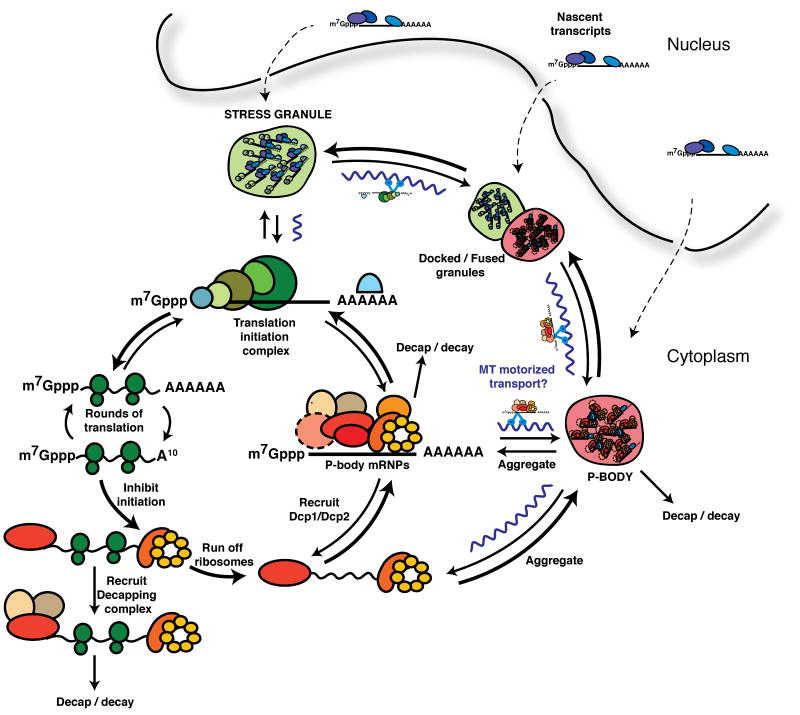
The stress response in eukaryotic cells often inhibits translation initiation and leads to the formation of cytoplasmic RNA-protein complexes referred to as stress granules. Stress granules contain nontranslating mRNAs, translation initiation components, and many additional proteins affecting mRNA function. Stress granules have been proposed to affect mRNA translation and stability and have been linked to apoptosis and nuclear processes. Stress granules also interact with P-bodies, another cytoplasmic RNP granule containing nontranslating mRNA, translation repressors, and some mRNA degradation machinery. Together, stress granules and P-bodies reveal a dynamic cycle of distinct biochemical and compartmentalized mRNPs in the cytosol, with implications for the control of mRNA function.
2009 Elsevier Inc.
Figures
References
-
- Anderson P. Post-transcriptional control of cytokine production. Nat Immunol. 2008;9:353–359. - PubMed
-
- Anderson P, Kedersha N. RNA granules: post-transcriptional and epigenetic modulators of gene expression. Nat Rev Mol Cell Biol. 2009;10:430–436. - PubMed
-
- Arimoto K, Fukuda H, Imajoh-Ohmi S, Saito H, Takekawa M. Formation of stress granules inhibits apoptosis by suppressing stress-responsive MAPK pathways. Nat Cell Biol. 2008;10:1324–1332. - PubMed
Publication types
MeSH terms
Substances
Grants and funding
LinkOut - more resources
Full Text Sources
Other Literature Sources
