


Angiotensin receptor agonistic autoantibody-mediated tumor necrosis factor-alpha induction contributes to increased soluble endoglin production in preeclampsia
- PMID: 20065159
- PMCID: PMC2844327
- DOI: 10.1161/CIRCULATIONAHA.109.902890
Angiotensin receptor agonistic autoantibody-mediated tumor necrosis factor-alpha induction contributes to increased soluble endoglin production in preeclampsia
Abstract
Background: Preeclampsia is a prevalent life-threatening hypertensive disorder of pregnancy. The circulating antiangiogenic factor, soluble endoglin (sEng), is elevated in the blood circulation of women with preeclampsia and contributes to disease pathology; however, the underlying mechanisms responsible for its induction in preeclampsia are unknown.
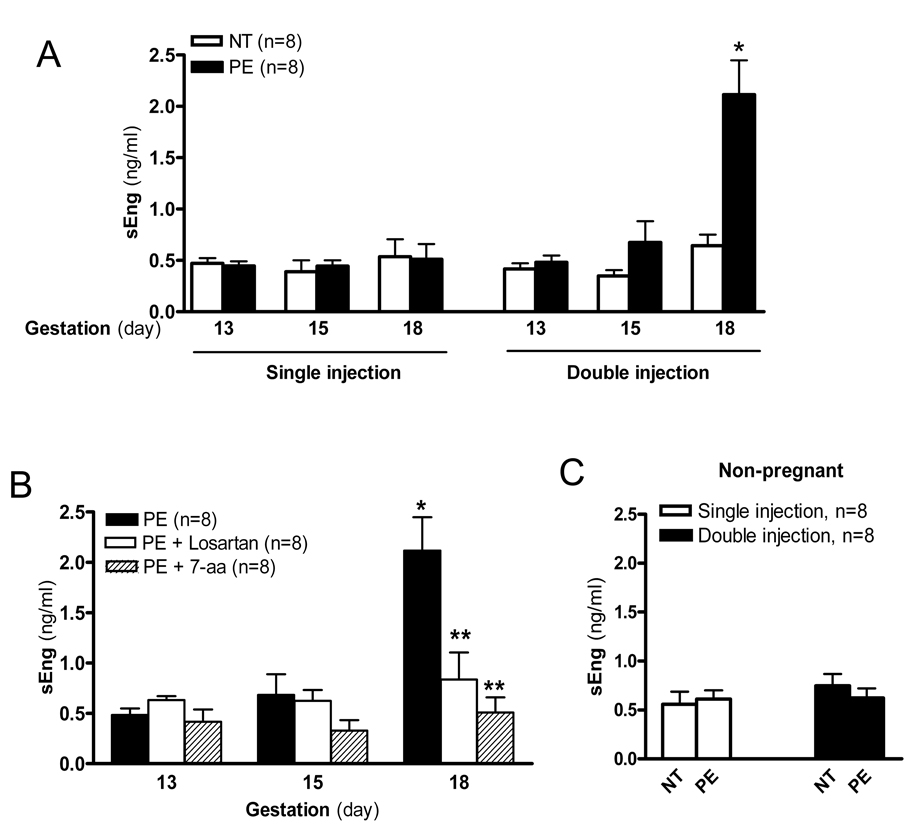
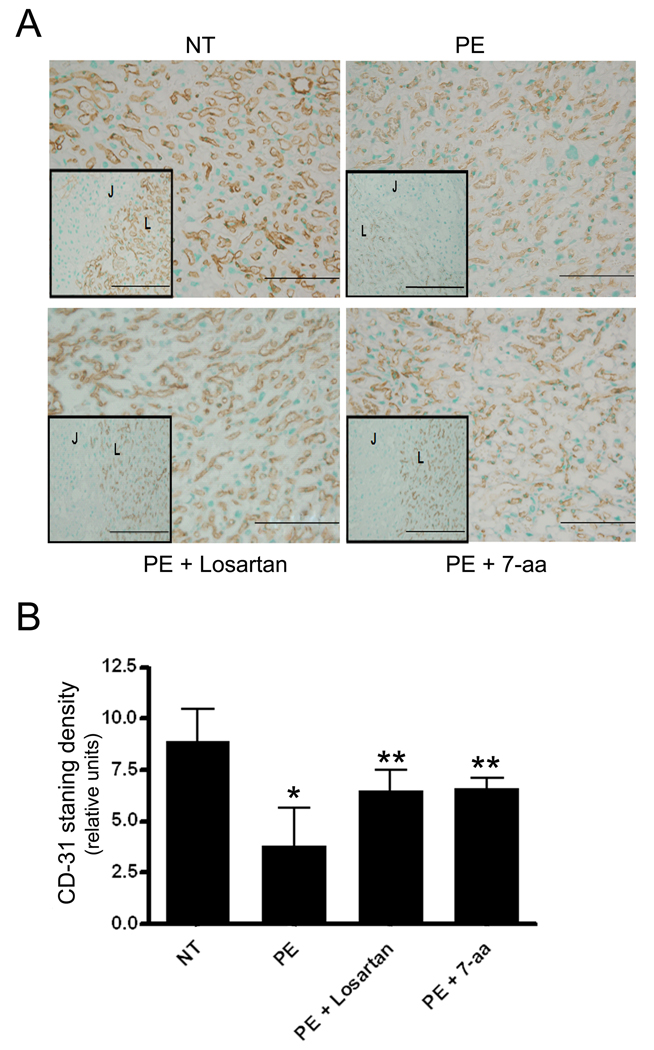
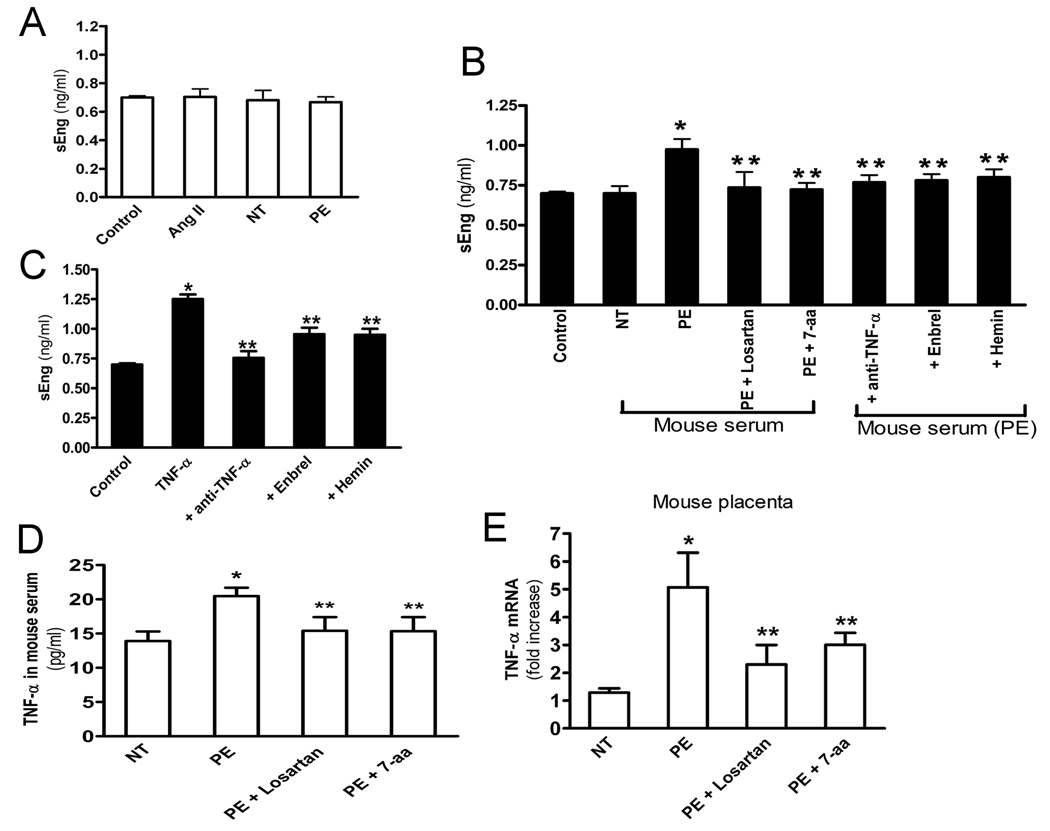
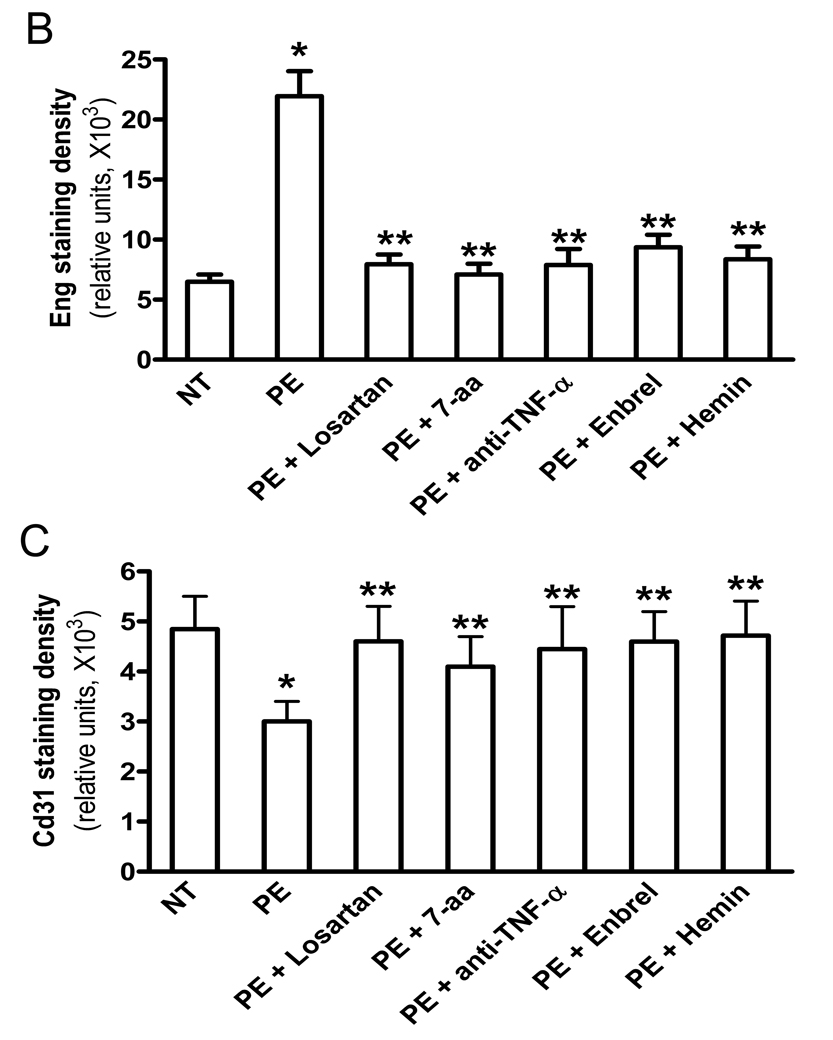
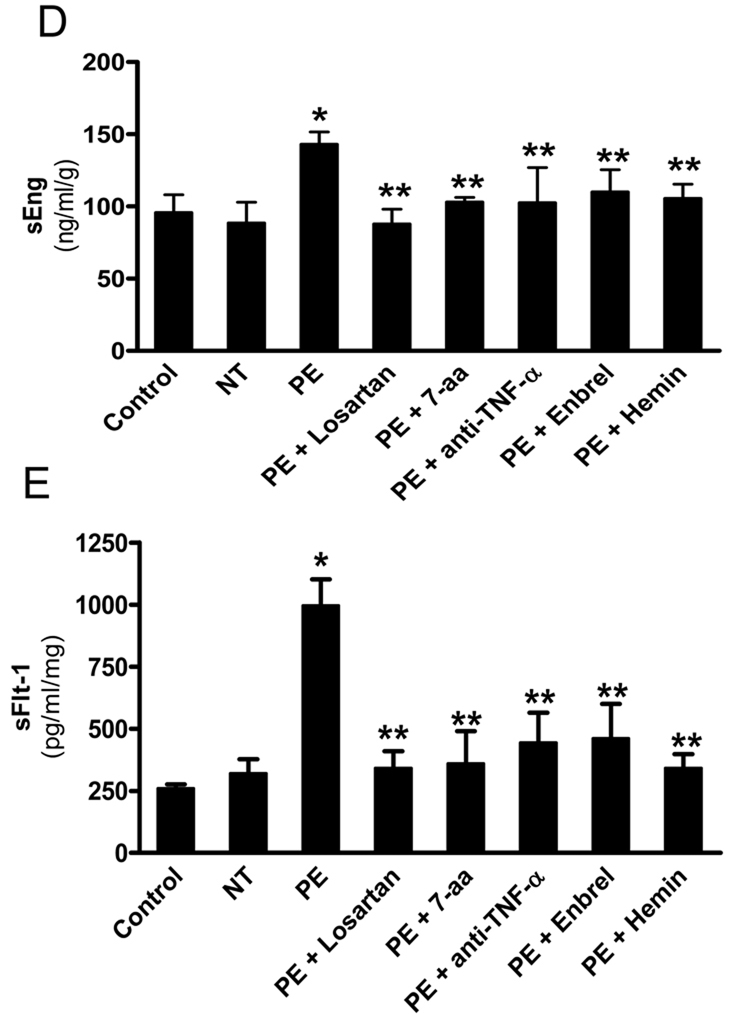
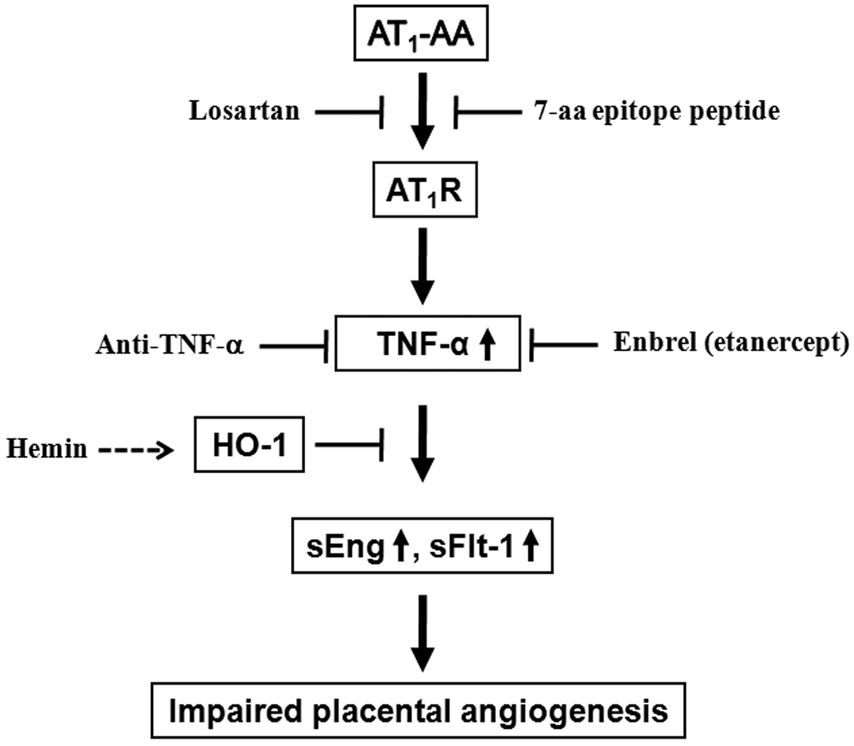
Methods and results: Here, we discovered that a circulating autoantibody, the angiotensin receptor agonistic autoantibody (AT(1)-AA), stimulates sEng production via AT(1) angiotensin receptor activation in pregnant mice but not in nonpregnant mice. We subsequently demonstrated that the placenta is a major source contributing to sEng induction in vivo and that AT(1)-AA-injected pregnant mice display impaired placental angiogenesis. Using drug screening, we identified tumor necrosis factor-alpha as a circulating factor increased in the serum of autoantibody-injected pregnant mice contributing to AT(1)-AA-mediated sEng induction in human umbilical vascular endothelial cells. Subsequently, among all the drugs screened, we found that hemin, an inducer of heme oxygenase, functions as a break to control AT(1)-AA-mediated sEng induction by suppressing tumor necrosis factor-alpha signaling in human umbilical vascular endothelial cells. Finally, we demonstrated that the AT(1)-AA-mediated decreased angiogenesis seen in human placenta villous explants was attenuated by tumor necrosis factor-alpha-neutralizing antibodies, soluble tumor necrosis factor-alpha receptors, and hemin by abolishing both sEng and soluble fms-like tyrosine kinase-1 induction.
Conclusions: Our findings demonstrate that AT(1)-AA-mediated tumor necrosis factor-alpha induction, by overcoming its negative regulator, heme oxygenase-1, is a key underlying mechanism responsible for impaired placental angiogenesis by inducing both sEng and soluble fms-like tyrosine kinase-1 secretion from human villous explants. Our results provide important new targets for diagnosis and therapeutic intervention in the management of preeclampsia.
Figures


References
-
- Roberts JM, Cooper DW. Pathogenesis and genetics of pre-eclampsia. Lancet. 2001;357:53–56. - PubMed
-
- Redman CW, Sargent IL. Latest advances in understanding preeclampsia. Science (New York, N.Y. 2005;308:1592–1594. - PubMed
-
- Dechend R, Homuth V, Wallukat G, Kreuzer J, Park JK, Theuer J, Juepner A, Gulba DC, Mackman N, Haller H, Luft FC. AT(1) receptor agonistic antibodies from preeclamptic patients cause vascular cells to express tissue factor. Circulation. 2000;101:2382–2387. - PubMed
-
- Dechend R, Viedt C, Muller DN, Ugele B, Brandes RP, Wallukat G, Park JK, Janke J, Barta P, Theuer J, Fiebeler A, Homuth V, Dietz R, Haller H, Kreuzer J, Luft FC. AT1 receptor agonistic antibodies from preeclamptic patients stimulate NADPH oxidase. Circulation. 2003;107:1632–1639. - PubMed
-
- Xia Y, Wen HY, Bobst S, Day MC, Kellems RE. Maternal autoantibodies from Preeclampsia patients Activate Angiotensin Receptors on Human Trophoblast Cells. J. Soc. Gyenocologic Investigation. 2003;10:82–93. - PubMed
Publication types
MeSH terms
Substances
Grants and funding
LinkOut - more resources
Full Text Sources
Other Literature Sources
Medical
Research Materials
Miscellaneous
