


Gene transfer into rat brain using adenoviral vectors
- PMID: 20066657
- PMCID: PMC2883311
- DOI: 10.1002/0471142301.ns0424s50
Gene transfer into rat brain using adenoviral vectors
Abstract
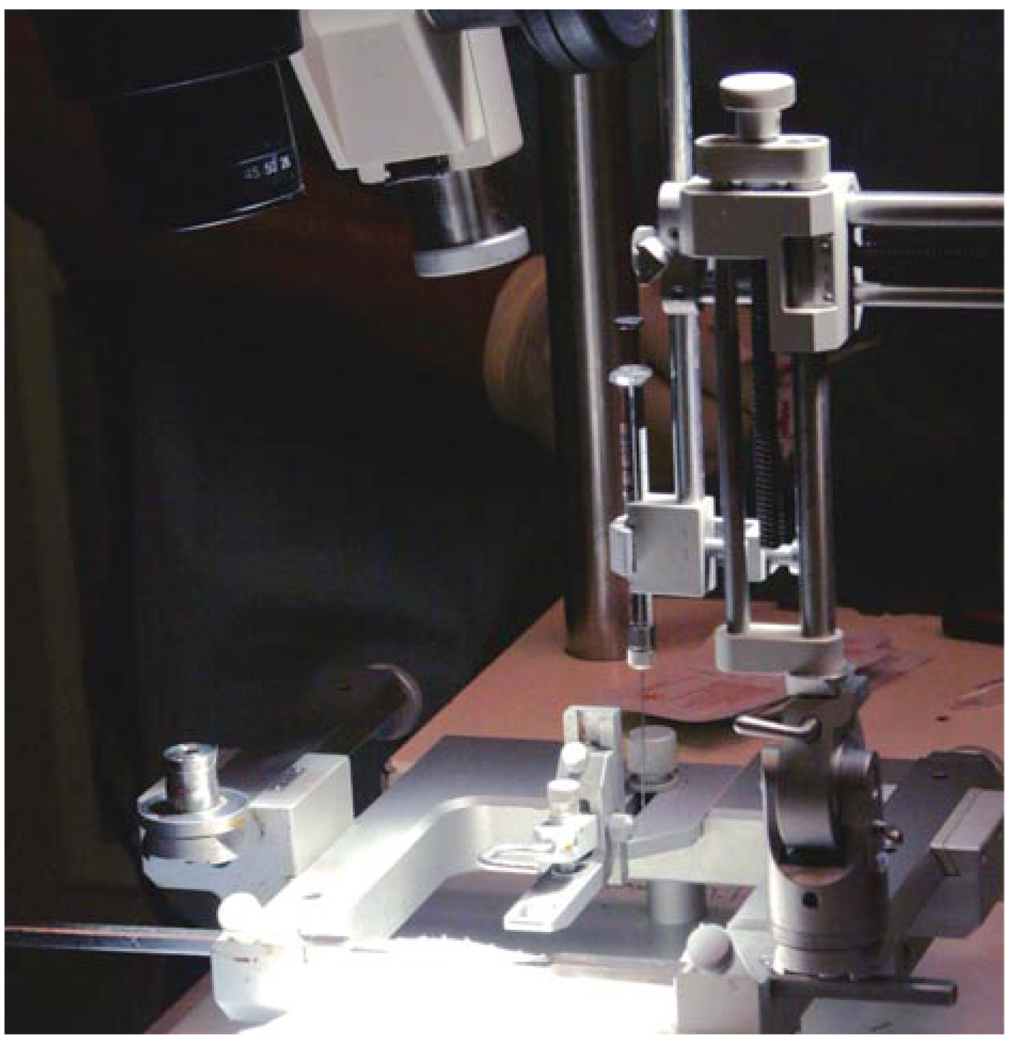
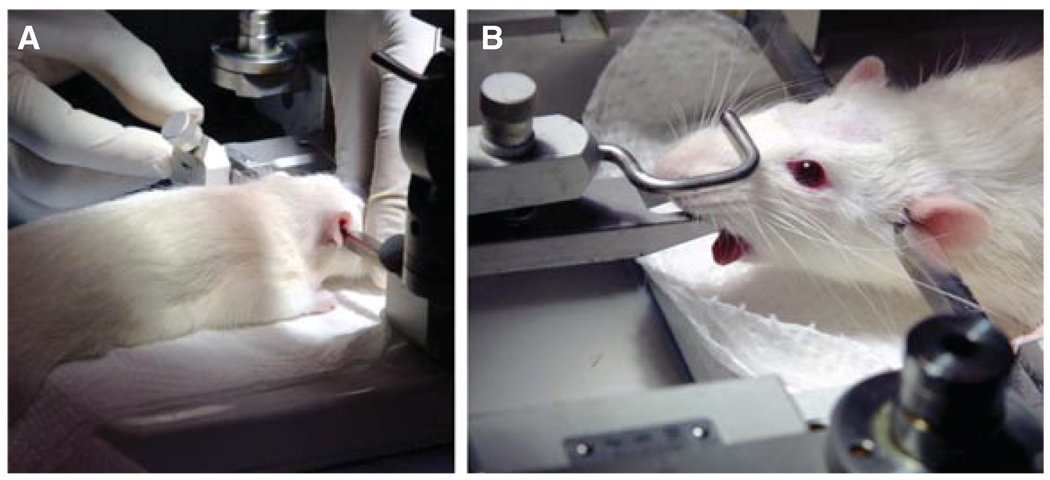
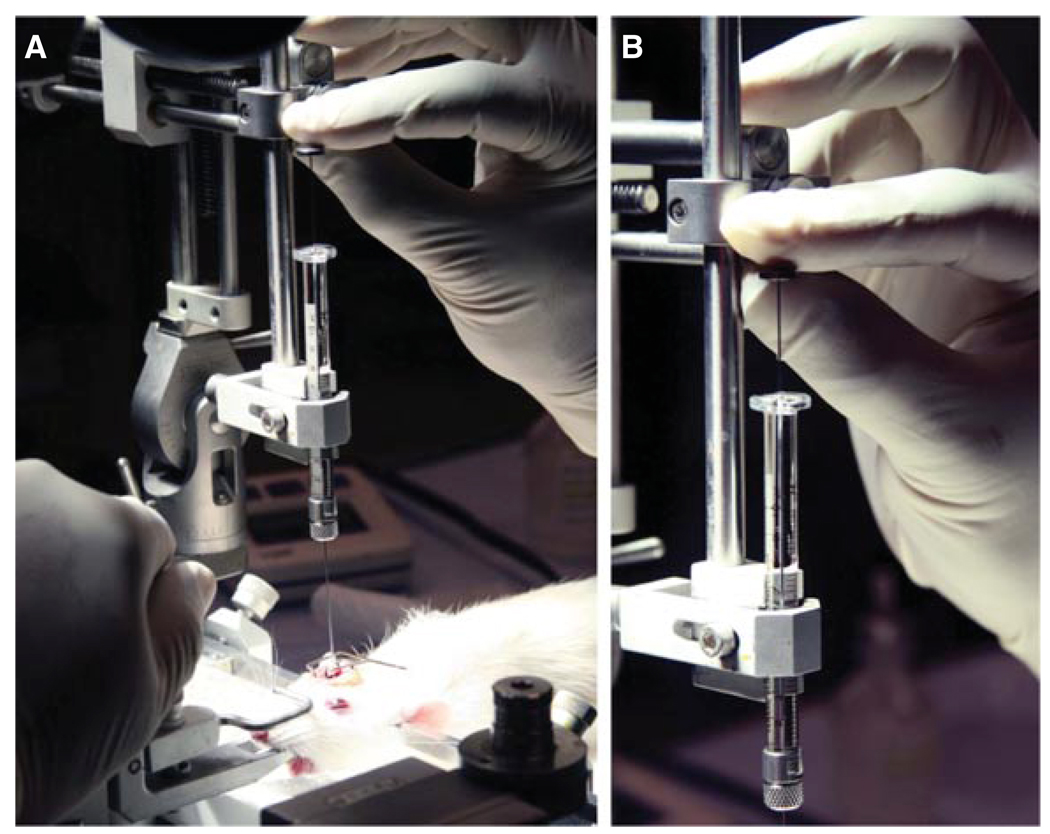
Viral vector-mediated gene delivery is an attractive procedure for introducing genes into the brain, both for purposes of basic neuroscience research and to develop gene therapy for neurological diseases. Replication-defective adenoviruses possess many features which make them ideal vectors for this purpose-efficiently transducing terminally differentiated cells such as neurons and glial cells, resulting in high levels of transgene expression in vivo. Also, in the absence of anti-adenovirus immunity, these vectors can sustain very long-term transgene expression within the brain parenchyma. This unit provides protocols for the stereotactic injection of adenoviral vectors into the brain, followed by protocols to detect transgene expression or infiltrates of immune cells by immunocytochemistry or immunofluorescence. ELISPOT and neutralizing antibody assay methodologies are provided to quantitate the levels of cellular and humoral immune responses against adenoviruses. Quantitation of adenoviral vector genomes within the rat brain using qPCR is also described.
Figures





References
Literature Cited
-
- Akli S, Caillaud C, Vigne E, Stratford-Perricaudet ED, Poenaru E, Perricaudet M, Kahn A, Peschanski MR. Transfer of a foreign gene into the brain using adenovirus vectors. Nature Genetics. 1993;3:224–228. - PubMed
-
- Amalfitano A, Parks RJ. Separating fact from fiction: Assessing the potential of modified adenovirus vectors for use in human gene therapy. Curr. Gene Ther. 2002;2:111–133. - PubMed
-
- Barcia C, Gerdes C, Xiong W, Thomas CE, Liu C, Kroeger KM, Castro MG, Lowenstein PR. Immunological thresholds in neurological gene therapy: Highly efficient elimination of transduced cells may be related to the specific formation of immunological synapses between T cells and virus-infected brain cells. Neuron Glia Biol. 2006a;2:309–327. - PMC - PubMed
-
- Barcia C, Thomas CE, Curtin JF, King GD, Wawrowsky K, Candolfi M, Xiong WD, Liu C, Kroeger K, Boyer O, Kupiec-Weglinski J, Klatzmann D, Castro MG, Lowenstein PR. In vivo mature immunological synapses forming SMACs mediate clearance of virally infected astrocytes from the brain. J. Exp. Med. 2006b;203:2095–2107. - PMC - PubMed
-
- Barcia C, Jimenez-Dalmaroni M, Kroeger KM, Puntel M, Rapaport AJ, Larocque D, King GD, Johnson SA, Liu C, Xiong W, Candolfi M, Mondkar S, Ng P, Palmer D, Castro MG. Sustained, one year expression from high-capacity helper-dependent adenoviral vectors delivered to the brain of animals with a pre-existing systemic anti-adenoviral immune response: implications for clinical trials. Mol. Ther. 2007;15:2154–2163. - PMC - PubMed
Key References
-
-
Dewey, et al. 1999 See above. A description of previously unforeseen long-term toxic side-effects of administering a potentially therapeutic adenovirus vector. This paper provides an excellent illustration of the importance of investigating long-term side effects of vector administration to the brain
-
-
-
Easton RM, Johnson EM, Creedon DJ. Analysis of events leading to neuronal death after infection with E1-deficient adenovirus vectors. Mol. Cell. Neurosci. 1998;11:334–347. A detailed molecular study of the consequences of infecting peripheral neurons in culture
-
-
-
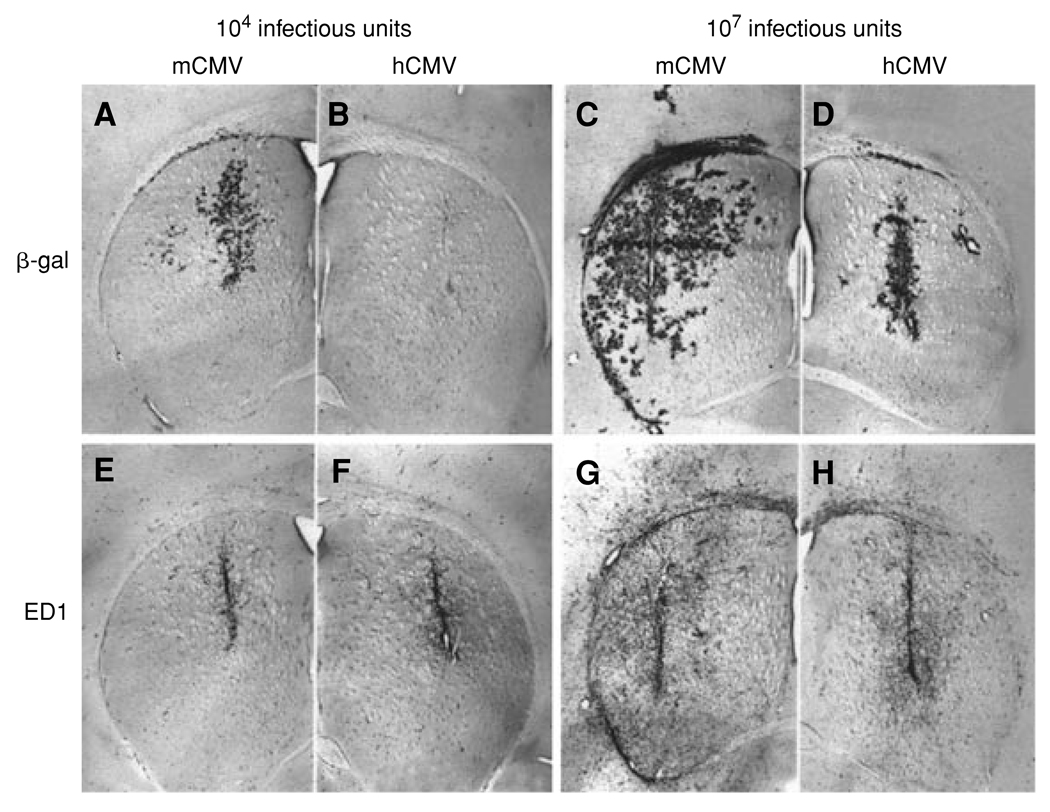
Gerdes, et al. 2000 See above. Illustrates the different levels of expression achievable from two different adenovirus vectors with the same virus backbone, expressing the same transgene under the control of two different promoters
-
-
-
Thomas, et al. 2000 See above. An in-depth investigation, in the rat brain, of the longevity of transgene expression, and inflammatory and cytotoxic side-effects from different doses of vector from 106 to 109 infectious units
-
-
-
Wood, et al. 1996 See above.A review of the immune responses to adenovirus vectors injected into the brains of naive or primed animals
-
Publication types
MeSH terms
Grants and funding
- R21 NS047298/NS/NINDS NIH HHS/United States
- R01 NS044556/NS/NINDS NIH HHS/United States
- R01 NS061107/NS/NINDS NIH HHS/United States
- U54 NS045309/NS/NINDS NIH HHS/United States
- 1 R01 NS 054193.01/NS/NINDS NIH HHS/United States
- 1R21-NS054143.01/NS/NINDS NIH HHS/United States
- R01 NS042893/NS/NINDS NIH HHS/United States
- 1U01 NS052465.01/NS/NINDS NIH HHS/United States
- R01 NS057711/NS/NINDS NIH HHS/United States
- R21 NS054143/NS/NINDS NIH HHS/United States
- U54 NS045309-01/NS/NINDS NIH HHS/United States
- R01 NS054193/NS/NINDS NIH HHS/United States
- R01NS061107-02/NS/NINDS NIH HHS/United States
- 1R01 NS44556.01/NS/NINDS NIH HHS/United States
- NS445561.01/NS/NINDS NIH HHS/United States
- U01 NS052465/NS/NINDS NIH HHS/United States
- 1R21 NS047298-01/NS/NINDS NIH HHS/United States
- R01NS057711-01A2/NS/NINDS NIH HHS/United States
LinkOut - more resources
Full Text Sources
Other Literature Sources
