


The protein kinase A pathway-regulated transcriptome of endometrial stromal fibroblasts reveals compromised differentiation and persistent proliferative potential in endometriosis
- PMID: 20068008
- PMCID: PMC2840687
- DOI: 10.1210/en.2009-0923
The protein kinase A pathway-regulated transcriptome of endometrial stromal fibroblasts reveals compromised differentiation and persistent proliferative potential in endometriosis
Abstract
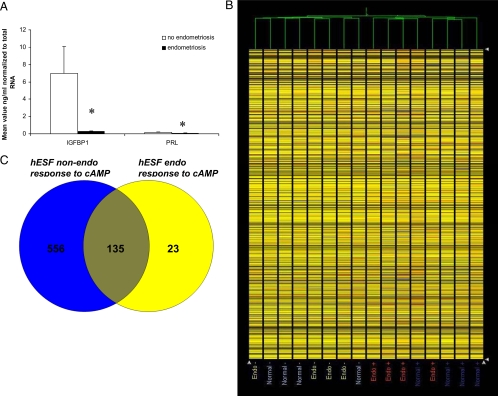
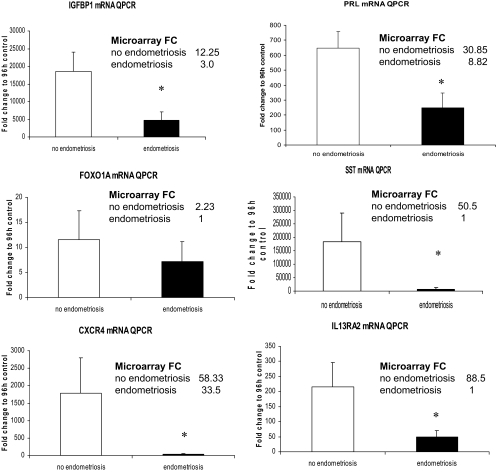
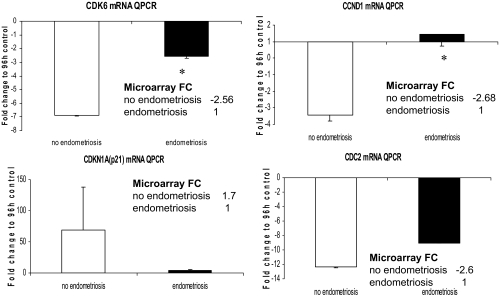
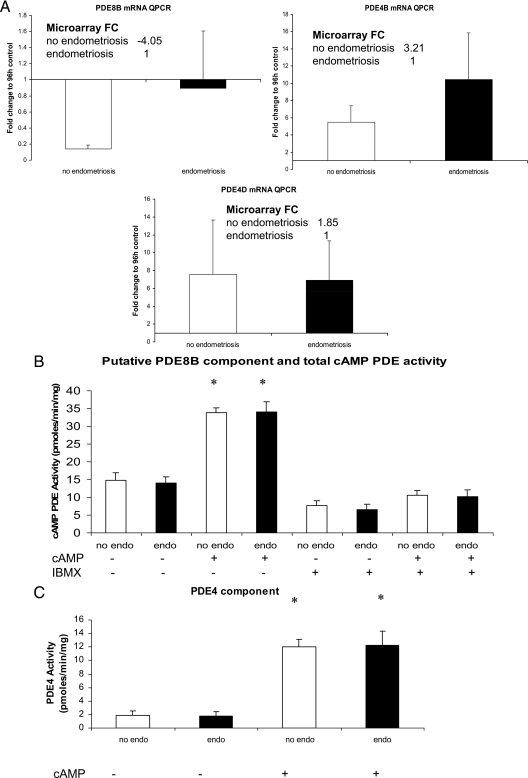
Intrinsic abnormalities in transplanted eutopic endometrium are believed to contribute to the pathogenesis of pelvic endometriosis. Herein we investigated transcriptomic differences in human endometrial stromal fibroblasts (hESFs) from women with (hESF(endo)) vs. without (hESF(nonendo)) endometriosis, in response to activation of the protein kinase A (PKA) pathway with 8-bromoadenosine-cAMP (8-Br-cAMP). hESF(nonendo) (n = 4) and hESF(endo) (n = 4) were isolated from eutopic endometrium and treated +/- 0.5 mm 8-Br-cAMP for 96 h. Purified total RNA was subjected to microarray analysis using the whole-genome Gene 1.0 ST Affymetrix platform. A total of 691 genes were regulated in cAMP-treated hESF(nonendo) vs. 158 genes in hESF(endo), suggesting a blunted response to cAMP/PKA pathway activation in women with disease. Real-time PCR and ELISA validated the decreased expression of decidualization markers in hESF(endo) compared with hESF(nonendo). In the absence of disease, 8-Br-cAMP down-regulated progression through the cell cycle via a decrease in cyclin D1, cyclin-dependent kinase 6, and cell division cycle 2 and an increase in cyclin-dependent kinase inhibitor 1A. However, cell cycle components in hESF(endo) were not responsive to 8-Br-cAMP, resulting in persistence of a proliferative phenotype. hESF(endo) treated with 8-Br-cAMP exhibited altered expression of immune response, extracellular matrix, cytoskeleton, and apoptosis genes. Changes in phosphodiesterase expression and activity were not different among experimental groups. These data support that eutopic hESF(endo) with increased proliferative potential can seed the pelvic cavity via retrograde menstruation and promote establishment, survival, and proliferation of endometriosis lesions, independent of hydrolysis of cAMP and likely due to an inherent abnormality in the PKA pathway.
Figures
References
-
- Giudice LC, Kao LC 2004 Endometriosis. Lancet 364:1789–1799 - PubMed
-
- Sampson JA 1927 Peritoneal endometriosis due to the menstrual dissemination of endometrial tissues into the peritoneal cavity. Am J Obstet Gynecol 14:422–469
-
- Berkley KJ, Rapkin AJ, Papka RE 2005 The pains of endometriosis. Science 308:1587–1589 - PubMed
-
- Burney RO, Giudice LC 2008 The pathogenesis of endometriosis. In: Nezhat CN, Nezhat FR, Nezhat C, eds. Nezhat’s operative gynecologic laparoscopy and hysteroscopy. New York: Cambridge University Press; 251–257
-
- Eskenazi B, Warner ML 1997 Epidemiology of endometriosis. Obstet Gynecol Clin North Am 24:235–258 - PubMed
Publication types
MeSH terms
Substances
Grants and funding
LinkOut - more resources
Full Text Sources
Other Literature Sources
Medical
Molecular Biology Databases
Research Materials
