


The impact of emotion on respiratory-related evoked potentials
- PMID: 20070570
- PMCID: PMC3612941
- DOI: 10.1111/j.1469-8986.2009.00956.x
The impact of emotion on respiratory-related evoked potentials
Abstract
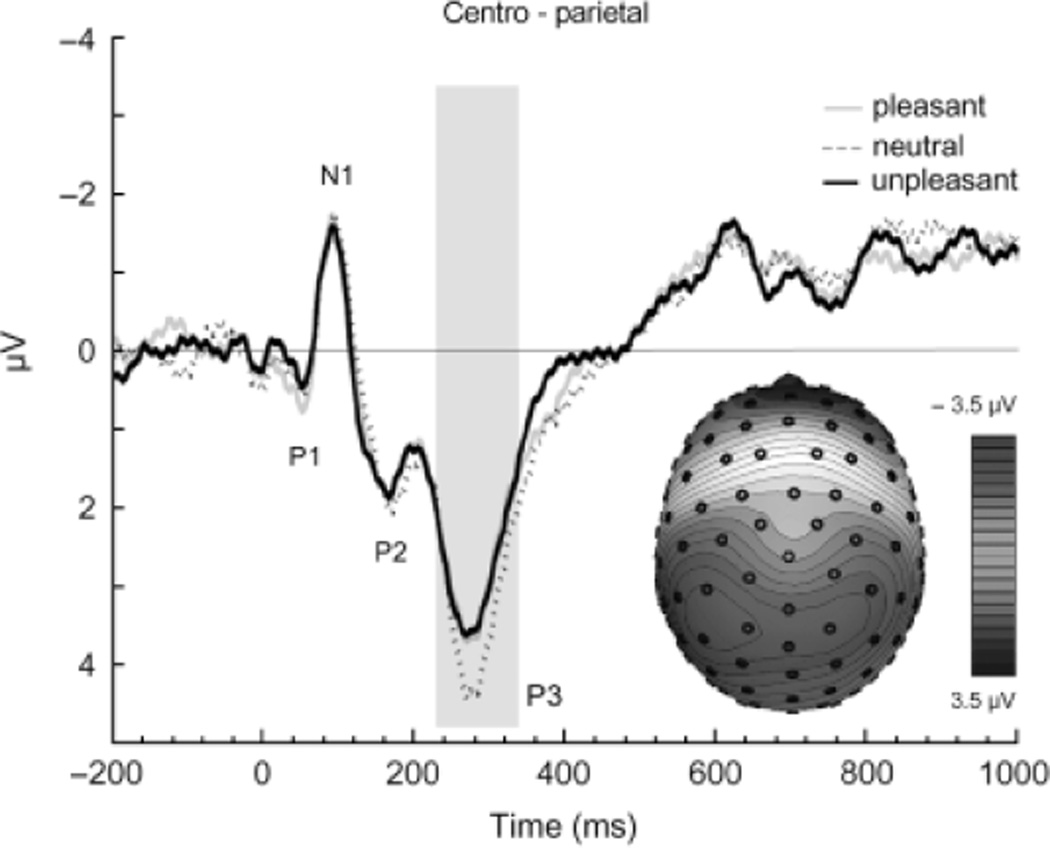
Emotion influences the perception of respiratory sensations, although the specific mechanism underlying this modulation is not yet clear. We examined the impact of viewing pleasant, neutral, and unpleasant affective pictures on the respiratory-related evoked potential (RREP) elicited by a short inspiratory occlusion in healthy volunteers. Reduced P3 amplitude of the RREP was found for respiratory probes presented when viewing pleasant or unpleasant series, when compared to those presented during the neutral series. Earlier RREP components, such as Nf, P1, N1, and P2, showed no modulation by emotion. The results suggest that emotion impacts the perception of respiratory sensations by reducing the attentional resources available for processing afferent respiratory sensory signals.
Figures
References
-
- Altose M, Cherniack N, Fishman AP. Respiratory sensations and dyspnea. Journal of Applied Physiology. 1985;58:1051–1054. - PubMed
-
- American Thoracic Society. Dyspnea: Mechanisms, assessment, and management: A consensus statement. American Journal of Respiratory and Critical Care Medicine. 1999;159:321–340. - PubMed
-
- Banzett RB, Dempsey JA, O’Donnell DE, Wamboldt MZ. Symptom perception and respiratory sensation in asthma. American Journal of Respiratory and Critical Care Medicine. 2000;162:1178–1182. - PubMed
-
- Barnes PJ. Blunted perception and death from asthma. The New England Journal of Medicine. 1994;330:1383–1384. - PubMed
-
- Barreiro E, Gea J, Sanjuas C, Marcos R, Broquetas J, Milic-Emili J. Dyspnoea at rest and at the end of different exercises in patients with near-fatal asthma. The European Respiratory Journal. 2004;24:219–225. - PubMed
Publication types
MeSH terms
Grants and funding
LinkOut - more resources
Full Text Sources
