


Spatiotemporal structure of molecular evolution of H5N1 highly pathogenic avian influenza viruses in Vietnam
- PMID: 20072619
- PMCID: PMC2799669
- DOI: 10.1371/journal.pone.0008631
Spatiotemporal structure of molecular evolution of H5N1 highly pathogenic avian influenza viruses in Vietnam
Abstract
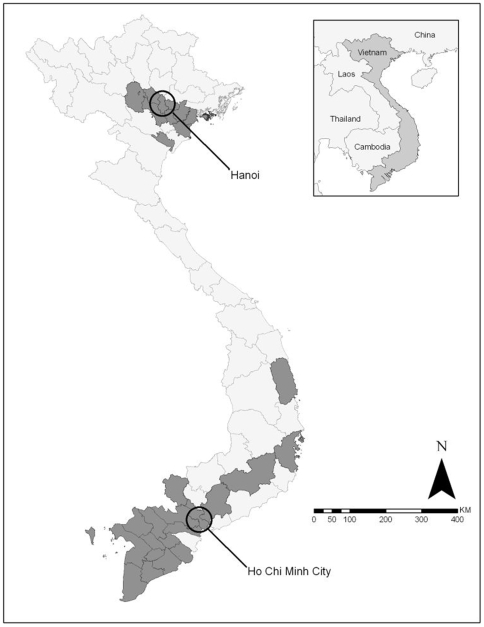
Background: Vietnam is one of the countries most affected by outbreaks of H5N1 highly pathogenic avian influenza viruses. First identified in Vietnam in poultry in 2001 and in humans in 2004, the virus has since caused 111 cases and 56 deaths in humans. In 2003/2004 H5N1 outbreaks, nearly the entire poultry population of Vietnam was culled. Our earlier study (Wan et al., 2008, PLoS ONE, 3(10): e3462) demonstrated that there have been at least six independent H5N1 introductions into Vietnam and there were nine newly emerged reassortants from 2001 to 2007 in Vietnam. H5N1 viruses in Vietnam cluster distinctly around Hanoi and Ho Chi Minh City. However, the nature of the relationship between genetic divergence and geographic patterns is still unclear.
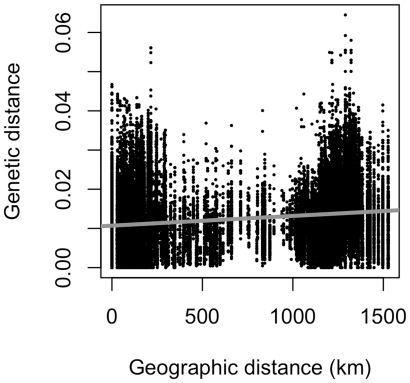
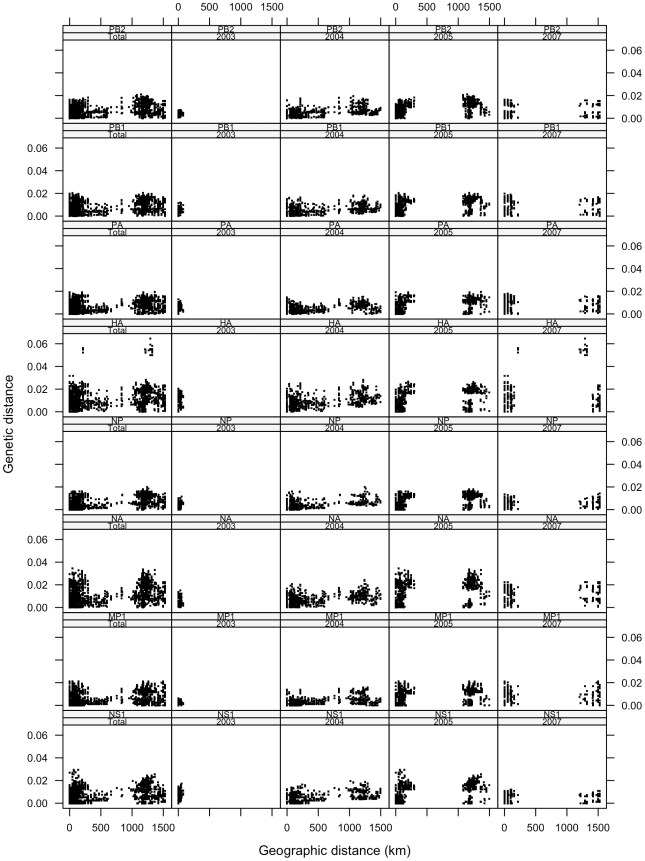
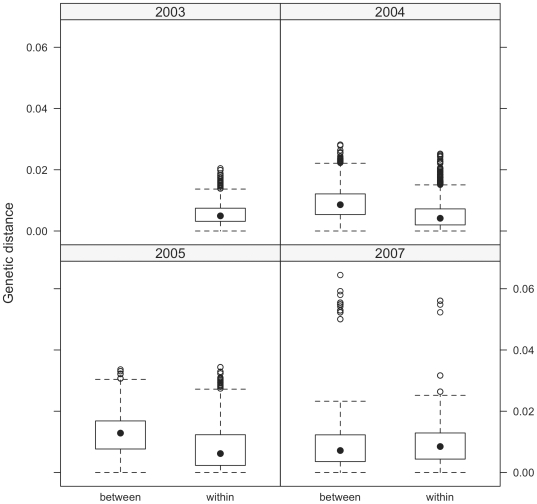
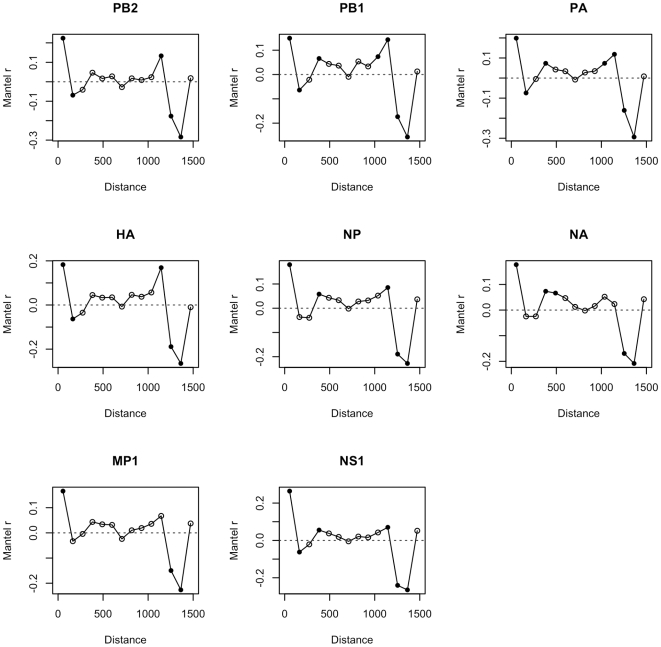
Methodology/principal findings: In this study, we hypothesized that genetic distances between H5N1 viruses in Vietnam are correlated with geographic distances, as the result of distinct population and environment patterns along Vietnam's long north to south longitudinal extent. Based on this hypothesis, we combined spatial statistical methods with genetic analytic techniques and explicitly used geographic space to explore genetic evolution of H5N1 highly pathogenic avian influenza viruses at the sub-national scale in Vietnam. Our dataset consisted of 125 influenza viruses (with whole genome sets) isolated in Vietnam from 2003 to 2007. Our results document the significant effect of space and time on genetic evolution and the rise of two regional centers of genetic mixing by 2007. These findings give insight into processes underlying viral evolution and suggest that genetic differentiation is associated with the distance between concentrations of human and poultry populations around Hanoi and Ho Chi Minh City.
Conclusions/significance: The results show that genetic evolution of H5N1 viruses in Vietnamese domestic poultry is highly correlated with the location and spread of those viruses in geographic space. This correlation varies by scale, time, and gene, though a classic isolation by distance pattern is observed. This study is the first to characterize the geographic structure of influenza viral evolution at the sub-national scale in Vietnam and can shed light on how H5N1 HPAIVs evolve in certain geographic settings.
Conflict of interest statement
Figures
References
-
- Webster RG, Guan Y, Poon L, Krauss S, Webby R, et al. The spread of the H5N1 bird flu epidemic in Asia in 2004. Arch Virol. 2005;Suppl (19)(19):117–129. - PubMed
-
- Chen H, Smith GJ, Zhang SY, Qin K, Wang J, et al. Avian flu: H5N1 virus outbreak in migratory waterfowl. Nature. 2005;436(7048):191–192. - PubMed
-
- Li KS, Guan Y, Wang J, Smith GJ, Xu KM, et al. Genesis of a highly pathogenic and potentially pandemic H5N1 influenza virus in eastern Asia. Nature. 2004;430(6996):209–213. - PubMed
Publication types
MeSH terms
Grants and funding
LinkOut - more resources
Full Text Sources
Medical
