


The role of infection in the aetiology of inflammatory bowel disease
- PMID: 20076977
- PMCID: PMC7087869
- DOI: 10.1007/s00535-009-0191-y
The role of infection in the aetiology of inflammatory bowel disease
Abstract
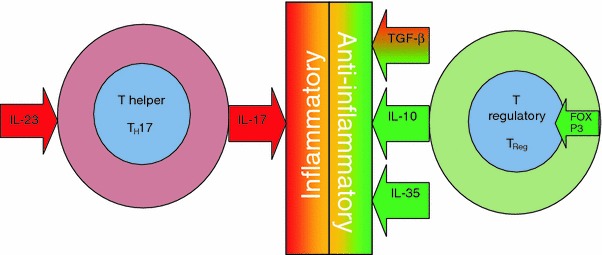
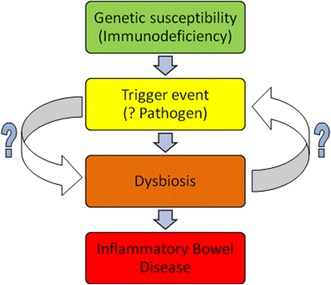
We have greatly increased our understanding of the genetics of inflammatory bowel disease (IBD) in the last decade; however, migrant studies highlight the importance of environment in disease risk. The possibility that IBD is an infection has been debated since the first description of Crohn's disease. Mycobacterium avium paratuberculosis was the first organism to be suggested as an IBD pathogen, and it has been argued that it fulfils Koch's postulates and could be designated the cause of Crohn's disease. Other organisms have been postulated as possible IBD pathogens, including various Helicobacter species, one of which has been identified in primate colitis;others are widely used in animal models of IBD. Adherent invasive Escherichia coli appear specific to ileal Crohn's disease and have been shown to induce the release of TNF-alpha, a key cytokine in IBD inflammation. The aim of this article is to give a concise overview of the infections postulated as being relevant to the onset of IBD. We will also briefly cover the immunology underpinning IBD, in addition to reviewing current knowledge regarding other microorganisms that are associated with modifying the risk of developing IBD. It may be that infectious organisms have an orchestrator role in the development of dysbiosis and subsequently IBD.
Figures
References
-
- Dalziel TK. Chronic interstitial enteritis. BMJ. 1913;2:1068–1070.
-
- Crohn BB, Ginsberg L, Oppenheimer GD. Regional ileitis: a clinical and pathological entity. JAMA. 1932;99:1323–1329.
-
- Loftus EV. Clinical epidemiology of inflammatory bowel disease: incidence, prevalence, and environmental influences. Gastroenterology. 2004;126(6):1504–1517. - PubMed
-
- Asakura K, Nishiwaki Y, Inoue N, Hibi T, Watanabe M, Takebayashi T. Prevalence of ulcerative colitis and Crohn’s disease in Japan. J Gastroenterol. 2009;44(7):659–665. - PubMed
Publication types
MeSH terms
Substances
Grants and funding
LinkOut - more resources
Full Text Sources
Medical
