


Reaction coordinate of isopenicillin N synthase: oxidase versus oxygenase activity
- PMID: 20078029
- PMCID: PMC2838496
- DOI: 10.1021/bi901772w
Reaction coordinate of isopenicillin N synthase: oxidase versus oxygenase activity
Abstract
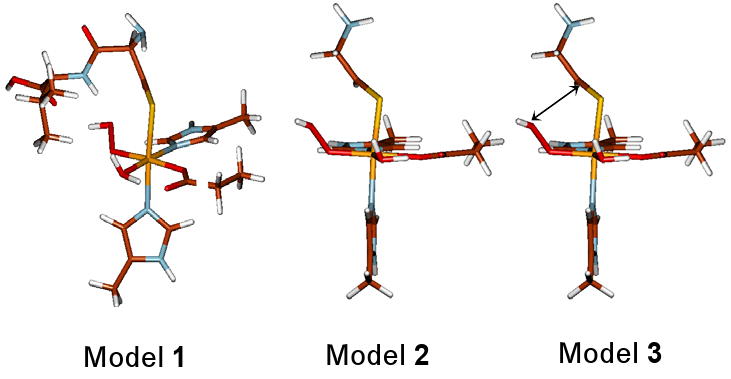
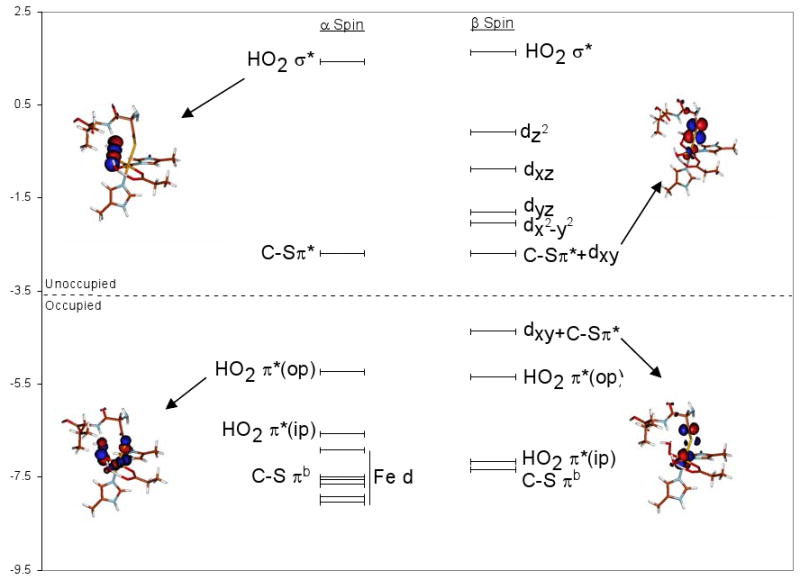
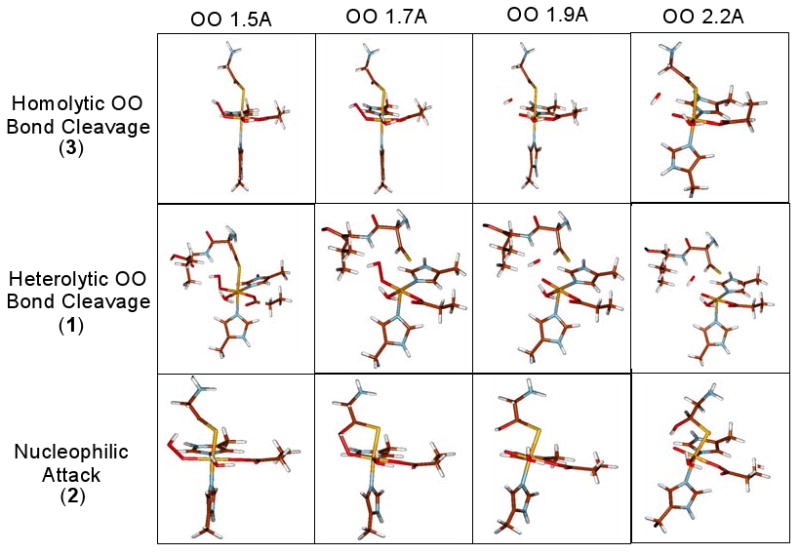
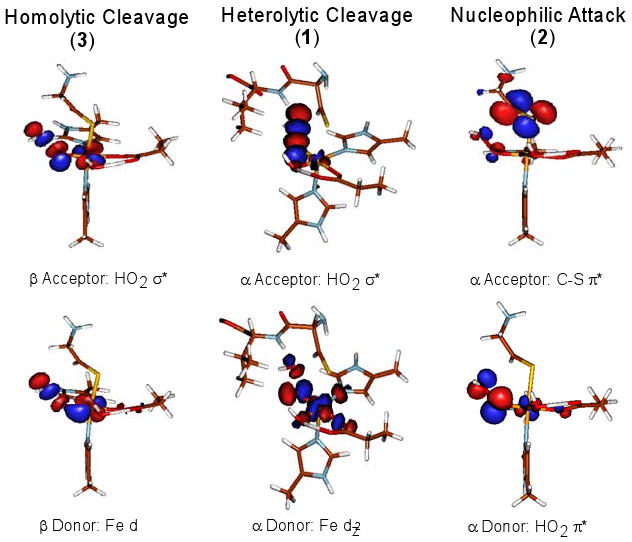
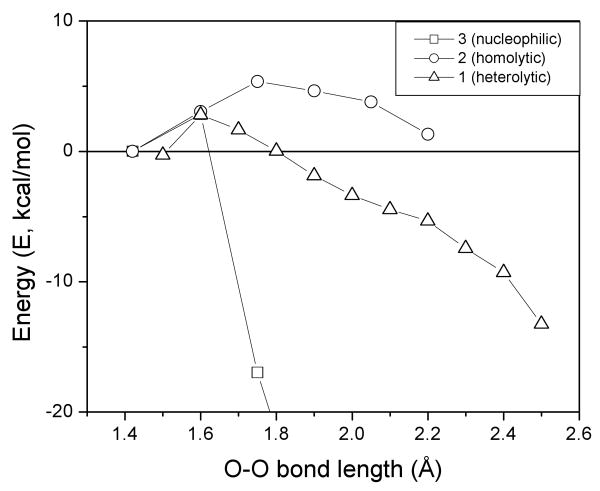
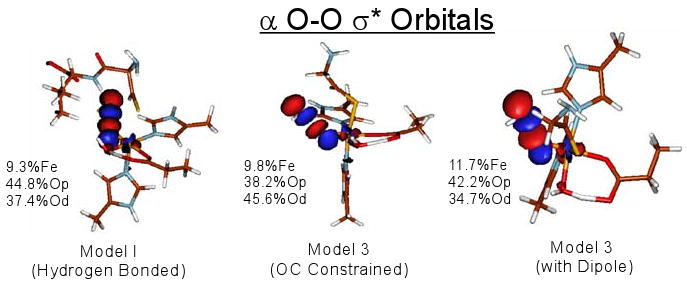
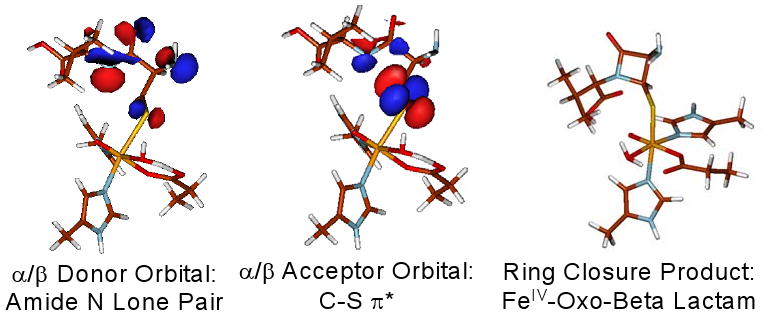
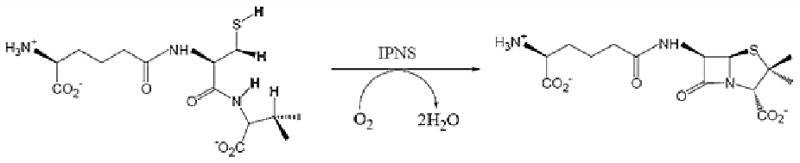
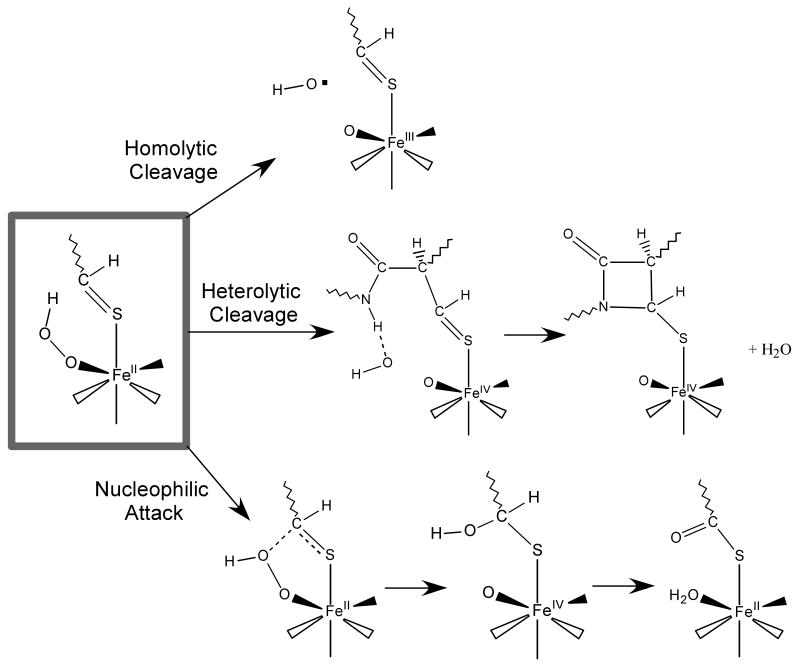
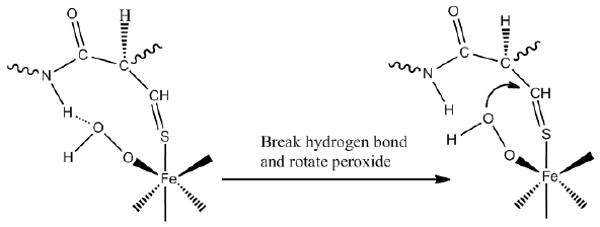
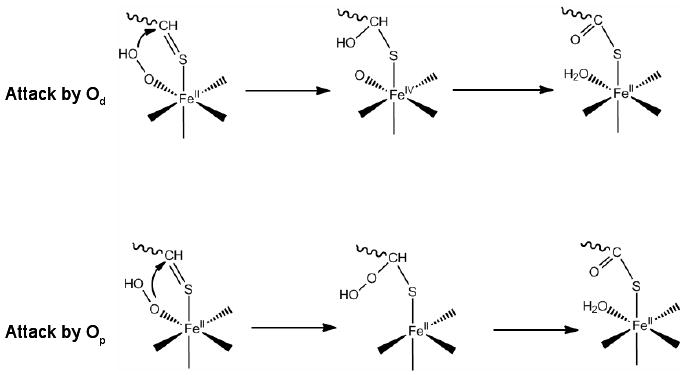
Isopenicillin N synthase (IPNS) can have both oxidase and oxygenase activity depending on the substrate. For the native substrate, ACV, oxidase activity exists; however, for the substrate analogue ACOV, which lacks an amide nitrogen, IPNS exhibits oxygenase activity. The potential energy surfaces for the O-O bond elongation and cleavage were calculated for three different reactions: homolytic cleavage via traditional Fenton chemistry, heterolytic cleavage, and nucleophilic attack. These surfaces show that the hydroperoxide-ferrous intermediate, formed by O(2)-activated H atom abstraction from the substrate, can exploit different reaction pathways and that interactions with the substrate govern the pathway. The hydrogen bonds from hydroperoxide to the amide nitrogen of ACV polarize the sigma* orbital of the peroxide toward the proximal oxygen, facilitating heterolytic cleavage. For the substrate analogue ACOV, this hydrogen bond is no longer present, leading to nucleophilic attack on the substrate intermediate C-S bond. After cleavage of the hydroperoxide, the two reaction pathways proceed with minimal barriers, resulting in the closure of the beta-lactam ring for the oxidase activity (ACV) or formation of the thiocarboxylate for oxygenase activity (ACOV).
Figures
References
-
- Baldwin JE, Adlington RM, Moroney SE, Field LD, Ting HH. Stepwise Ring-Closure in Penicillin Biosynthesis - Initial Beta-Lactam Formation. J Chem Soc Chem Commun. 1984:984–986.
-
- Baldwin JE, Abraham E. The Biosynthesis of Penicillins and Cephalosporins. Nat Prod Rep. 1988;5:129–145. - PubMed
-
- Chen P, Solomon EI. Oxygen activation by the noncoupled binuclear copper site in peptidylglycine alpha-hydroxylating monooxygenase. Reaction mechanism and role of the noncoupled nature of the active site. J Am Chem Soc. 2004;126:4991–5000. - PubMed
-
- Orville AM, Chen VJ, Kriauciunas A, Harpel MR, Fox BG, Munck E, Lipscomb JD. Thiolate Ligation of the Active-Site Fe2+ of Isopenicillin-N Synthase Derives from Substrate Rather Than Endogenous Cysteine - Spectroscopic Studies of Site-Specific Cys -] Ser Mutated Enzymes. Biochemistry. 1992;31:4602–4612. - PubMed
-
- Randall CR, Zang Y, True AE, Que L, Charnock JM, Garner CD, Fujishima Y, Schofield CJ, Baldwin JE. X-Ray-Absorption Studies of the Ferrous Active-Site of Isopenicillin N-Synthase and Related Model Complexes. Biochemistry. 1993;32:6664–6673. - PubMed
Publication types
MeSH terms
Substances
Grants and funding
LinkOut - more resources
Full Text Sources
