


Light changes the atmospheric reactivity of soot
- PMID: 20080580
- PMCID: PMC2872373
- DOI: 10.1073/pnas.0908341107
Light changes the atmospheric reactivity of soot
Abstract
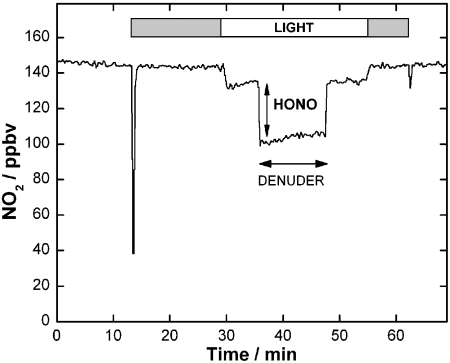
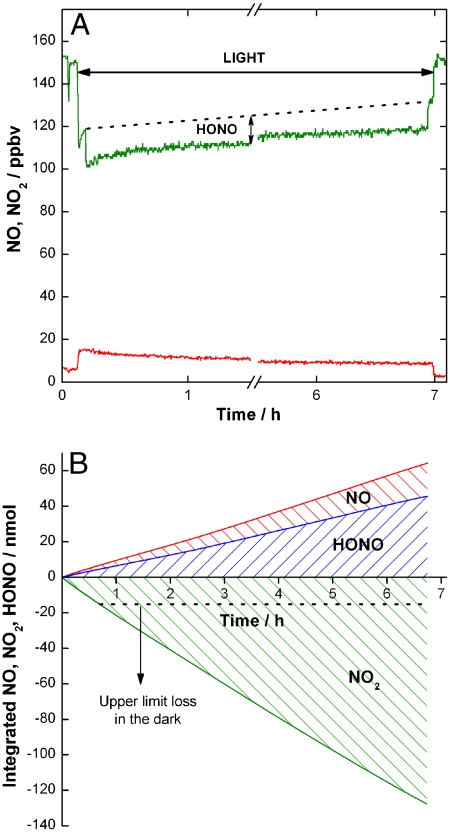
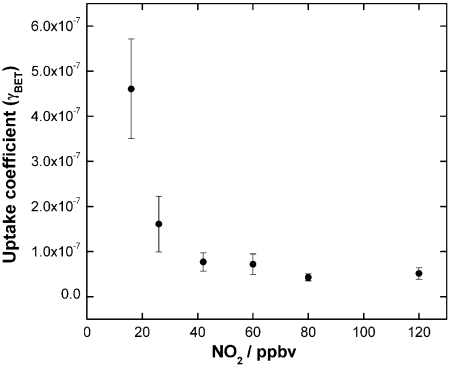
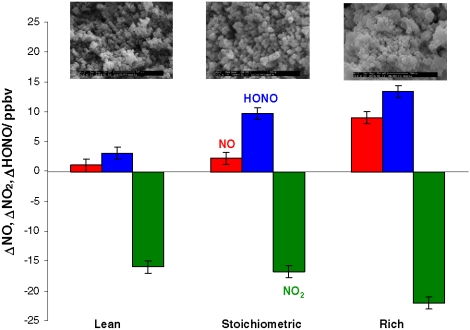
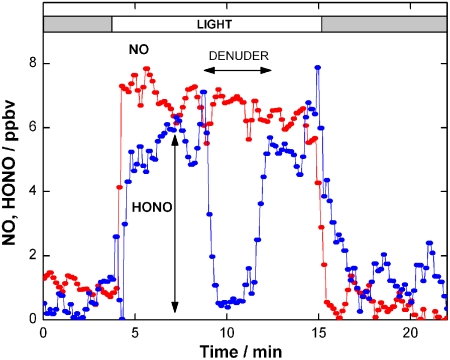
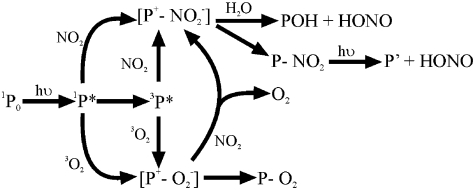
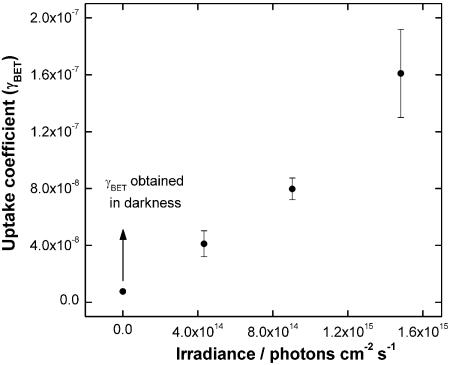
Soot particles produced by incomplete combustion processes are one of the major components of urban air pollution. Chemistry at their surfaces lead to the heterogeneous conversion of several key trace gases; for example NO(2) interacts with soot and is converted into HONO, which rapidly photodissociates to form OH in the troposphere. In the dark, soot surfaces are rapidly deactivated under atmospheric conditions, leading to the current understanding that soot chemistry affects tropospheric chemical composition only in a minor way. We demonstrate here that the conversion of NO(2) to HONO on soot particles is drastically enhanced in the presence of artificial solar radiation, and leads to persistent reactivity over long periods. Soot photochemistry may therefore be a key player in urban air pollution.
Conflict of interest statement
The authors declare no conflict of interest.
Figures
References
-
- Forster P, et al. Changes in Atmospheric Constituents and in Radiative Forcing. 2007 http://ipcc-wg1.ucar.edu/wg1/wg1-report.html.
-
- Jacobson MZ. Strong radiative heating due to the mixing state of black carbon in atmospheric aerosols. Nature. 2001;409(6821):695–697. - PubMed
-
- Akhter MS, Chughtai AR, Smith DM. The structure of hexane soot I: Spectroscopic Studies. Appl Spectrosc. 1985;39(1):143–153.
-
- Akhter MS, Chughtai AR, Smith DM. The structure of hexane soot II: Extraction studies. Appl Spectrosc. 1985;39(1):154–167.
-
- IARC. Overall evaluations of carcinogenicity: An updating of IARC Monographs volumes 1 to 42. IARC Monogr Eval Carcinog Risks Hum Suppl . 1987;7:1–440. - PubMed
Publication types
MeSH terms
Substances
LinkOut - more resources
Full Text Sources
