. 2010 May;23(5):743-50.
doi: 10.1038/modpathol.2009.189. Epub 2010 Jan 15.

Carbonic anhydrase II. A novel biomarker for gastrointestinal stromal tumors

Affiliations

Carbonic anhydrase II. A novel biomarker for gastrointestinal stromal tumors

Seppo Parkkila et al. Mod Pathol. 2010 May.

Abstract

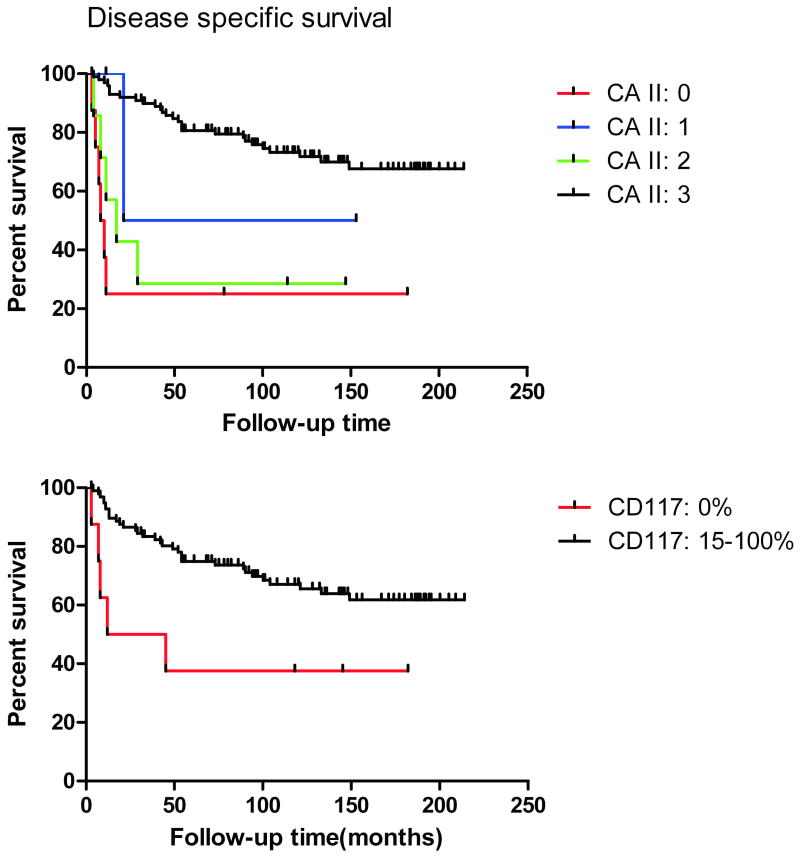
Gastrointestinal stromal tumors (GISTs) are clinically distinct mesenchymal tumors, which generally result from expression of mutant KIT or PDGFRA receptor tyrosine kinase oncogenes. Most GISTs feature strong expression of KIT that serves as a crucial diagnostic adjunct. However, a subset of tumors lacks KIT expression and otherwise may also be difficult to distinguish from other sarcomas, including leiomyosarcoma. Because various carbonic anhydrase (CA) isozymes have been identified as potential treatment targets against different cancers, we evaluated CA II expression in 175 GISTs. Western blotting experiments indicated that CA II is highly expressed in GIST cell lines. Immunohistochemically, 95% of GISTs showed positive signal. The CA II expression in GISTs did not correlate with particular KIT or PDGFRA mutation types. CA II immunoreactivity was absent or low in other mesenchymal tumor categories analyzed. High CA II expression was associated with a better disease-specific survival rate than low or no expression (Mantel-Cox test, P<0.0001). The present results indicate that CA II is overexpressed in most GISTs, is quite selective to this tumor type among mesenchymal tumors, and therefore might be a useful biomarker in diagnostics.


Conflict of interest statement

Disclosure/Conflict of Interest: None

Figures

Figure 1
Figure 1
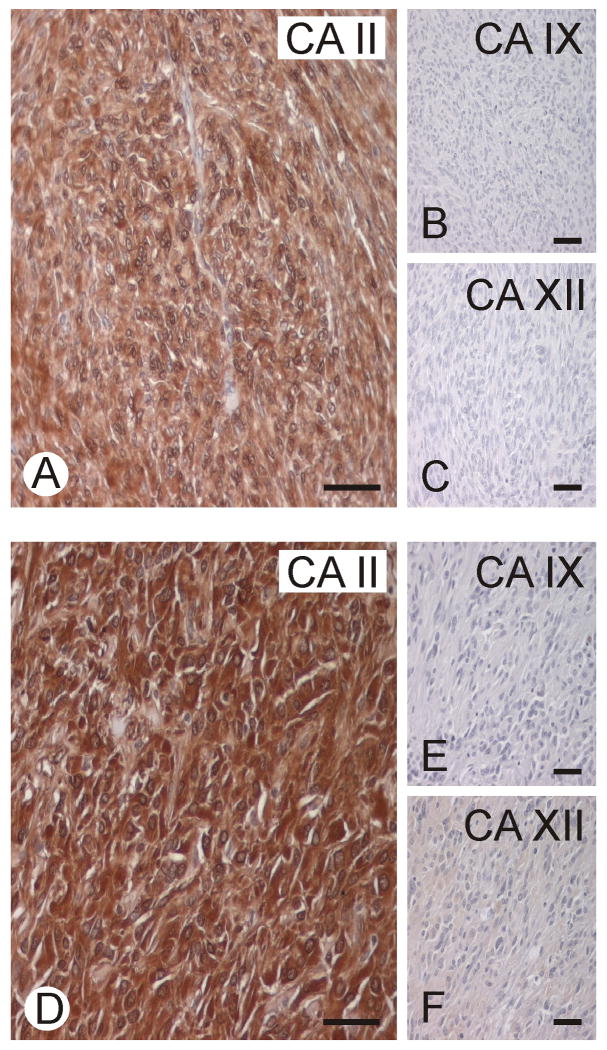
Two representative GISTs immunostained for CA II, CA IX, and CA XII. CA II shows strong immunoreaction, whereas CA IX and XII remained negative. Bars = 50 μm.
Figure 2
Figure 2
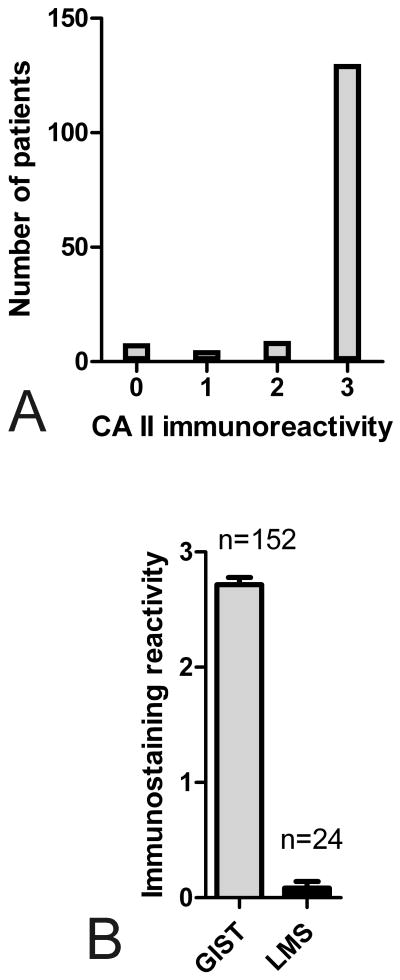
A. CA II immunoreactivity in 152 GISTs. Most specimens showed strong signal for CA II enzyme. B. Comparison of mean (+/- SEM) CA II immunoreactions in GISTs and leiomyosarcomas (LMS). CA II usually showed strong immunoreactions in GISTs, whereas LMS specimens showed negligible signals.
Figure 3
Figure 3
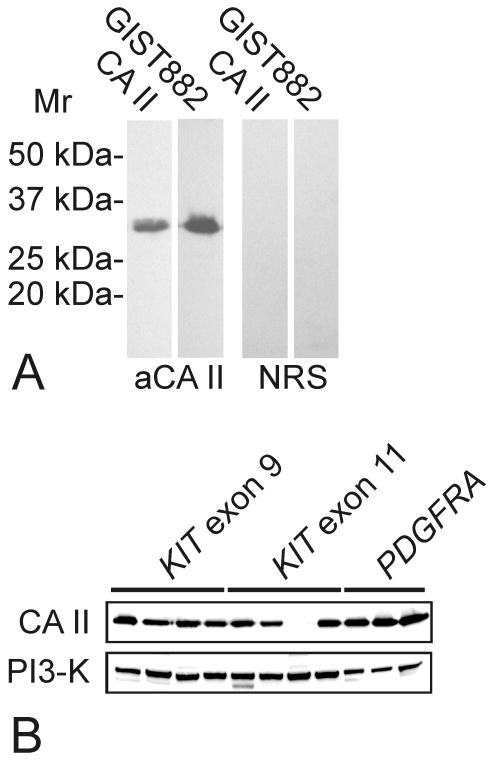
A. Western blotting of CA II in GIST882 cells. A positive 30 kDa polypeptide of CA II was observed in the cultured cells. Recombinant human CA II was used as a positive control (the first lane). NRS = normal rabbit serum. B. In Western blotting of primary tumors, CA II was expressed strongly in most GISTs, irrespective of KIT or PDGFRA mutation type. Phosphoinositide-3- kinase (PI3-K) stain was a loading control.
Figure 4
Figure 4
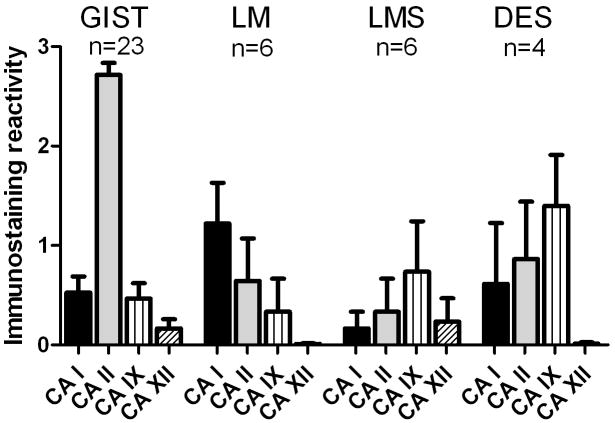
Distribution of mean (+/- SEM) immunostaining reactivities for CA I, CA II, CA IX, and CA XII in GISTs and other mesenchymal tumors. The strongest immunoreactivities were observed for CA II in GISTs. LM = leiomyoma, LMS = leiomyosarcoma, DES = desmoid tumor.
Figure 5
Figure 5
Disease-specific survival of GIST patients categorized according to the CA II or c-KIT (CD117) immunostaining results. Positive reactions for KIT and strong staining for CA II indicated significantly better survival rates.
Figure 6
Figure 6
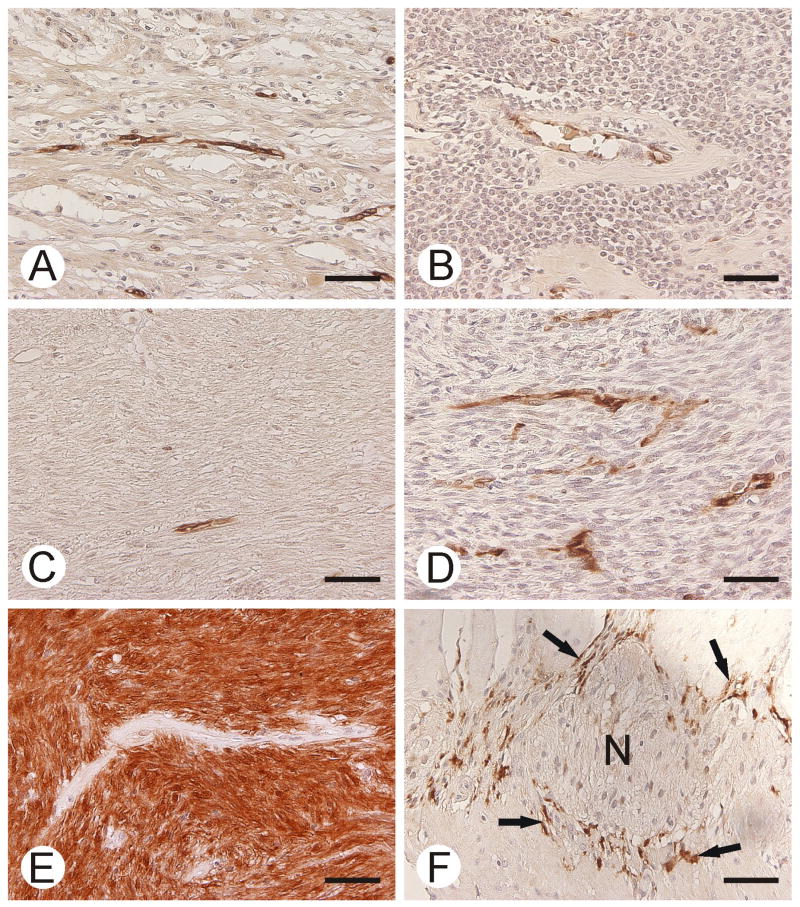
CA II immunostaining in gastric schwannoma (A), gastric glomus tumor (B), esophageal leiomyoma (C), malignant peripheral nerve sheath tumor (D), GIST (E), and normal smooth muscle (F). GIST shows strong staining for CA II. Capillary endothelium is positive in all other tumor specimens. Note the positive immunoreactions in Cajal cells (arrows in F). Neural myenteric plexus (N) is negative. Bars = 50 μm.

References

    1. Fletcher JA, Rubin BP. KIT mutations in GIST. Curr Opin Genet Dev. 2007;17:3–7. - PubMed
    1. Lasota J, Miettinen M. Clinical significance of oncogenic KIT and PDGFRA mutations in gastrointestinal stromal tumours. Histopathology. 2008;53:245–66. - PubMed
    1. Miettinen M, Lasota J. Gastrointestinal stromal tumors: review on morphology, molecular pathology, prognosis, and differential diagnosis. Arch Pathol Lab Med. 2006;130:1466–78. - PubMed
    1. Kindblom LG, Remotti HE, Aldenborg F, Meis-Kindblom JM. Gastrointestinal pacemaker cell tumor (GIPACT): gastrointestinal stromal tumors show phenotypic characteristics of the interstitial cells of Cajal. Am J Pathol. 1998;152:1259–69. - PMC - PubMed
    1. DeMatteo RP, Lewis JJ, Leung D, et al. Two hundred gastrointestinal stromal tumors: recurrence patterns and prognostic factors for survival. Ann Surg. 2000;231:51–8. - PMC - PubMed

Publication types

MeSH terms