


Effect of moderate diet-induced weight loss and weight regain on cardiovascular structure and function
- PMID: 20082927
- PMCID: PMC2818984
- DOI: 10.1016/j.jacc.2009.07.054
Effect of moderate diet-induced weight loss and weight regain on cardiovascular structure and function
Abstract
Objectives: The objective of this prospective, single-site, 2-year dietary intervention study was to evaluate the effects of moderate weight reduction and subsequent partial weight regain on cardiovascular structure and function.
Background: Obesity is associated with adverse cardiac and vascular structural and functional alterations.
Methods: Sixty obese subjects (age 46 + or - 10 years, body mass index 37 + or - 3 kg/m(2)) were evaluated during their participation in a weight loss study. Cardiac and vascular ultrasound studies were performed at baseline and at 3, 6, 12, and 24 months after start of intervention.
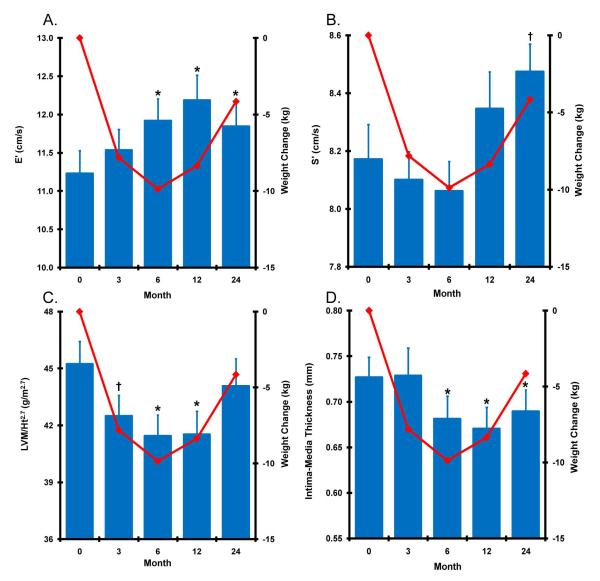
Results: Forty-seven subjects (78%) completed the entire 2-year follow-up. Average weight loss was 7.3 + or - 4.0%, 9.2 + or - 5.6%, 7.8 + or - 6.6%, and 3.8 + or - 7.9% at 3, 6, 12, and 24 months, respectively. Age- and sex-adjusted mixed linear models revealed that the follow-up time was significantly associated with decreases in weight (p < 0.0001), left ventricular (LV) mass (p = 0.001), and carotid intima-media thickness (p < 0.0001); there was also significant improvement in LV diastolic (p < or = 0.0001) and systolic (p = 0.001) function. Partial weight regain diminished the maximal observed beneficial effects of weight loss, however cardiovascular parameters measured at 2 years still showed a net benefit compared with baseline.
Conclusions: Diet-induced moderate weight loss in obese subjects is associated with beneficial changes in cardiovascular structure and function. Subsequent weight regain is associated with partial loss of these beneficial effects. (The Safety and Effectiveness of Low and High Carbohydrate Diets; NCT00079547).
Figures
References
-
- Kenchaiah S, Evans JC, Levy D, Wilson PW, Benjamin EJ, Larson MG, Kannel WB, Vasan RS. Obesity and the risk of heart failure. N Engl J Med. 2002;347:305–13. - PubMed
-
- Alpert MA. Obesity cardiomyopathy: pathophysiology and evolution of the clinical syndrome. Am J Med Sci. 2001;321:225–36. - PubMed
-
- Peterson LR, Waggoner AD, Schechtman KB, Meyer T, Gropler RJ, Barzilai B, Davila-Roman VG. Alterations in left ventricular structure and function in young healthy obese women: assessment by echocardiography and tissue Doppler imaging. J Am Coll Cardiol. 2004;43:1399–404. - PubMed
-
- Wong CY, O’Moore-Sullivan T, Leano R, Byrne N, Beller E, Marwick TH. Alterations of left ventricular myocardial characteristics associated with obesity. Circulation. 2004;110:3081–7. - PubMed
-
- Alaud-din A, Meterissian S, Lisbona R, MacLean LD, Forse RA. Assessment of cardiac function in patients who were morbidly obese. Surgery. 1990;108:809–18. - PubMed
Publication types
MeSH terms
Substances
Associated data
Grants and funding
LinkOut - more resources
Full Text Sources
Other Literature Sources
Medical
