GRASP55 and GRASP65 play complementary and essential roles in Golgi cisternal stacking
- PMID: 20083603
- PMCID: PMC2812519
- DOI: 10.1083/jcb.200907132
GRASP55 and GRASP65 play complementary and essential roles in Golgi cisternal stacking
Abstract
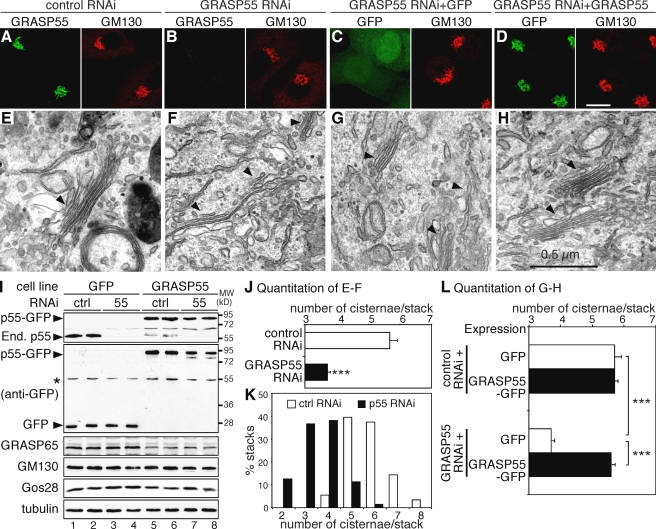
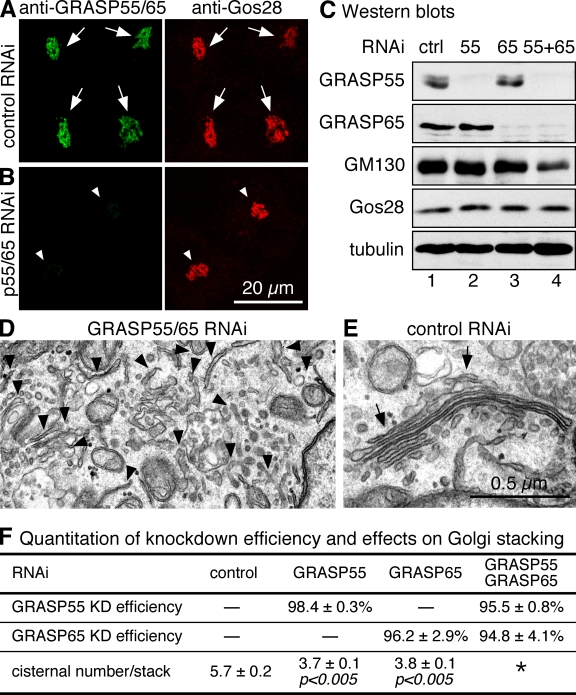
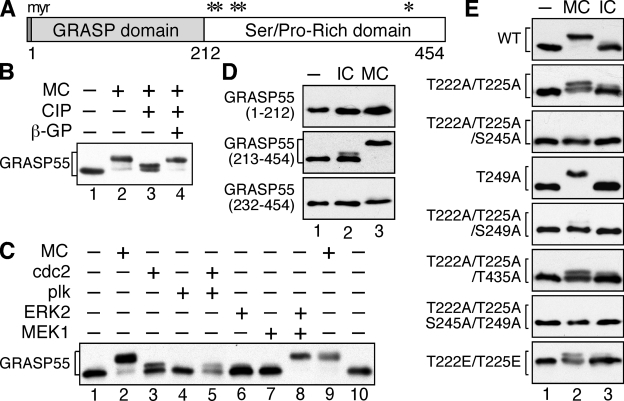
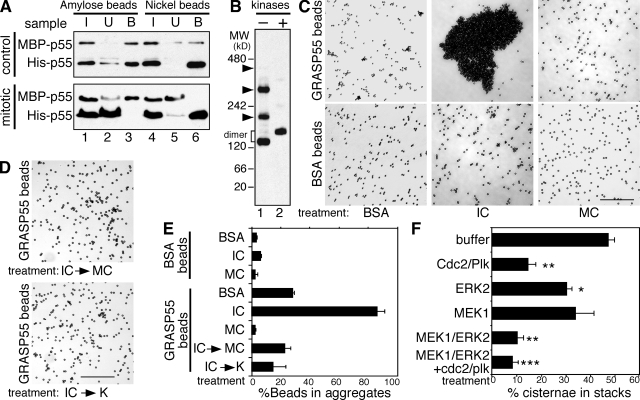
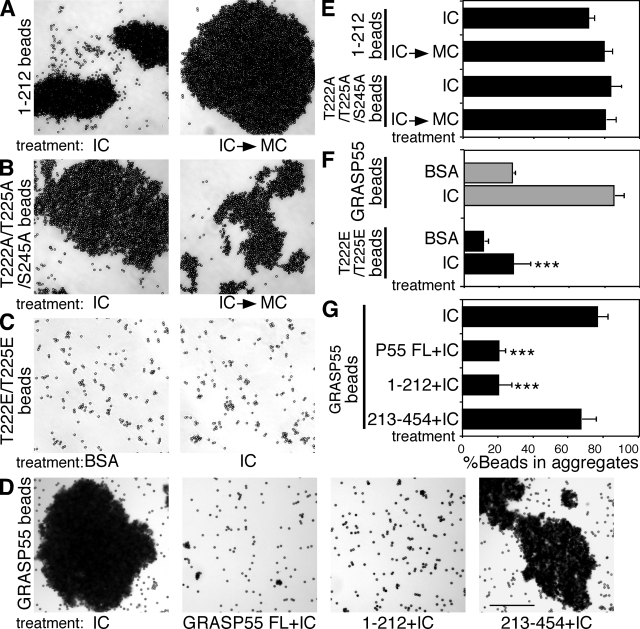
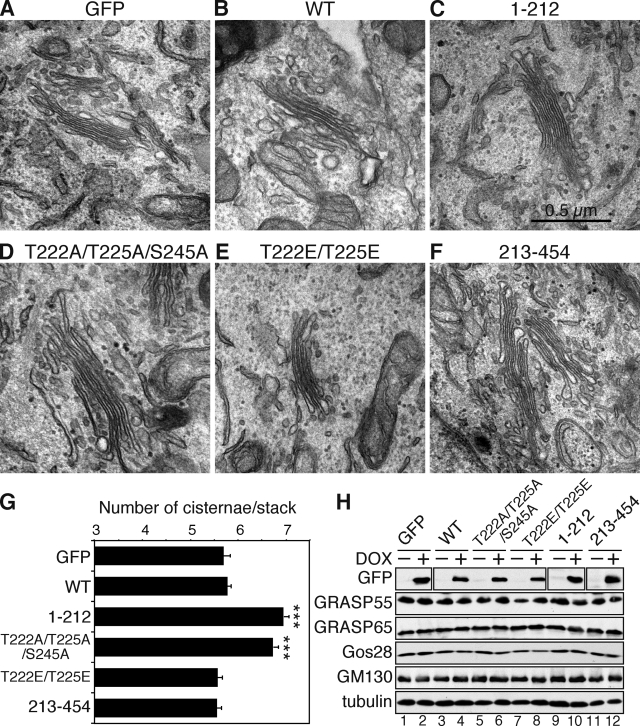
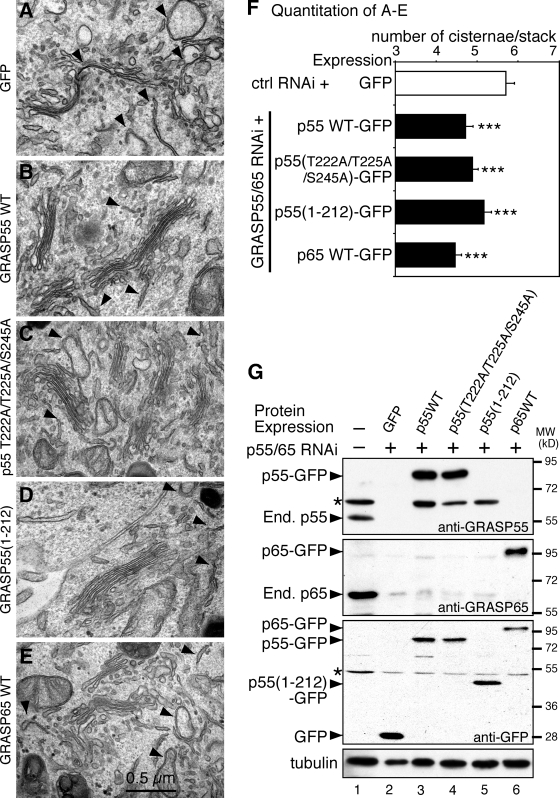
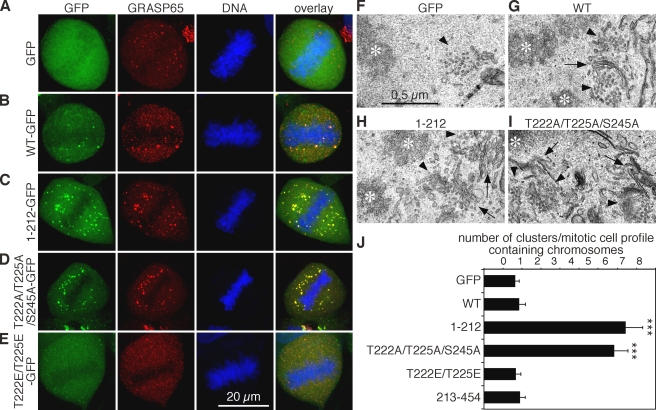
In vitro studies have suggested that Golgi stack formation involves two homologous peripheral Golgi proteins, GRASP65 and GRASP55, which localize to the cis and medial-trans cisternae, respectively. However, no mechanism has been provided on how these two GRASP proteins work together to stack Golgi cisternae. Here, we show that depletion of either GRASP55 or GRASP65 by siRNA reduces the number of cisternae per Golgi stack, whereas simultaneous knockdown of both GRASP proteins leads to disassembly of the entire stack. GRASP55 stacks Golgi membranes by forming oligomers through its N-terminal GRASP domain. This process is regulated by phosphorylation within the C-terminal serine/proline-rich domain. Expression of nonphosphorylatable GRASP55 mutants enhances Golgi stacking in interphase cells and inhibits Golgi disassembly during mitosis. These results demonstrate that GRASP55 and GRASP65 stack mammalian Golgi cisternae via a common mechanism.
Figures
References
Publication types
MeSH terms
Substances
Grants and funding
LinkOut - more resources
Full Text Sources
Molecular Biology Databases