


High defibrillation threshold: the science, signs and solutions
- PMID: 20084193
- PMCID: PMC2803603
High defibrillation threshold: the science, signs and solutions
Abstract
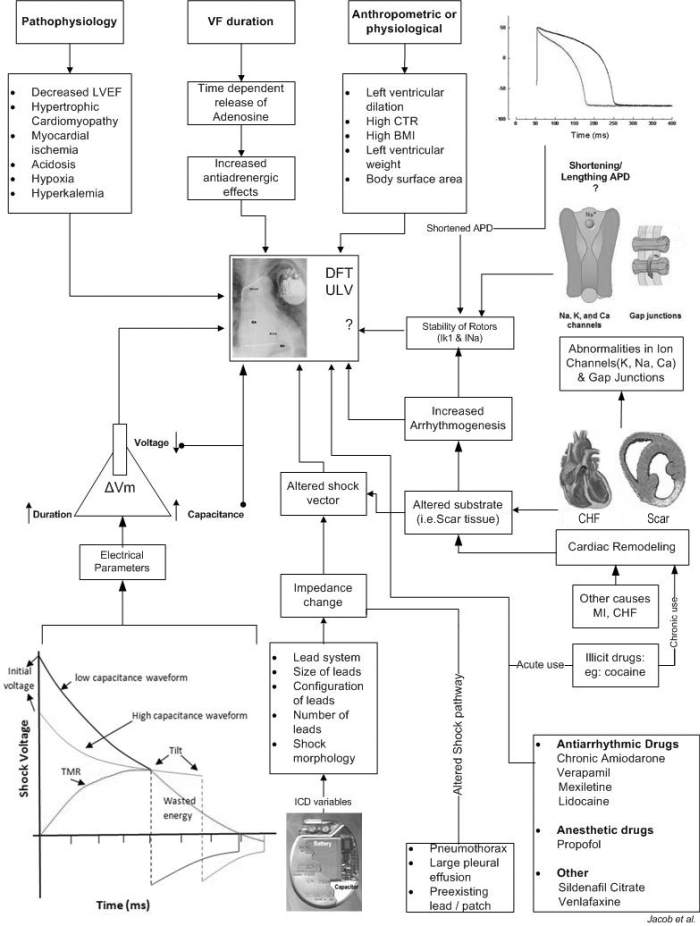
Defibrillation threshold (DFT) testing has traditionally been an integral part of implantable cardioverter defibrillator (ICD) implantation. With the increasing number of patients receiving ICDs, physicians are encountering high DFT more often than before. Tackling the problem of high DFT, warrants an in-depth understanding of the science of defibrillation including the key electrophysiological concepts and the underlying molecular mechanisms. Numerous factors have been implicated in the causation of high DFT. Due consideration to the past medical history, pharmacotherapy, laboratory data and cardiac imaging, help in assessing the pre-procedural risk for occurrence of high DFT. Drugs, procedural changes, type and location of ICD lead system are some of the key players in predicting DFT during implantation. In the event of encountering an unacceptably high DFT, we recommend to follow a step-wise algorithm. Ruling out procedural complications like pneumothorax and tamponade is imperative before embarking on a search for potentially reversible clinical or metabolic derangements. Finally, if these attempts fail, the electrophysiologist must choose from a wide range of options for device adjustment and system modification. Although this review article is meant to be a treatise on the science, signs and solutions for high DFT, it is bound by limitations of space and scope of the article.
Keywords: DFT; Defibrillation threshold testing; implantable cardioverter defibrillator.
Figures
References
-
- A comparison of antiarrhythmic-drug therapy with implantable defibrillators in patients resuscitated from near-fatal ventricular arrhythmias. The Antiarrhythmics versus Implantable Defibrillators (AVID) Investigators. N Engl J Med. 1997;337:1576. - PubMed
-
- Klein H, et al. New primary prevention trials of sudden cardiac death in patients with left ventricular dysfunction: SCD-HEFT and MADIT-II. Am J Cardiol. 1999;83:91D. - PubMed
-
- Nanthakumar K, et al. Prophylactic implantable cardioverter-defibrillator therapy in patients with left ventricular systolic dysfunction: a pooled analysis of 10 primary prevention trials. J Am Coll Cardiol. 2004;44:2166. - PubMed
-
- Lee DS, et al. Effectiveness of implantable defibrillators for preventing arrhythmic events and death: a meta-analysis. J Am Coll Cardiol. 2003;41:1573. - PubMed
-
- Liu QM, et al. Defibrillation threshold testing: is it necessary during implantable cardioverter-defibrillator implantation? Med Hypotheses. 2009;72:147. - PubMed
LinkOut - more resources
Full Text Sources
Miscellaneous