


An attempt to improve bilateral cochlear implants by increasing the distance between electrodes and providing complementary information to the two ears
- PMID: 20085200
- PMCID: PMC2857406
- DOI: 10.3766/jaaa.21.1.7
An attempt to improve bilateral cochlear implants by increasing the distance between electrodes and providing complementary information to the two ears
Abstract
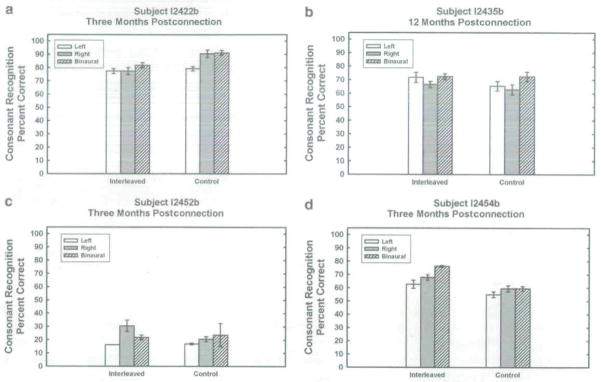
Objectives: The purpose of this investigation was to determine if adult bilateral cochlear implant recipients could benefit from using a speech processing strategy in which the input spectrum was interleaved among electrodes across the two implants.
Design: Two separate experiments were conducted. In both experiments, subjects were tested using a control speech processing strategy and a strategy in which the full input spectrum was filtered so that only the output of half of the filters was audible to one implant, while the output of the alternative filters was audible to the other implant. The filters were interleaved in a way that created alternate frequency "holes" between the two cochlear implants.
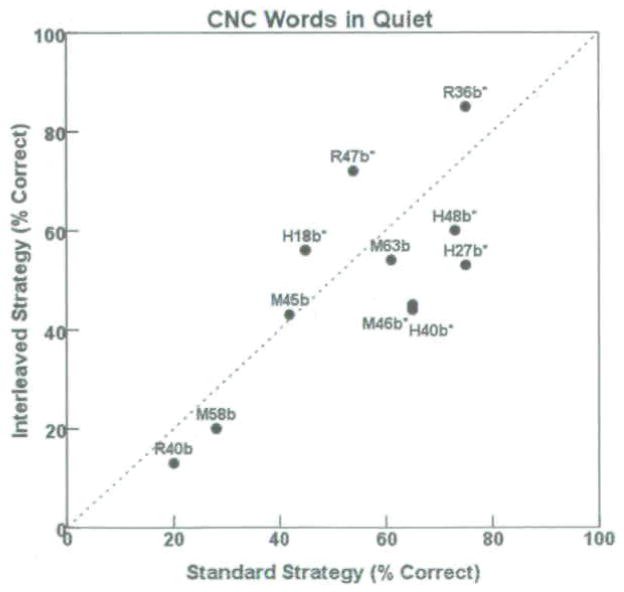
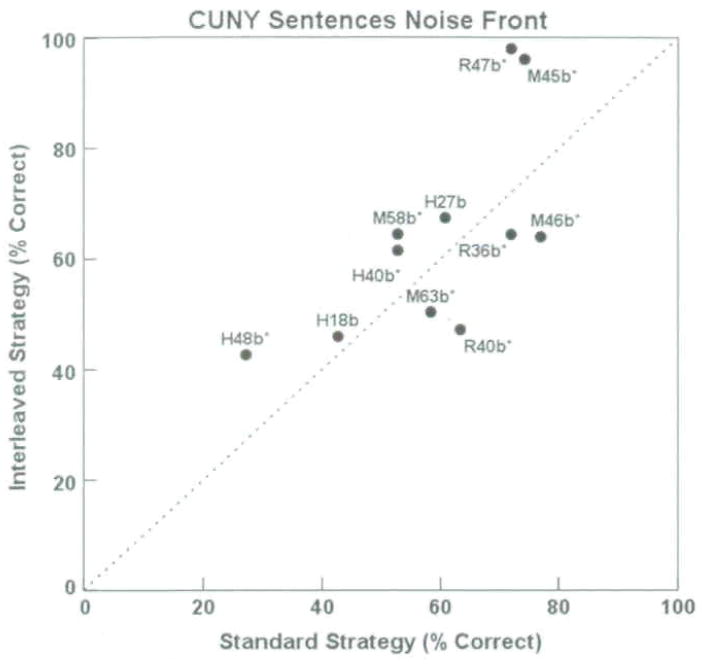
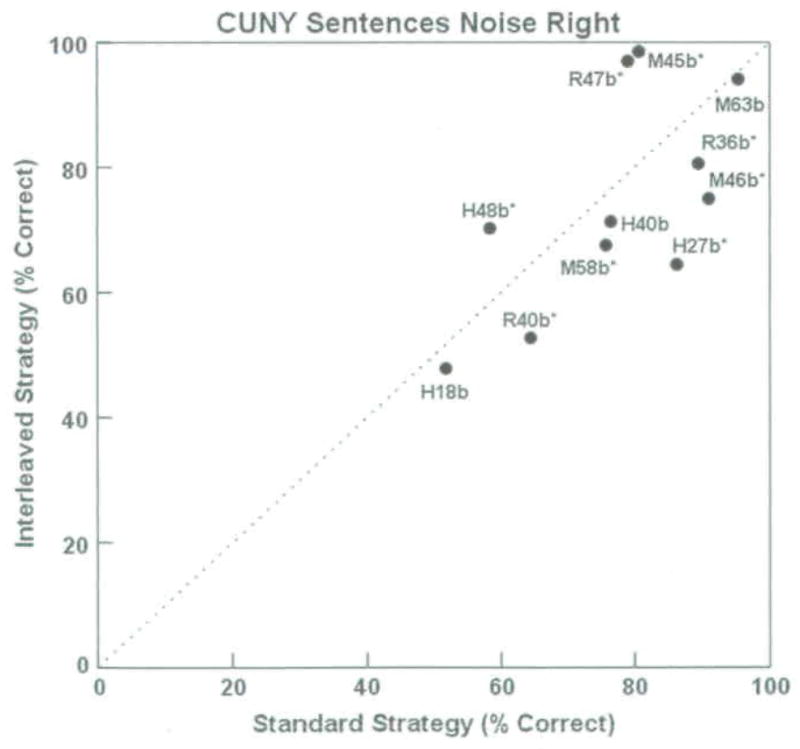
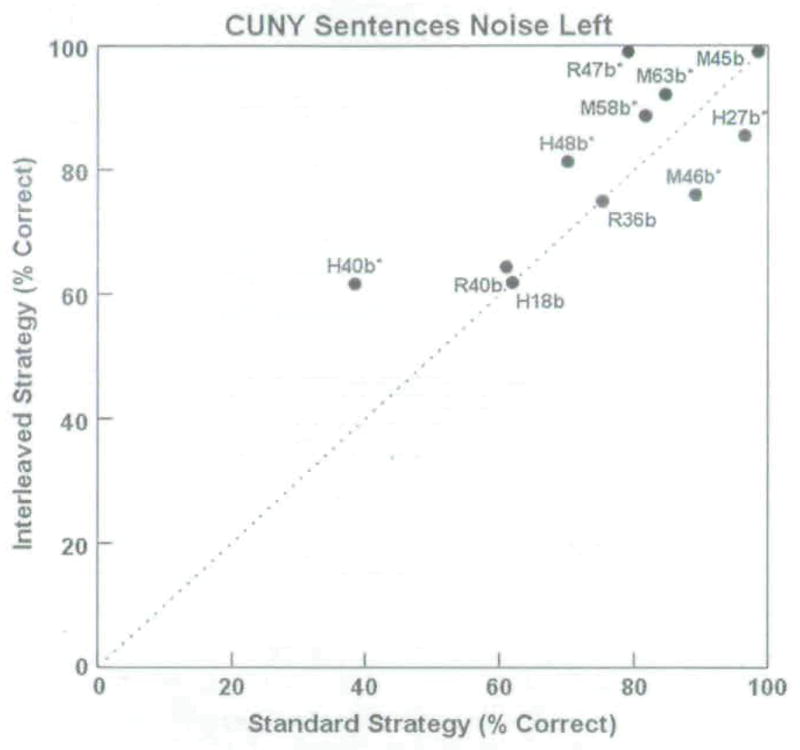
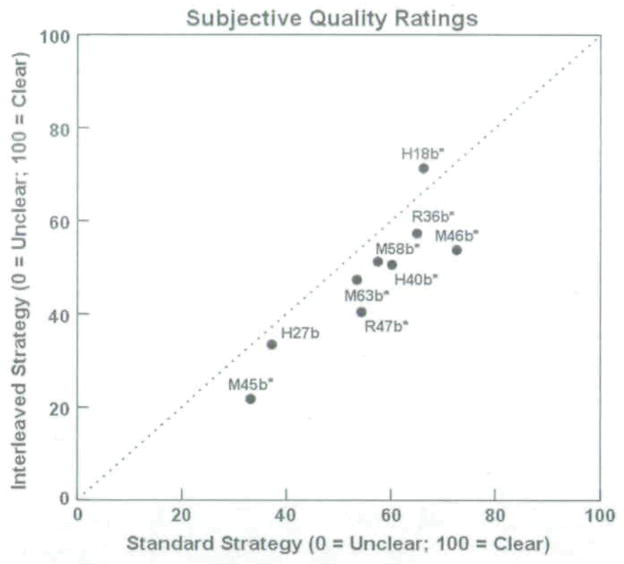
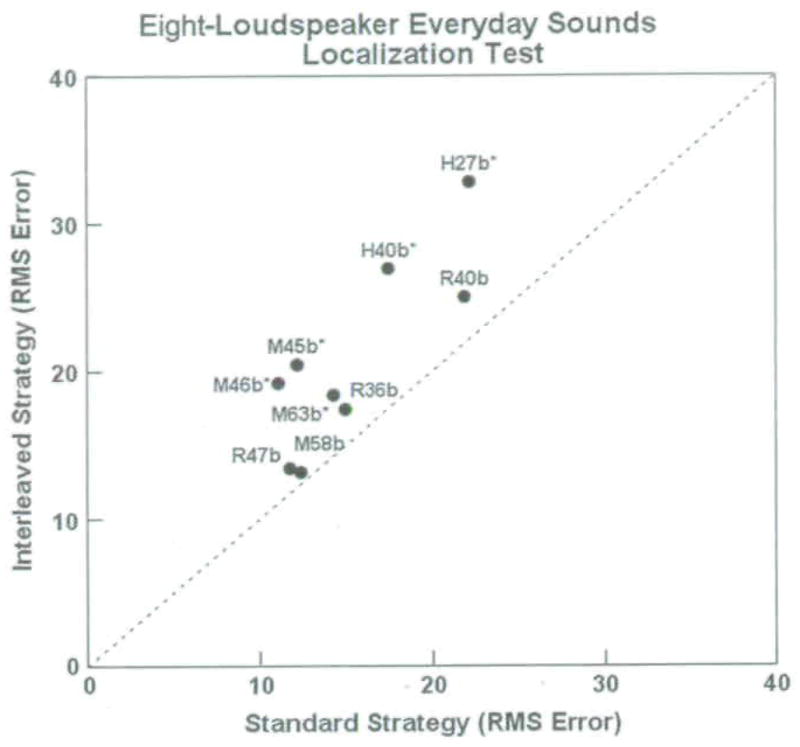
Results: In experiment one, four subjects were tested on consonant recognition. Results indicated that one of the four subjects performed better with the interleaved strategy, one subject received a binaural advantage with the interleaved strategy that they did not receive with the control strategy, and two subjects showed no decrement in performance when using the interleaved strategy. In the second experiment, 11 subjects were tested on word recognition, sentences in noise, and localization (it should be noted that not all subjects participated in all tests). Results showed that for speech perception testing one subject achieved significantly better scores with the interleaved strategy on all tests, and seven subjects showed a significant improvement with the interleaved strategy on at least one test. Only one subject showed a decrement in performance on all speech perception tests with the interleaved strategy. Out of nine subjects, one subject preferred the sound quality of the interleaved strategy. No one performed better on localization with the interleaved strategy.
Conclusion: Data from this study indicate that some adult bilateral cochlear implant recipients can benefit from using a speech processing strategy in which the input spectrum is interleaved among electrodes across the two implants. It is possible that the subjects in this study who showed a significant improvement with the interleaved strategy did so because of less channel interaction; however, this hypothesis was not directly tested.
Conflict of interest statement
In the interest of full disclosure, it should be noted that author A.J.P. is employed by, but has no other financial interest in, Cochlear Americas of Denver, CO, and that author B.S.W. is a consultant to, but has no other financial interest in, MED-EL Medical Electronics GmbH of Innsbruck, Austria.
Figures
References
-
- Boëx C, de Balthasar C, Kós MI, Pelizzone M. Electrical field interactions in different cochlear implant systems. J Acoust Soc Am. 2003;114(4):2049–2057. - PubMed
-
- Boothroyd A, Hanin L, Hnath T. A Sentence Test of Speech Perception: Reliability, Set Equivalence, and Short-Term Learning. New York: Speech and Hearing Sciences Research Center, City University of New York; 1985.
-
- Buss E, Pillsbury HC, Buchman CA, et al. Multicenter U.S. bilateral MED-EL cochlear implantation study: speech perception over the first year of use. Ear Hear. 2008;29(1):20–32. - PubMed
-
- Byrne D. Clinical issues and options in binaural hearing aid fitting. Ear Hear. 1981;2(5):187–193. - PubMed
Publication types
MeSH terms
Grants and funding
LinkOut - more resources
Full Text Sources
Other Literature Sources
Medical
