


Intergenic, gene terminal, and intragenic CpG islands in the human genome
- PMID: 20085634
- PMCID: PMC2817693
- DOI: 10.1186/1471-2164-11-48
Intergenic, gene terminal, and intragenic CpG islands in the human genome
Abstract
Background: Recently, it has been discovered that the human genome contains many transcription start sites for non-coding RNA. Regulatory regions related to transcription of this non-coding RNAs are poorly studied. Some of these regulatory regions may be associated with CpG islands located far from transcription start-sites of any protein coding gene. The human genome contains many such CpG islands; however, until now their properties were not systematically studied.
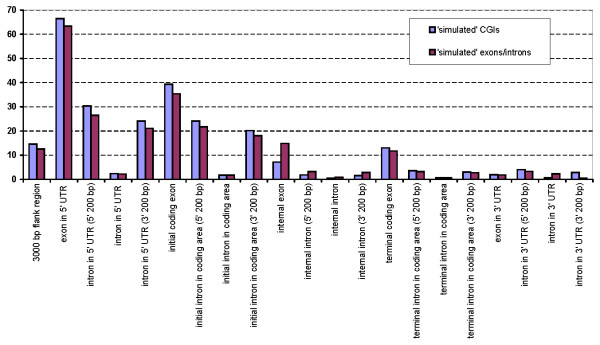
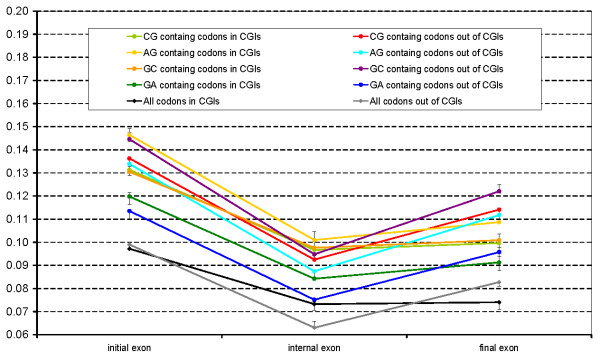
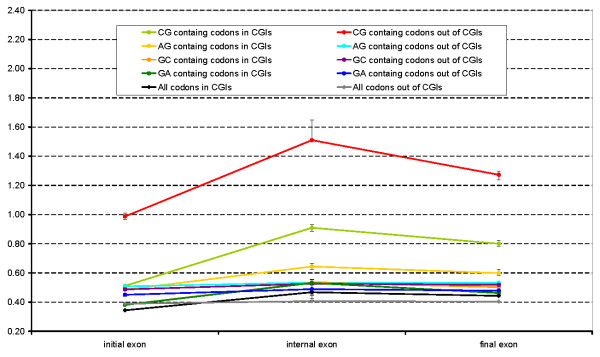
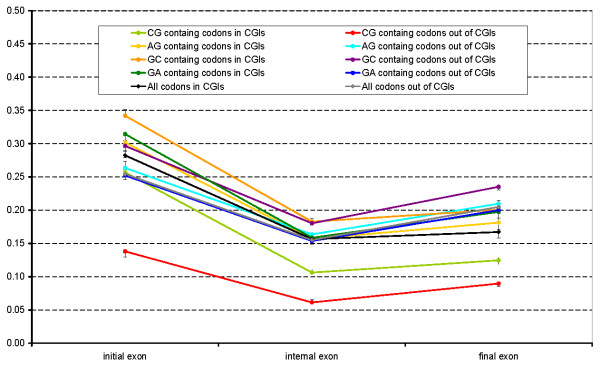
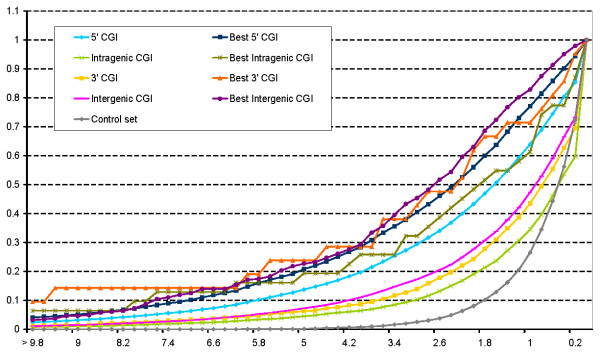
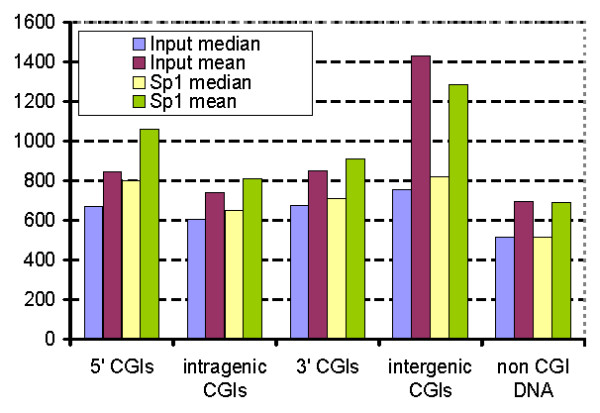
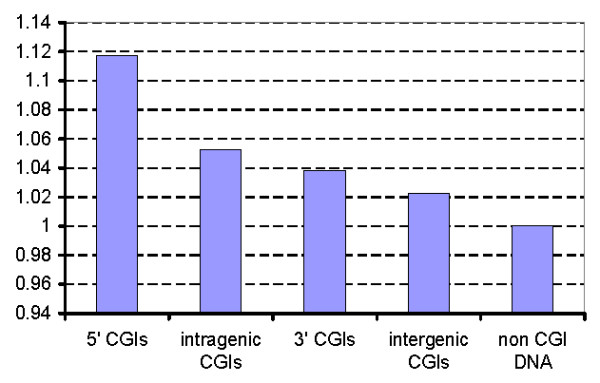
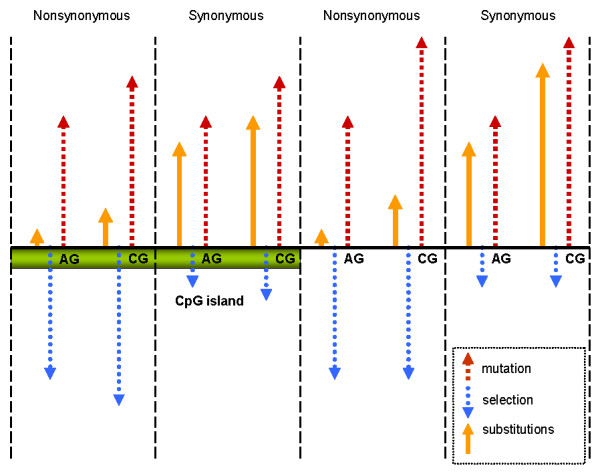
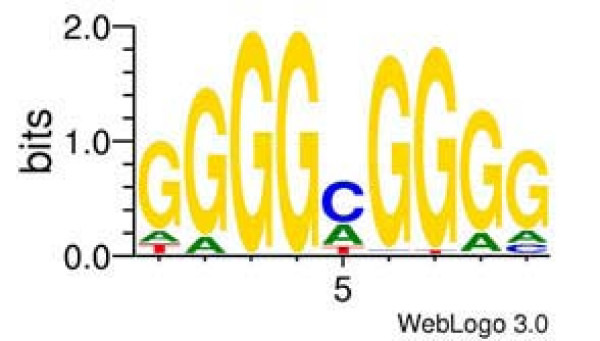
Results: We studied CpG islands located in different regions of the human genome using methods of bioinformatics and comparative genomics. We have observed that CpG islands have a preference to overlap with exons, including exons located far from transcription start site, but usually extend well into introns. Synonymous substitution rate of CpG-containing codons becomes substantially reduced in regions where CpG islands overlap with protein-coding exons, even if they are located far downstream from transcription start site. CAGE tag analysis displayed frequent transcription start sites in all CpG islands, including those found far from transcription start sites of protein coding genes. Computational prediction and analysis of published ChIP-chip data revealed that CpG islands contain an increased number of sites recognized by Sp1 protein. CpG islands containing more CAGE tags usually also contain more Sp1 binding sites. This is especially relevant for CpG islands located in 3' gene regions. Various examples of transcription, confirmed by mRNAs or ESTs, but with no evidence of protein coding genes, were found in CAGE-enriched CpG islands located far from transcription start site of any known protein coding gene.
Conclusions: CpG islands located far from transcription start sites of protein coding genes have transcription initiation activity and display Sp1 binding properties. In exons, overlapping with these islands, the synonymous substitution rate of CpG containing codons is decreased. This suggests that these CpG islands are involved in transcription initiation, possibly of some non-coding RNAs.
Figures
References
-
- Ahuja N, Li Q, Mohan AL, Baylin SB, Issa JP. Aging and DNA methylation in colorectal mucosa and cancer. Cancer Res. 1998;58(23):5489–5494. - PubMed
-
- Lander ES, Linton LM, Birren B, Nusbaum C, Zody MC, Baldwin J, Devon K, Dewar K, Doyle M, FitzHugh W, Funke R, Gage D, Harris K, Heaford A, Howland J, Kann L, Lehoczky J, LeVine R, McEwan P, McKernan K, Meldrim J, Mesirov JP, Miranda C, Morris W, Naylor J, Raymond C, Rosetti M, Santos R, Sheridan A, Sougnez C. et al. Initial sequencing and analysis of the human genome. Nature. 2001;409(6822):860–921. doi: 10.1038/35057062. - DOI - PubMed
Publication types
MeSH terms
Substances
LinkOut - more resources
Full Text Sources
