


Tuberous sclerosis complex: a brave new world?
- PMID: 20087180
- PMCID: PMC2884012
- DOI: 10.1097/WCO.0b013e32832c4ff5
Tuberous sclerosis complex: a brave new world?
Abstract
Purpose of review: Tuberous sclerosis complex (TSC) is a multiorgan genetic disease caused by mutations in the TSC1 or TSC2 genes. TSC has been recognized for many years as an important cause of severe neurological disease with patients suffering from epilepsy, developmental delay, autism, and psychiatric problems. During the last year, there have been enormous advances in basic and translational research pertaining to TSC.
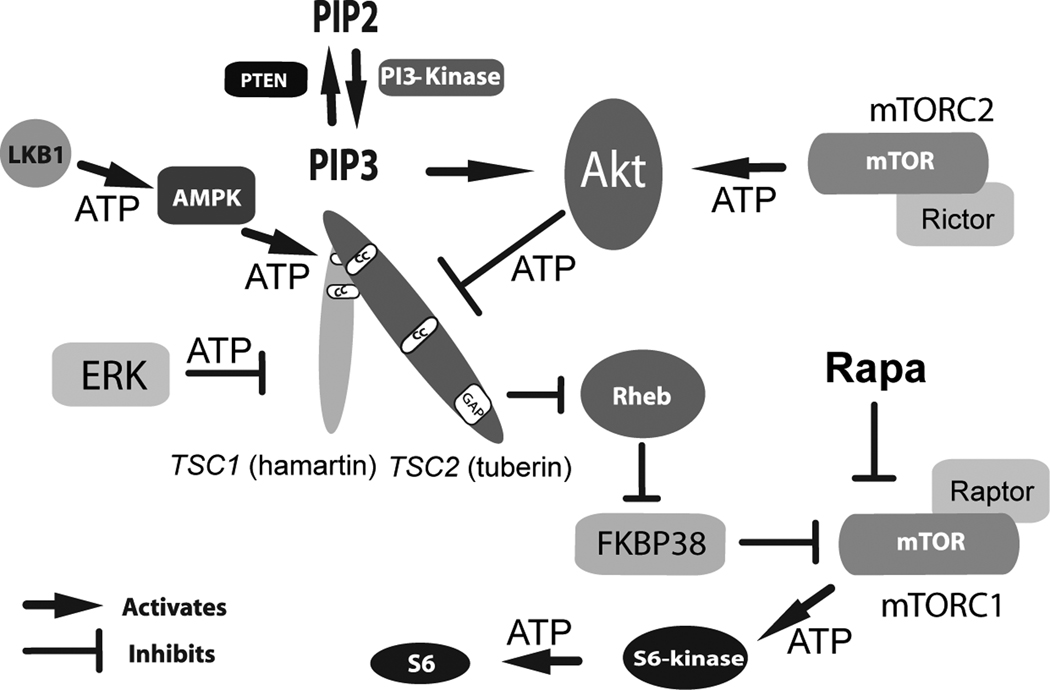
Recent findings: In this review, I discuss the basic science findings that position the TSC1 and TSC2 genes as critical regulators of the mammalian target of rapamycin kinase within mammalian target of rapamycin complex 1. In addition, I will discuss the development of new animal models, translational data, and recent clinical trials using mammalian target of rapamycin complex 1 inhibitors such as rapamycin.
Summary: The past few years have seen spectacular advances that have energized TSC-related research and challenged existing symptomatic treatments. Although it remains to be seen whether use of mammalian target of rapamycin complex 1 inhibitors will revolutionize the care of patients with TSC, the application of basic and translational research towards a specific clinical disorder emphasizes the potential and promise of molecular medicine.
Figures
References
-
- Crino PB, Nathanson KL, Henske EP. The tuberous sclerosis complex. N Engl J Med. 2006;355:1345–1356. - PubMed
-
- Bourneville DM. Tuberous Sclerosis with Cortical Abnormalities: Mental Retardation and Hemiplegic Epilepsy. Archives de neurologie. 1880;1:81–91.
-
- van Slegtenhorst M, de Hoogt R, Hermans C, Nellist M, Janssen B, Verhoef S, Lindhout D, van den Ouweland A, Halley D, Young J, et al. Identification of the tuberous sclerosis gene TSC1 on chromosome 9q34. Science. 1997;277:805–808. - PubMed
-
- Consortium ECTS. Identification and characterization of the tuberous sclerosis gene on chromosome 16. Cell. 1993;75:1305–1315. - PubMed
-
- Sancak O, Nellist M, Goedbloed M, Elfferich P, Wouters C, Maat-Kievit A, Zonnenberg B, Verhoef S, Halley D, van den Ouweland A. Mutational analysis of the TSC1 and TSC2 genes in a diagnostic setting: genotype--phenotype correlations and comparison of diagnostic DNA techniques in Tuberous Sclerosis Complex. Eur J Hum Genet. 2005;13:731–741. - PubMed
Publication types
MeSH terms
Substances
Grants and funding
LinkOut - more resources
Full Text Sources
Medical
Research Materials
Miscellaneous
