


Socioeconomic disparities in the decline in invasive breast cancer incidence
- PMID: 20087648
- PMCID: PMC2904433
- DOI: 10.1007/s10549-010-0737-y
Socioeconomic disparities in the decline in invasive breast cancer incidence
Abstract
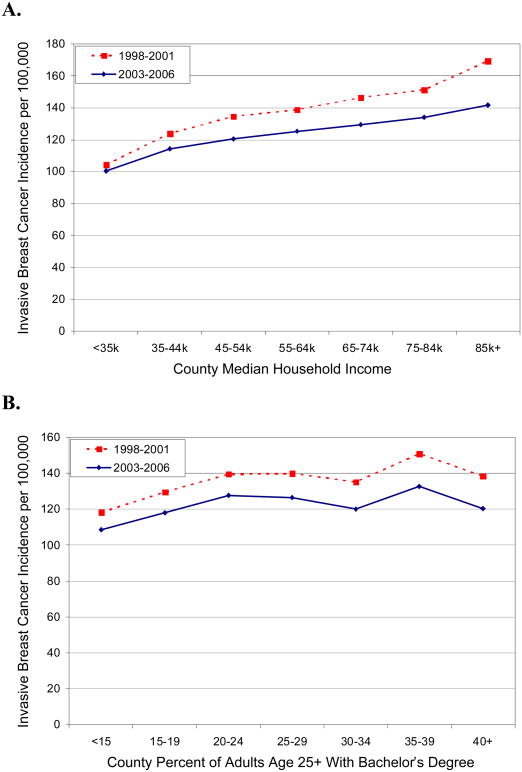
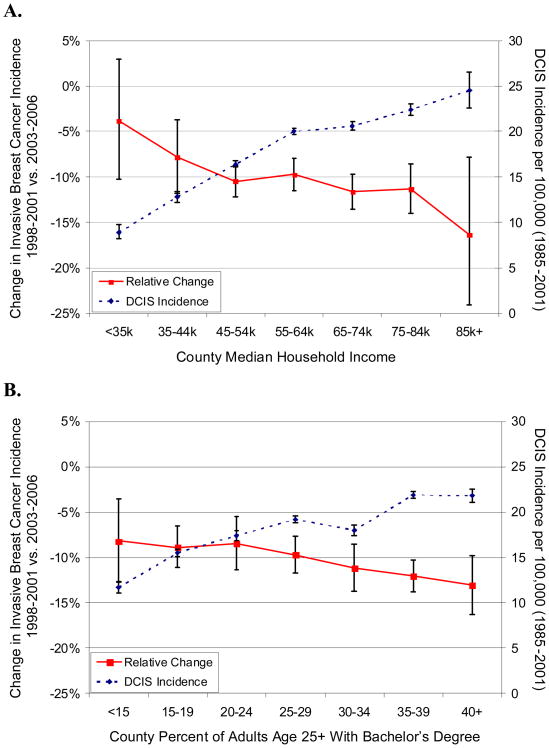
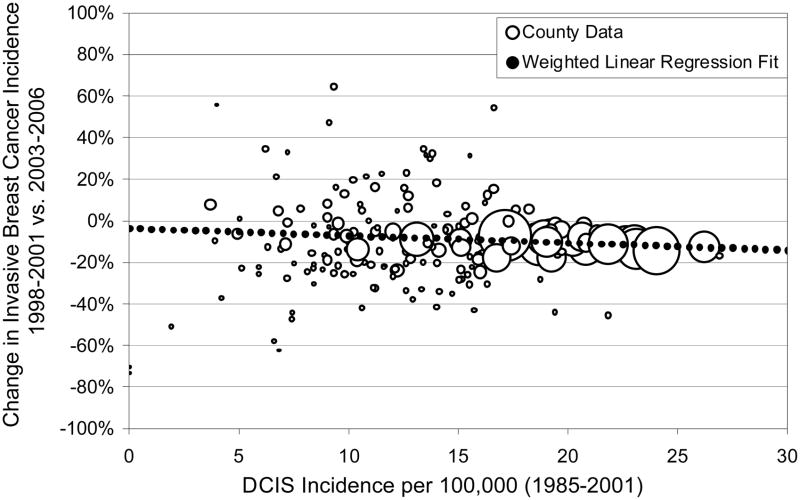
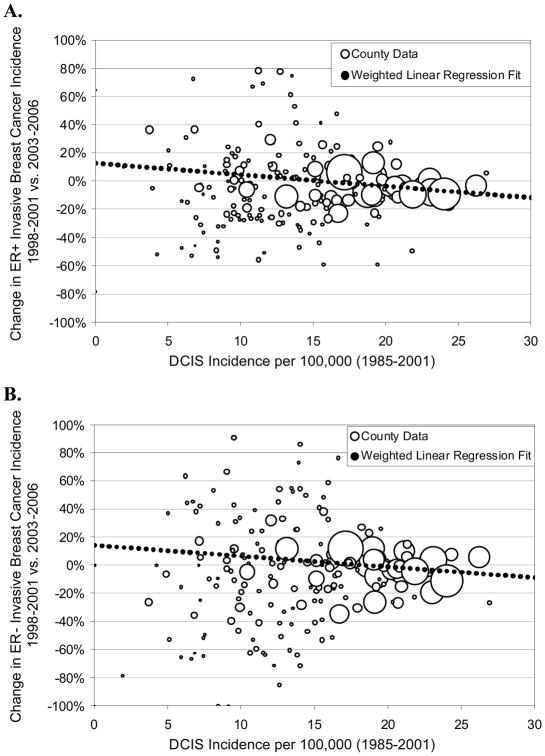
Breast cancer incidence in the United States has declined dramatically since the year 2002. To improve our understanding of the underlying factors driving breast cancer trends, we explored potential socioeconomic disparities in the recent decline in incidence. We examined the decline in breast cancer incidence according to county-level socioeconomic indicators using data from the Surveillance, Epidemiology and End Results (SEER) program. Since socioeconomic status is associated with mammography screening, we also examined the relation between incidence of ductal carcinoma in situ (DCIS; a strong marker of mammography utilization) and the decline in invasive breast cancer. The reduction in invasive breast cancer incidence between 1998-2001 and 2003-2006 in the SEER 9 registries was greatest among women living in counties with higher median household income (-16% change for > or = $85,000 vs. -4% for <$35,000; P(trend) < 0.01) and a higher percentage of adults aged 25 years or older with a bachelor's degree (-13% change for > or = 40% vs. -8% for <15%; P(trend) < 0.01). Counties with higher DCIS incidence during 1985-2001 had a larger decrease in invasive breast cancer incidence (absolute decrease 1.7 percentage points greater per 5 per 100,000 increase in DCIS incidence; P = 0.01). This association was present for both ER-positive and ER-negative invasive cancers (P < 0.05). In summary, the decline in breast cancer incidence has been largest in areas with high socioeconomic status and high screening utilization rates. These results are consistent with the hypothesis that a saturation of screening mammography utilization contributed to the overall decline in breast cancer incidence.
Figures
References
-
- Ravdin PM, Cronin KA, Howlader N, et al. The decrease in breast-cancer incidence in 2003 in the United States. N Engl J Med. 2007;356(16):1670–1674. - PubMed
-
- Horner MJ, Ries LAG, Krapcho M, et al. SEER Cancer Statistics Review, 1975–2006. Bethesda, MD: National Cancer Institute; 2009. http://seer.cancer.gov/csr/1975_2006/, based on November 2008 SEER data submission, posted to the SEER web site.
-
- Collaborative Group on Hormonal Factors in Breast Cancer. Breast cancer and hormone replacement therapy: collaborative reanalysis of data from 51 epidemiological studies of 52,705 women with breast cancer and 108,411 women without breast cancer. Lancet. 1997;350(9084):1047–1059. - PubMed
-
- Rossouw JE, Anderson GL, Prentice RL, et al. Risks and benefits of estrogen plus progestin in healthy postmenopausal women: principal results From the Women’s Health Initiative randomized controlled trial. JAMA. 2002;288(3):321–333. - PubMed
-
- Ross RK, Paganini-Hill A, Wan PC, Pike MC. Effect of hormone replacement therapy on breast cancer risk: estrogen versus estrogen plus progestin. J Natl Cancer Inst. 2000;92(4):328–332. - PubMed
Publication types
MeSH terms
Grants and funding
LinkOut - more resources
Full Text Sources
Medical
