


Inactivation of Lactobacillus leichmannii ribonucleotide reductase by 2',2'-difluoro-2'-deoxycytidine 5'-triphosphate: adenosylcobalamin destruction and formation of a nucleotide-based radical
- PMID: 20088568
- PMCID: PMC2867335
- DOI: 10.1021/bi9021318
Inactivation of Lactobacillus leichmannii ribonucleotide reductase by 2',2'-difluoro-2'-deoxycytidine 5'-triphosphate: adenosylcobalamin destruction and formation of a nucleotide-based radical
Abstract
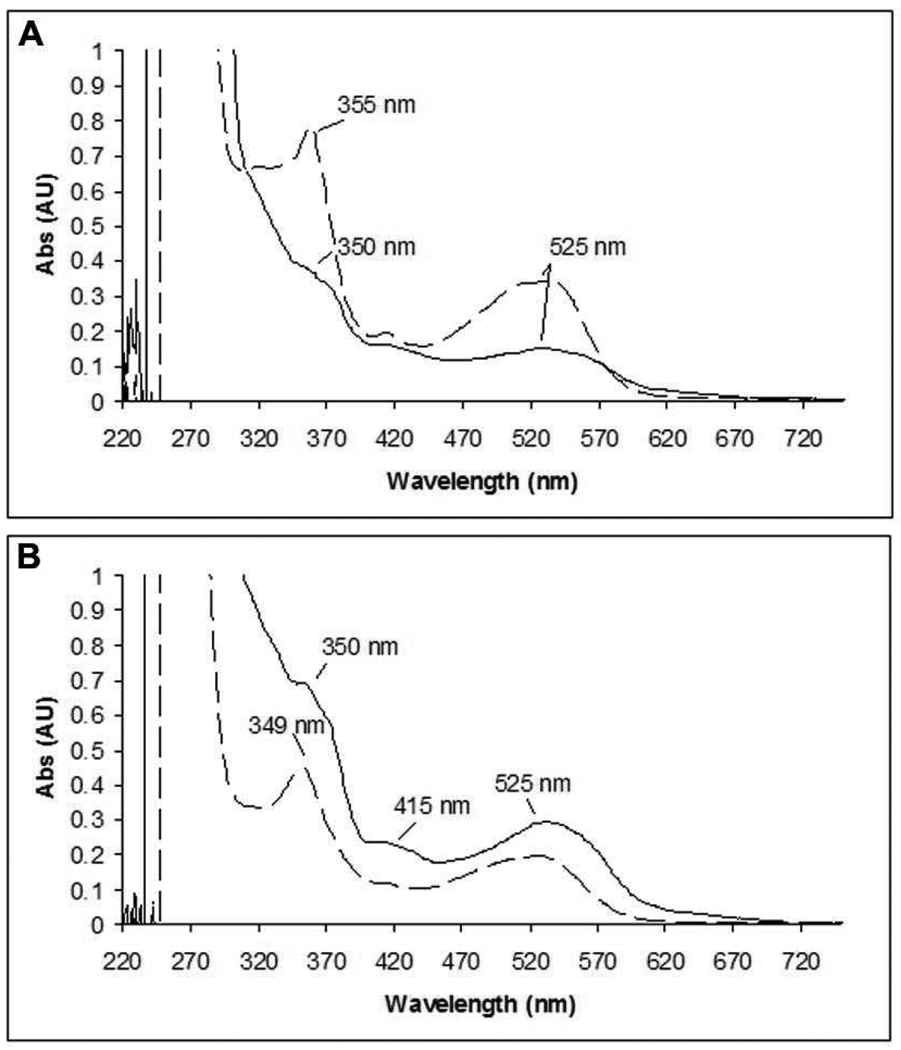
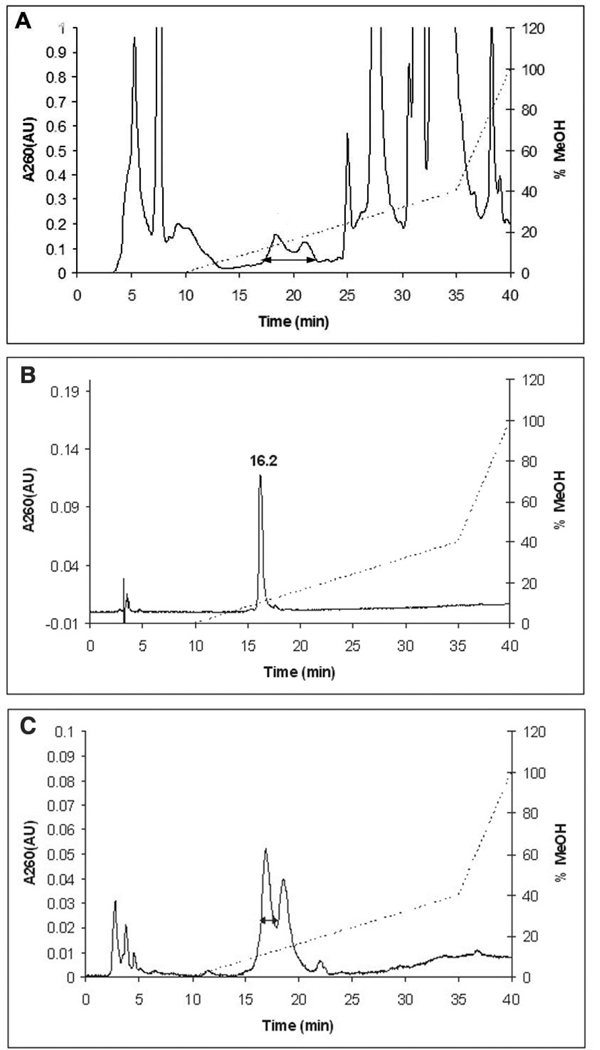
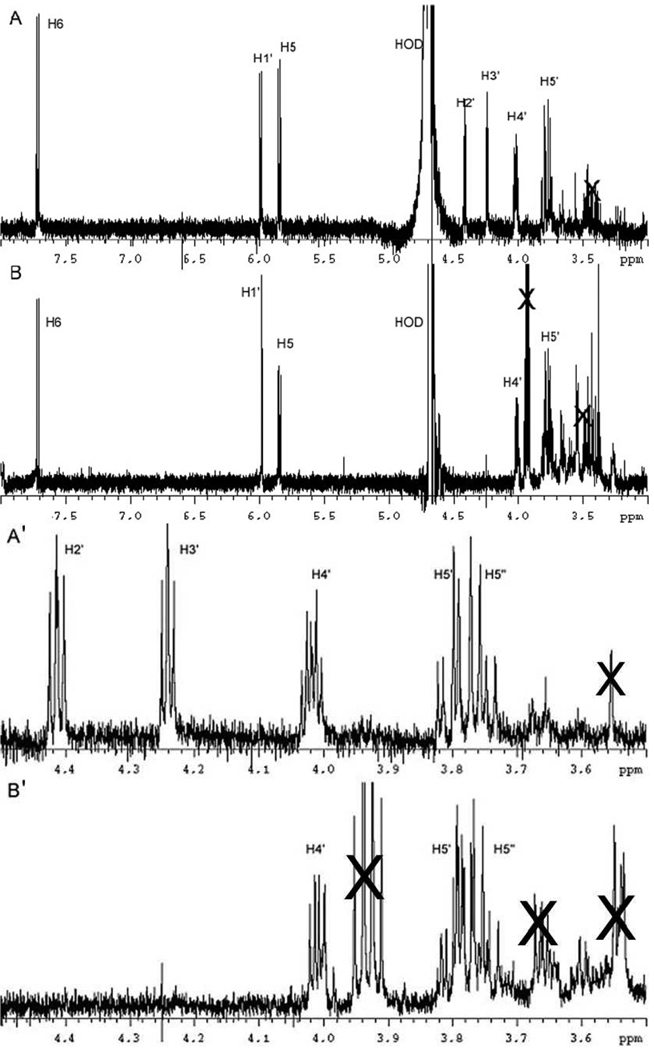
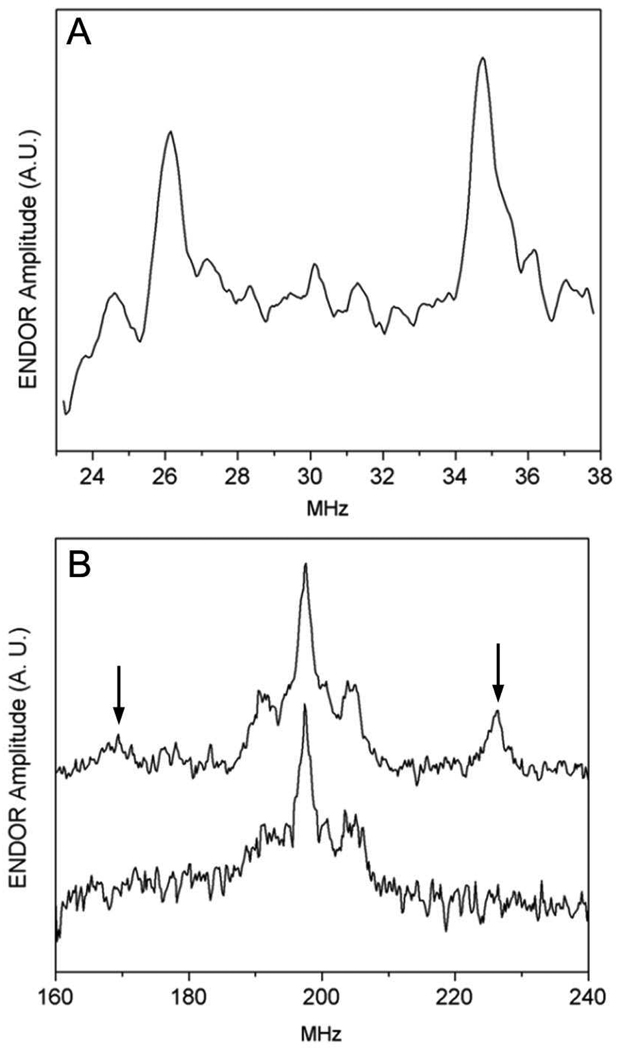
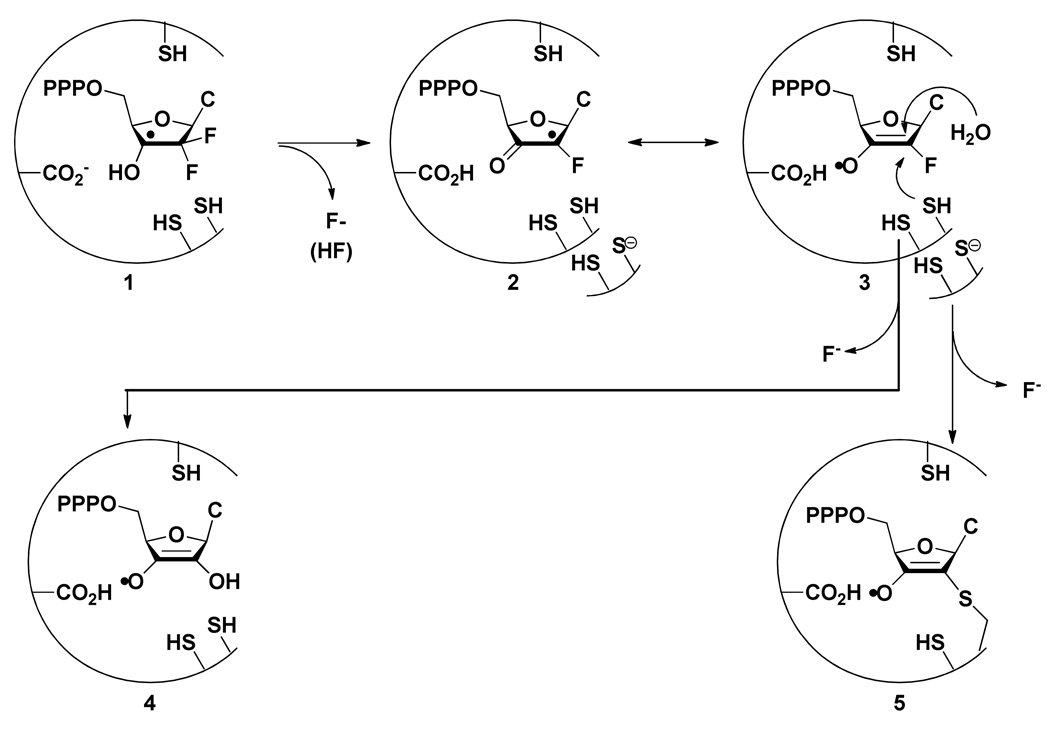
Ribonucleotide reductase (RNR, 76 kDa) from Lactobacillus leichmannii is a class II RNR that requires adenosylcobalamin (AdoCbl) as a cofactor. It catalyzes the conversion of nucleoside triphosphates to deoxynucleotides and is 100% inactivated by 1 equiv of 2',2'-difluoro-2'-deoxycytidine 5'-triphosphate (F(2)CTP) in <2 min. Sephadex G-50 chromatography of the inactivation reaction mixture for 2 min revealed that 0.47 equiv of a sugar moiety is covalently bound to RNR and 0.25 equiv of a cobalt(III) corrin is tightly associated, likely through a covalent interaction with C(419) (Co-S) in the active site of RNR [Lohman, G. J. S., and Stubbe, J. (2010) Biochemistry 49, DOI: 10.1021/bi902132u ]. After 1 h, a similar experiment revealed 0.45 equiv of the Co-S adduct associated with the protein. Thus, at least two pathways are associated with RNR inactivation: one associated with alkylation by the sugar of F(2)CTP and the second with AdoCbl destruction. To determine the fate of [1'-(3)H]F(2)CTP in the latter pathway, the reaction mixture at 2 min was reduced with NaBH(4) (NaB(2)H(4)) and the protein separated from the small molecules using a centrifugation device. The small molecules were dephosphorylated and analyzed by HPLC to reveal 0.25 equiv of a stereoisomer of cytidine, characterized by mass spectrometry and NMR spectroscopy, indicating the trapped nucleotide had lost both of its fluorides and gained an oxygen. High-field ENDOR studies with [1'-(2)H]F(2)CTP from the reaction quenched at 30 s revealed a radical that is nucleotide-based. The relationship between this radical and the trapped cytidine analogue provides insight into the nonalkylative pathway for RNR inactivation relative to the alkylative pathway.
Figures

References
-
- Stubbe J, van der Donk WA. Ribonucleotide reductases: radical enzymes with suicidal tendencies. Chem. Biol. 1995;2:793–801. - PubMed
-
- Stubbe J, van der Donk WA. Protein radicals in enzyme catalysis. Chem. Rev. 1998;98:705–762. - PubMed
-
- Licht S, Stubbe J. Mechanistic investigations of ribonucleotide reductases. In: Barton SD, Nakanishi K, Meth-Cohn O, Poulter CD, editors. Comprehensive Natural Products Chemistry. New York: Elsevier Science; 1999. pp. 163–203.
-
- Eklund H, Uhlin U, Färnegårdh M, Logan DT, Nordlund P. Structure and function of the radical enzyme ribonucleotide reductase. Prog. Biophys. Mol. Biol. 2001;77:177–268. - PubMed
-
- Nordlund P, Reichard P. Ribonucleotide reductases. Annu. Rev. Biochem. 2006;75:681–706. - PubMed
Publication types
MeSH terms
Substances
Grants and funding
LinkOut - more resources
Full Text Sources
