


Stress-induced glucocorticoids at the earliest stages of herpes simplex virus-1 infection suppress subsequent antiviral immunity, implicating impaired dendritic cell function
- PMID: 20089700
- PMCID: PMC3701455
- DOI: 10.4049/jimmunol.0902469
Stress-induced glucocorticoids at the earliest stages of herpes simplex virus-1 infection suppress subsequent antiviral immunity, implicating impaired dendritic cell function
Abstract
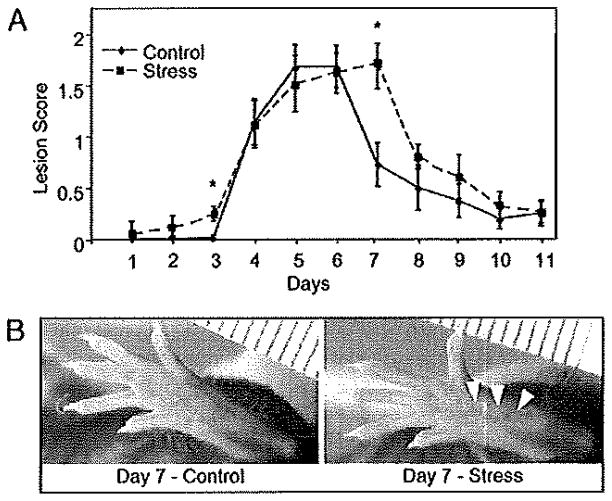
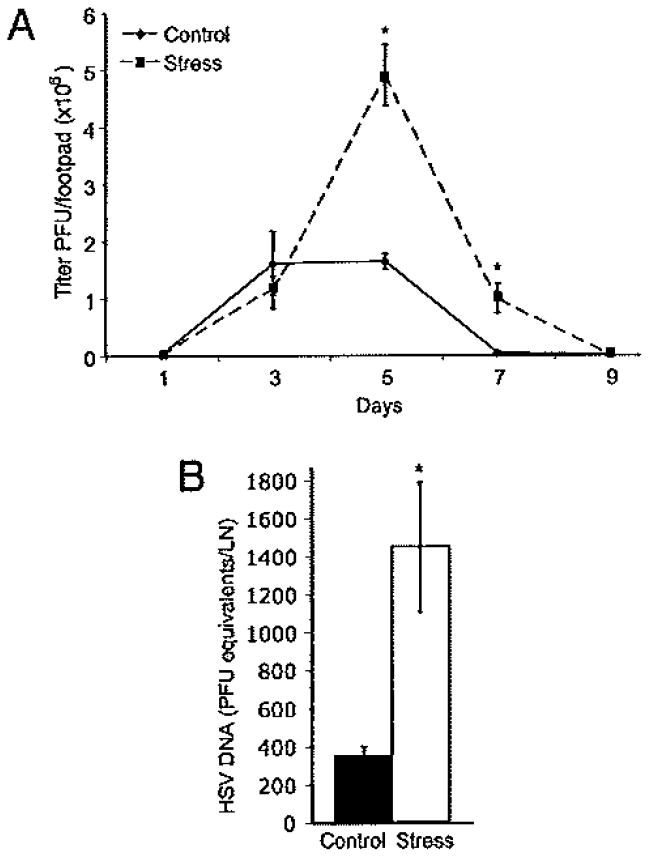
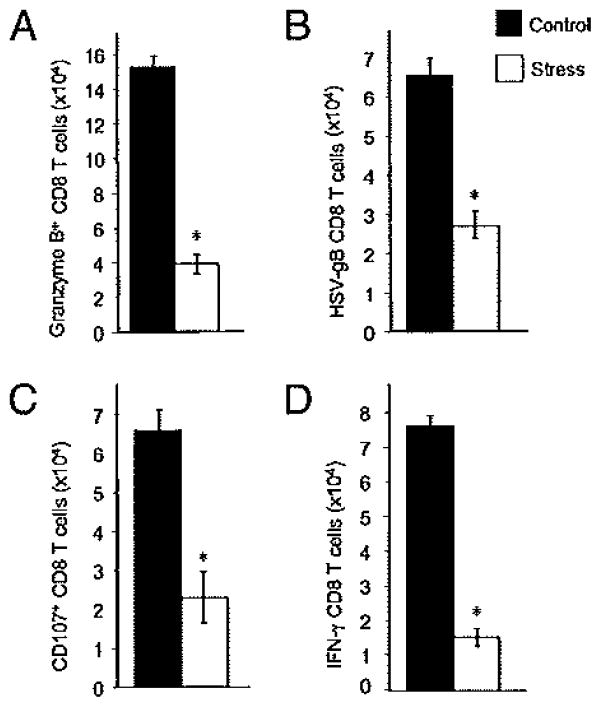
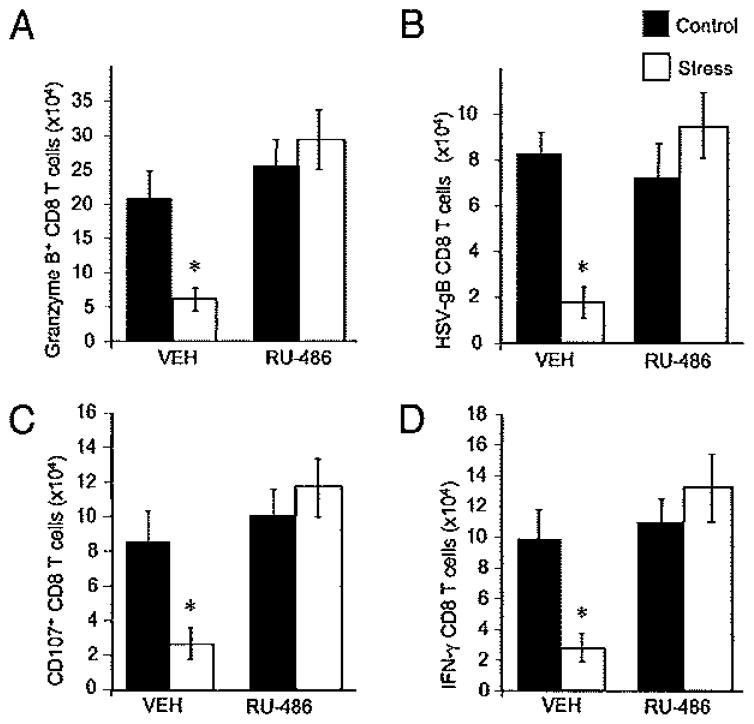
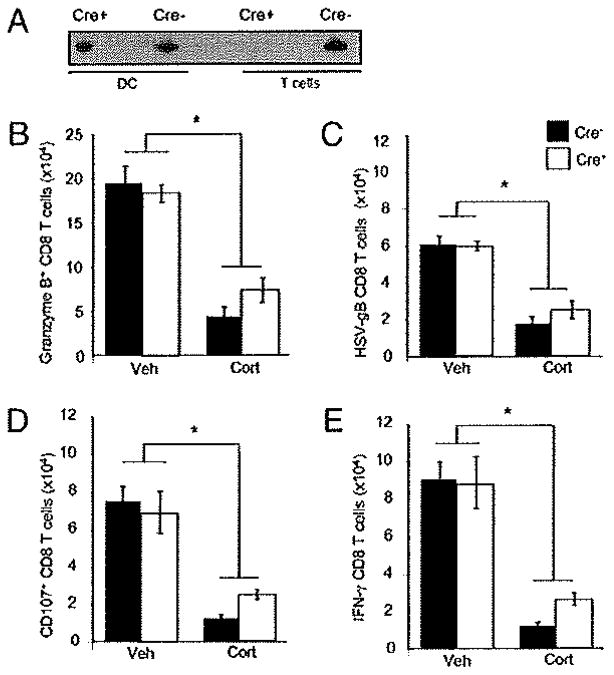
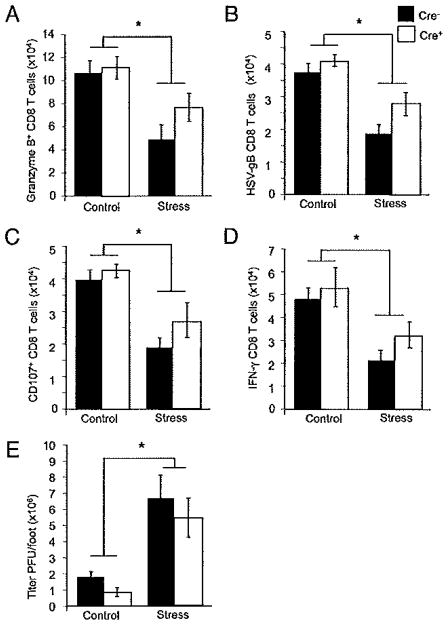
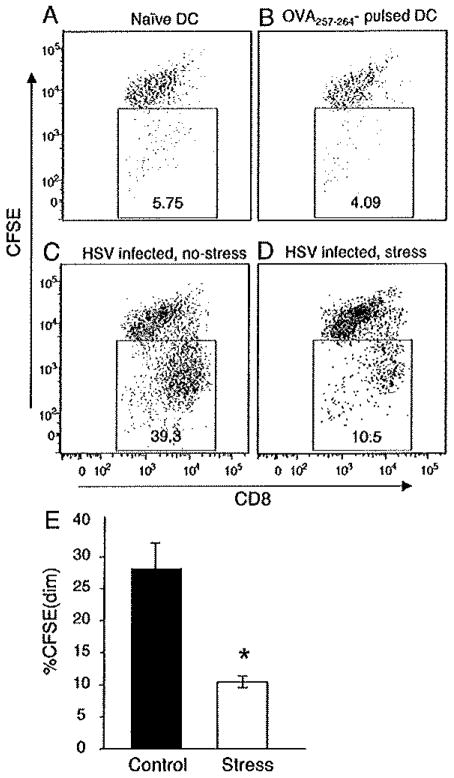
The systemic elevation of psychological stress-induced glucocorticoids strongly suppresses CD8(+) T cell immune responses resulting in diminished antiviral immunity. However, the specific cellular targets of stress/glucocorticoids, the timing of exposure, the chronology of immunological events, and the underlying mechanisms of this impairment are incompletely understood. In this study, we address each of these questions in the context of a murine cutaneous HSV infection. We show that exposure to stress or corticosterone in only the earliest stages of an HSV-1 infection is sufficient to suppress, in a glucocorticoid receptor-dependent manner, the subsequent antiviral immune response after stress/corticosterone has been terminated. This suppression resulted in early onset and delayed resolution of herpetic lesions, reduced viral clearance at the site of infection and draining popliteal lymph nodes (PLNs), and impaired functions of HSV-specific CD8(+) T cells in PLNs, including granzyme B and IFN-gamma production and the ability to degranulate. In knockout mice lacking glucocorticoid receptors only in T cells, we show that these impaired CD8(+) T cell functions are not due to direct effects of stress/corticosterone on the T cells, but the ability of PLN-derived dendritic cells to prime HSV-1-specific CD8(+) T cells is functionally impaired. These findings highlight the susceptibility of critical early events in the generation of an antiviral immune response to neuroendocrine modulation and implicate dendritic cells as targets of stress/glucocorticoids in vivo. These findings also provide insight into the mechanisms by which the clinical use of glucocorticoids contributes to altered immune responses in patients with viral infections or tumors.
Conflict of interest statement
The authors have no financial conflicts of interest.
Figures
References
-
- McEwen BS, Biron CA, Branson KW, Bulloch K, Chambers WH, Dhabhar FS, Goldfarb RH, Kitson RP, Miller AH, Spencer RL, Weiss JM. The role of adrenocorticoids as modulators of immune function in health and disease: neural, endocrine and immune interactions. Brain Res Brain Res Rev. 1997;23:79–133. - PubMed
-
- Webster JI, Tonelli L, Sternberg EM. Neuroendocrine regulation of immunity. Annu Rev Immunol. 2002;20:125–163. - PubMed
-
- Bailey M, Engler H, Hunzeker J, Sheridan JF. The hypothalamic-pituitary-adrenal axis and viral infection. Viral Immunol. 2003;16:141–157. - PubMed
-
- Dhabhar FS. Stress, leukocyte trafficking, and the augmentation of skin immune function. Ann N Y Acad Sci. 2003;992:205–217. - PubMed
Publication types
MeSH terms
Substances
Grants and funding
LinkOut - more resources
Full Text Sources
Medical
Molecular Biology Databases
Research Materials
