


Perinatal nutritional iron deficiency impairs noradrenergic-mediated synaptic efficacy in the CA1 area of rat hippocampus
- PMID: 20089786
- PMCID: PMC2821889
- DOI: 10.3945/jn.109.114702
Perinatal nutritional iron deficiency impairs noradrenergic-mediated synaptic efficacy in the CA1 area of rat hippocampus
Abstract
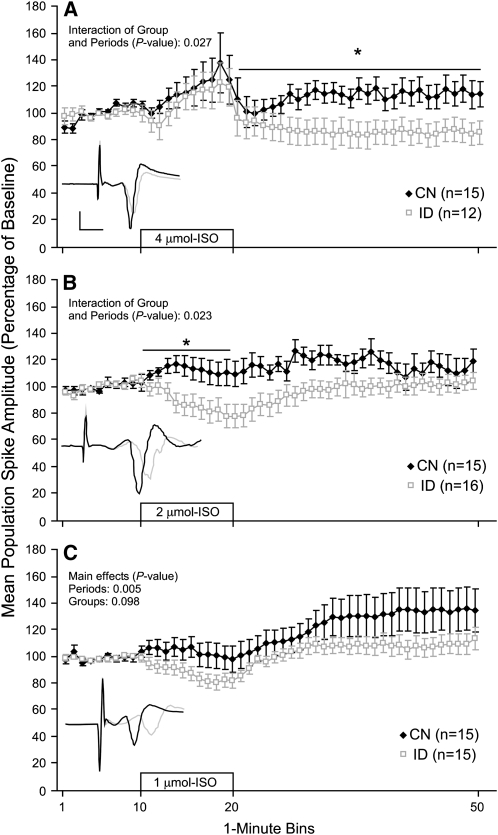
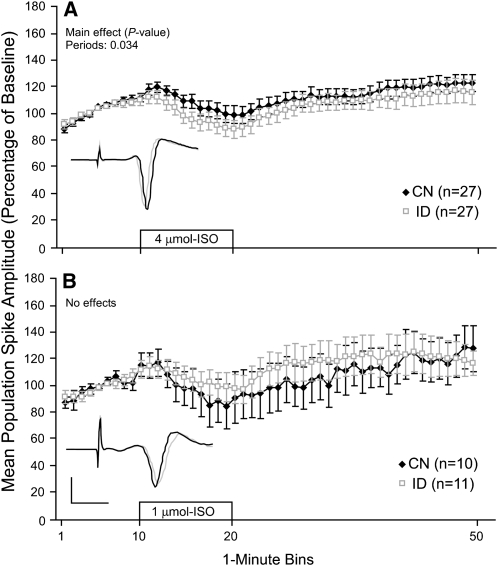
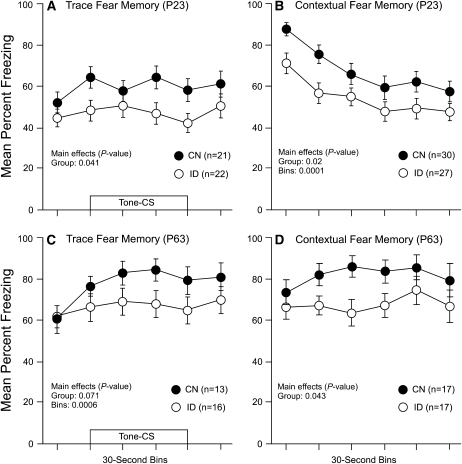
Many studies have shown that perinatal nutritional iron deficiency (ID) produces learning impairments in children. Research has also shown that catecholamines like epinephrine and norepinephrine play a pivotal role in the consolidation of memories. In this study, we sought to determine if perinatal ID impairs the following: 1) noradrenergic synaptic function in the hippocampus; and 2) several forms of hippocampus-dependent fear learning. Electrophysiological brain slice methods were used to examine noradrenergic-mediated synaptic efficacy in the CA1-hippocampus of rats that were subjected to perinatal ID or control (CN) diets. Rats were fed ID (3 mg Fe/kg) or CN (45 mg Fe/kg) diets on gestational d 14. These diets were maintained until postnatal d (P) 12 after which all rats were switched to the CN diet. Hippocampal slices were prepared between P26 and P30. The noradrenergic agonist isoproterenol (ISO) (1, 2, or 4 micromol) was used to induce modulatory increases in synaptic efficacy in the hippocampal slices. CN slices showed a long-lasting increase in synaptic efficacy as the result of ISO perfusion in the slice bath, whereas ID slices did not show increases in synaptic efficacy as the result of ISO perfusion. ID and CN groups did not differ when ISO was perfused through slices from adult rats (P61). Both young and adult ID rats showed reduced levels of hippocampus-dependent fear learning compared with the young and adult CN rats. Together, these findings suggest that ID may impair early forms of noradrenergic-mediated synaptic plasticity, which may in turn play a role in adult learning deficits.
Figures
References
-
- Lozoff B, Jimenez E, Wolf AW. Long-term developmental outcome of infants with iron deficiency. N Engl J Med. 1991;325:687–94. - PubMed
-
- Lozoff B, Wolf AW, Jimenez E. Iron-deficiency anemia and infant development: effects of extended oral iron therapy. J Pediatr. 1996;129:382–9. - PubMed
-
- McEchron MD, Cheng AY, Liu H, Connor JR, Gilmartin MR. Perinatal nutritional iron deficiency permanently impairs hippocampus-dependent fear learning. Nutr Neurosci. 2005;8:195–206. - PubMed
-
- McEchron MD, Alexander DN, Gilmartin MR, Paronish MD. Perinatal nutritional iron deficiency impairs hippocampus-dependent trace eyeblink conditioning in rats. Dev Neurosci. 2008;30:243–54. - PubMed
-
- McEchron MD, Paronish MP. Perinatal nutritional iron deficiency reduces hippocampal synaptic transmission but does not impair short- or long-term synaptic plasticity. Nutr Neurosci. 2005;8:277–85. - PubMed
Publication types
MeSH terms
Substances
Grants and funding
LinkOut - more resources
Full Text Sources
Miscellaneous
