


APP transgenic modeling of Alzheimer's disease: mechanisms of neurodegeneration and aberrant neurogenesis
- PMID: 20091183
- PMCID: PMC2847155
- DOI: 10.1007/s00429-009-0232-6
APP transgenic modeling of Alzheimer's disease: mechanisms of neurodegeneration and aberrant neurogenesis
Abstract
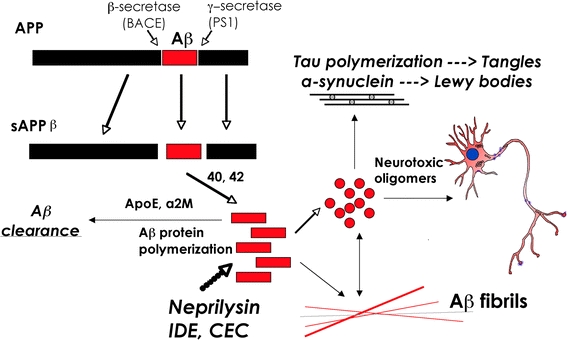
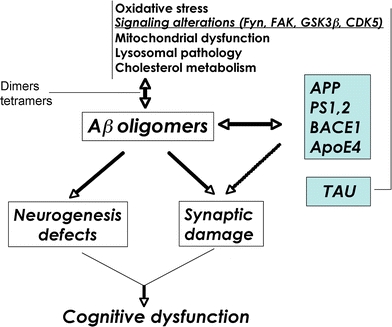
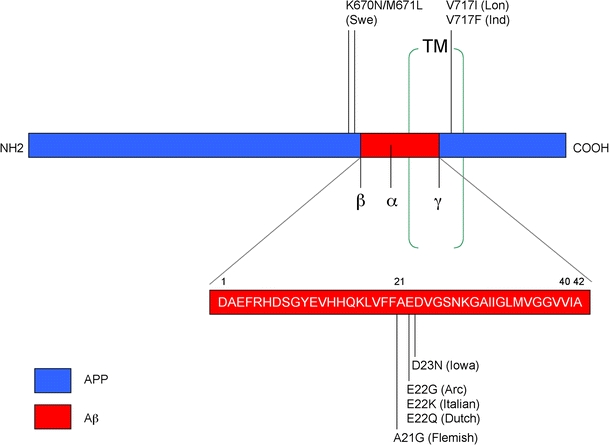
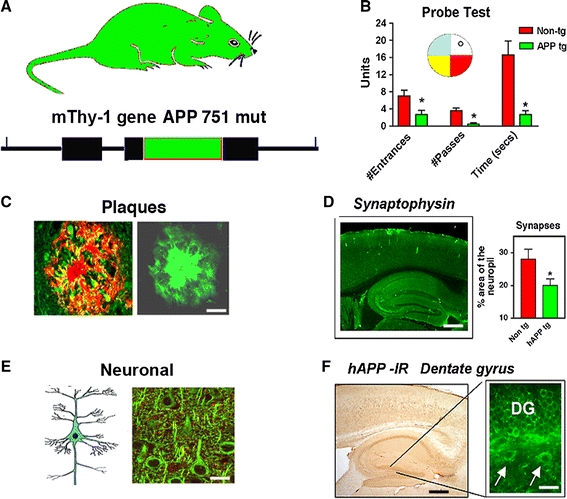
Neurodegenerative disorders of the aging population affect over 5 million people in the US and Europe alone. The common feature is the progressive accumulation of misfolded proteins with the formation of toxic oligomers. Alzheimer's disease (AD) is characterized by cognitive impairment, progressive degeneration of neuronal populations in the neocortex and limbic system, and formation of amyloid plaques and neurofibrillary tangles. Amyloid-beta (Abeta) is the product of proteolysis of amyloid precursor protein (APP) by beta and gamma-secretase enzymes. The neurodegenerative process in AD initiates with axonal and synaptic damage and is associated with progressive accumulation of toxic Abeta oligomers in the intracellular and extracellular space. In addition, neurodegeneration in AD is associated with alterations in neurogenesis. Abeta accumulation is the consequence of an altered balance between protein synthesis, aggregation rate, and clearance. Identification of genetic mutations in APP associated with familial forms of AD and gene polymorphisms associated with the more common sporadic variants of AD has led to the development of transgenic (tg) and knock out rodents as well as viral vector driven models of AD. While APP tg murine models with mutations in the N- and C-terminal flanking regions of Abeta are characterized by increased Abeta production with plaque formation, mutations in the mid-segment of Abeta result in increased formation of oligomers, and mutations toward the C-terminus (E22Q) segment results in amyloid angiopathy. Similar to AD, in APP tg models bearing familial mutations, formation of Abeta oligomers results in defective plasticity in the perforant pathway, selective neuronal degeneration, and alterations in neurogenesis. Promising results have been obtained utilizing APP tg models of AD to develop therapies including the use of beta- and gamma-secretase inhibitors, immunization, and stimulating neurogenesis.
Figures
References
-
- Ahlijanian MK, Barrezueta NX, Williams RD, Jakowski A, Kowsz KP, McCarthy S, Coskran T, Carlo A, Seymour PA, Burkhardt JE, Nelson RB, McNeish JD. Hyperphosphorylated tau and neurofilament and cytoskeletal disruptions in mice overexpressing human p25, an activator of cdk5. Proc Natl Acad Sci USA. 2000;97:2910–2915. - PMC - PubMed
-
- Andra K, Abramowski D, Duke M, Probst A, Wiederholt K, Burki K, Goedert M, Sommer B, Staufenbiel M. Expression of APP in transgenic mice: a comparison of neuron-specific promoters. Neurobiol Aging. 1996;17:183–190. - PubMed
-
- Bertoli-Avella AM, Oostra BA, Heutink P. Chasing genes in Alzheimer’s and Parkinson’s disease. Hum Genet. 2004;114:413–438. - PubMed
Publication types
MeSH terms
Substances
Grants and funding
LinkOut - more resources
Full Text Sources
Medical
Miscellaneous
