


Development of a cognitive-behavioral intervention program to treat anxiety and social deficits in teens with high-functioning autism
- PMID: 20091348
- PMCID: PMC2863047
- DOI: 10.1007/s10567-009-0062-3
Development of a cognitive-behavioral intervention program to treat anxiety and social deficits in teens with high-functioning autism
Abstract
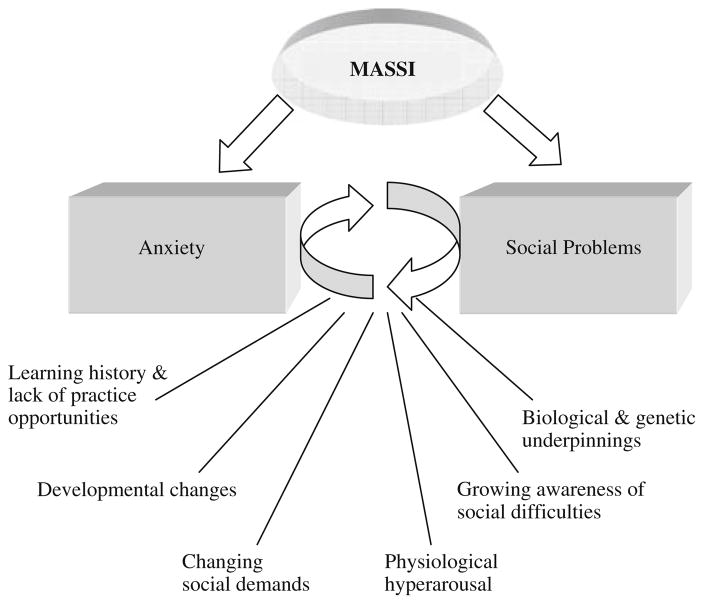
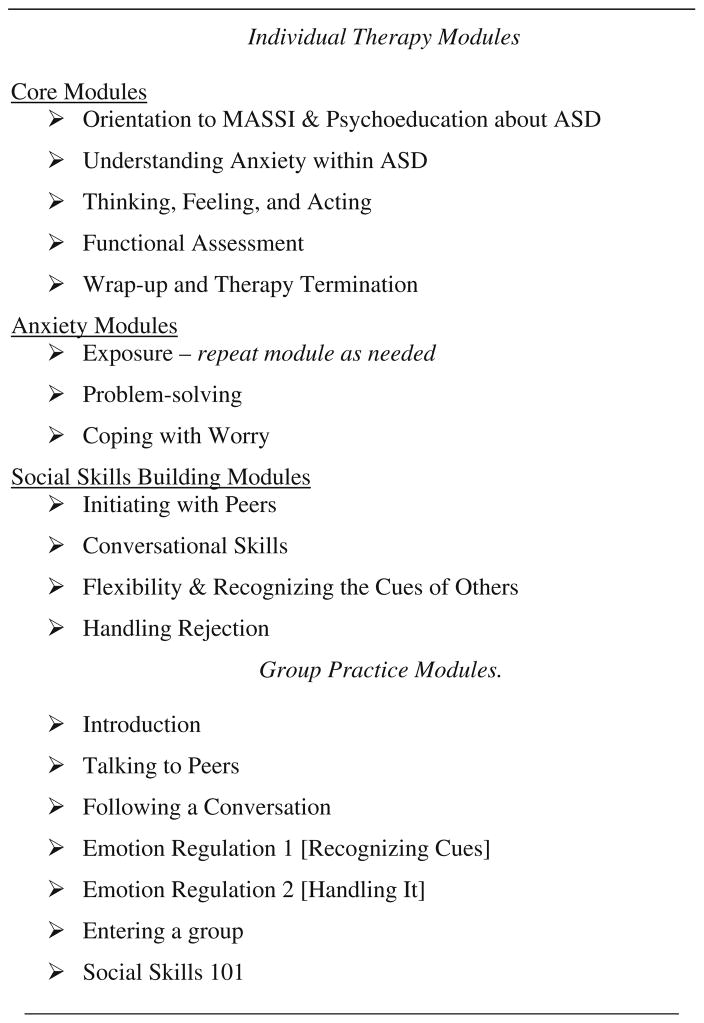
Anxiety is a common co-occurring problem among young people with autism spectrum disorders (ASD). Characterized by deficits in social interaction, communication problems, and stereotyped behavior and restricted interests, this group of disorders is more prevalent than previously realized. When present, anxiety may compound the social deficits of young people with ASD. Given the additional disability and common co-occurrence of anxiety in ASD, we developed a manual-based cognitive-behavioral treatment program to target anxiety symptoms as well as social skill deficits in adolescents with ASD [Multimodal Anxiety and Social Skills Intervention: MASSI]. In this paper, we describe the foundation, content, and development of MASSI. We also summarize data on treatment feasibility based on a pilot study that implemented the intervention.
Figures
References
-
- Attwood T. Cognitive behaviour therapy for children and adults with Asperger’s syndrome. Behaviour Change. 2004;21:147–161.
-
- Baron-Cohen S. Mindblindness: An essay on autism and theory. Cambridge, MA: MIT Press; 1995.
-
- Bauminger N, Kasari C. Loneliness and friendship in high-functioning children with autism. Child Development. 2000;71:447–456. - PubMed
-
- Beaumont R, Sofrononoff K. A multi-component social skills intervention for children with Asperger syndrome: The junior detective training program. The Journal of Child Psychology and Psychiatry. 2008;49(7):743–753. - PubMed
-
- Bellini S. Social skill deficits and anxiety in high-functioning adolescents with autism spectrum disorders. Focus on Autism and Other Developmental Disabilities. 2004;19:78–86.
