


Hypertonic challenge to porcine vocal folds: effects on epithelial barrier function
- PMID: 20096227
- PMCID: PMC2928222
- DOI: 10.1016/j.otohns.2009.09.011
Hypertonic challenge to porcine vocal folds: effects on epithelial barrier function
Abstract
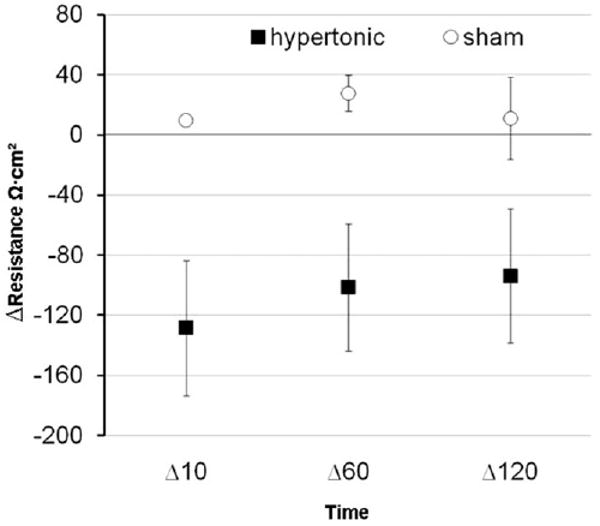
Objective: Dehydration challenges can increase the chemical composition of surface fluid overlying vocal fold epithelia (hypertonic surface fluid). The vocal fold epithelium is posited to act as a barrier, shielding the lamina propria from perturbations in the airway lumen. However, the effects of hypertonic surface fluid on the barrier functions of vocal fold epithelia have not been quantified. We, therefore, sought to investigate whether hypertonic surface fluid compromises epithelial barrier function. We examined the effects of hypertonic surface fluid on vocal fold epithelial resistance, paracellular pathway morphology, and tight junction protein integrity.
Study design: Ex vivo, between group design.
Setting: Laboratory.
Methods: Porcine vocal folds (n = 24) were exposed to hypertonic or isotonic challenge and examined by electrophysiology, transmission electron microscopy, and Western blot analyses.
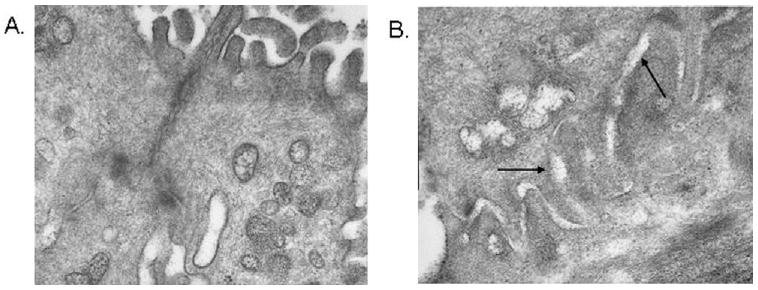
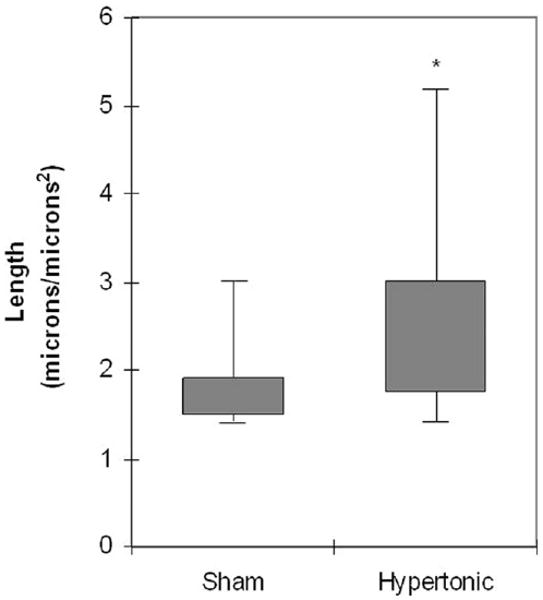
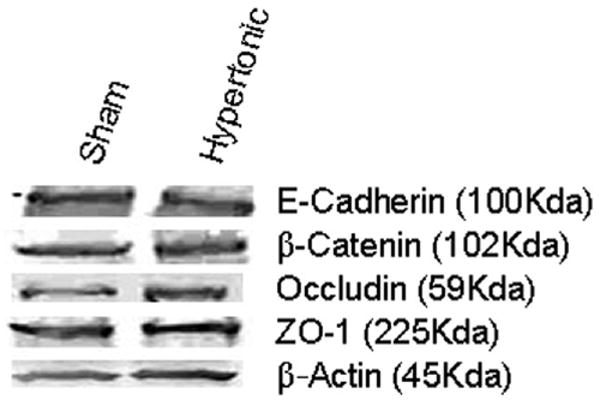
Results: Hypertonic, but not isotonic, challenge significantly reduced transepithelial resistance. This decrease in resistance was observed immediately after the challenge and was consistent with the appearance of dilated paracellular pathway morphology. However, hypertonic challenge did not alter protein levels of occludin, zona occludens-1, E-cadherin, or beta-catenin.
Conclusion: Hypertonic surface fluid alters epithelial barrier function in the vocal folds. Specifically, exposure to hypertonic challenges increases epithelial permeability. Given the important role of the vocal fold epithelium in shielding the underlying mucosa from inhaled pathogens and pollutants, our data provide the impetus for future studies on pharmacological treatments aimed at restoring the hydration level and chemical composition of vocal fold surface fluid.
Conflict of interest statement
Figures
References
-
- Fisher K, Telser A, Phillips J, et al. Regulation of vocal fold transepithelial water fluxes. J Appl Physiol. 2001;91:1401–11. - PubMed
-
- Olivera D, Boggs S, Beenhouwer C, et al. Cellular mechanisms of mainstream cigarette smoke-induced lung epithelial tight junction permeability changes in vitro. Inhal Toxicol. 2007;19:13–22. - PubMed
-
- Tobey N, Carson J, Alkiek R, et al. Dilated intercellular spaces: a morphological feature of acid reflux-damaged human esophageal epithelium. Gastroenterol. 1996;111:1200–5. - PubMed
-
- Reichel O, Mayr D, Durst F, et al. E-cadherin but not beta-catenin expression is decreased in laryngeal biopsies from patients with laryngopharyngeal reflux. Eur Arch Otolaryngol. 2008;265:937–42. - PubMed
-
- Sivasankar M, Fisher K. Vocal fold epithelial response to luminal osmotic perturbation. J Speech Lang Hear Res. 2007;50:886–98. - PubMed
Publication types
MeSH terms
Substances
Grants and funding
LinkOut - more resources
Full Text Sources
