


The role of primary cilia in neuronal function
- PMID: 20097287
- PMCID: PMC2953617
- DOI: 10.1016/j.nbd.2009.12.022
The role of primary cilia in neuronal function
Abstract
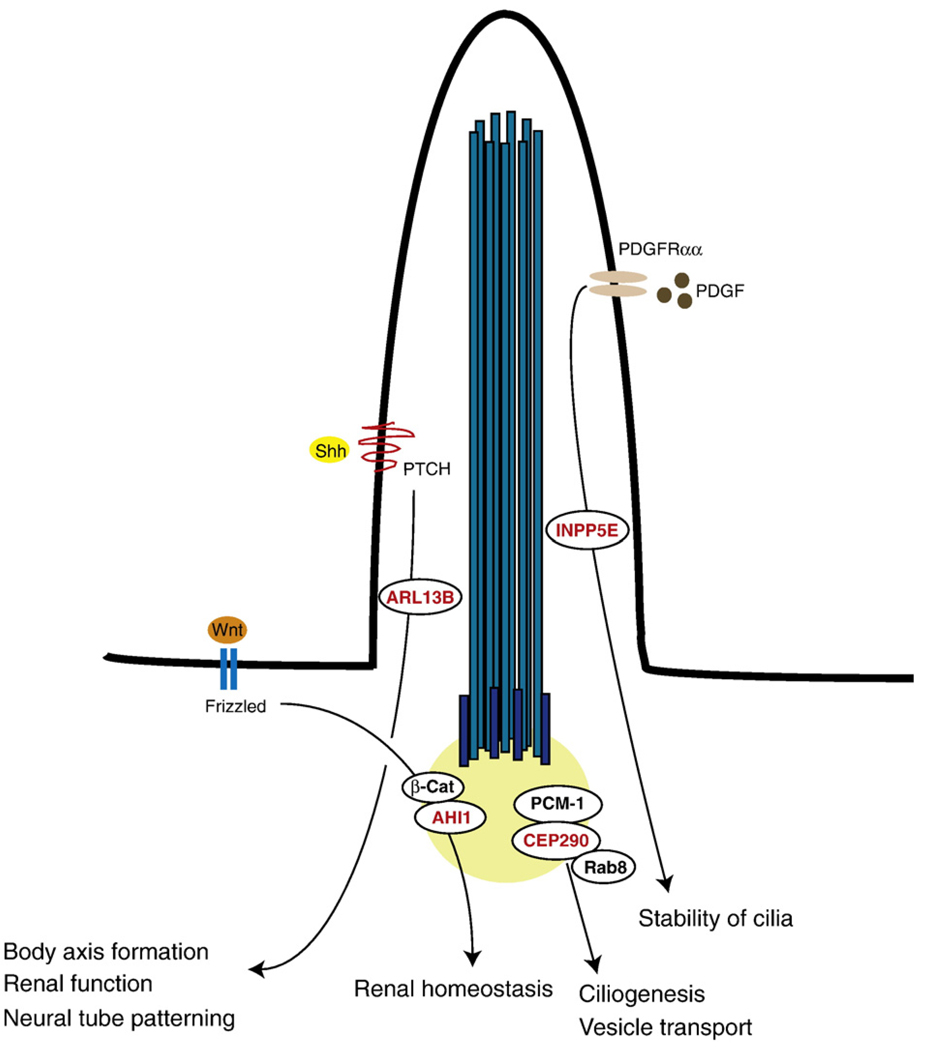
The "ciliopathies" are a newly defined group of disorders characterized by defects in the structure or function of the cellular primary cilium. Patients with these disorders display variably expressive fibrocystic renal disease, retinal blindness, polydactyly, obesity, and brain dysgenesis as well as neurocognitive impairments. Joubert syndrome is a ciliopathy defined by cerebellar vermis hypoplasia, oculomotor apraxia, intermittent hyperventilation, and mental retardation. Recent evidence suggests important roles for the primary cilium in mediating a host of extracellular signaling events such as morphogen, mitogen, homeostatic and polarity signals. Based upon the clinical features of ciliopathies and cilia mediated signaling pathways, the data support a role for the primary cilium in modulating neurogenesis, cell polarity, axonal guidance and possibly adult neuronal function.
Copyright 2009 Elsevier Inc. All rights reserved.
Figures

References
-
- Adams NA, et al. The retinal ciliopathies. Ophthalmic Genet. 2007;28:113–125. - PubMed
-
- Ahdab-Barmada M, Claassen D. A distinctive triad of malformations of the central nervous system in the Meckel-Gruber syndrome. J. Neuropathol. Exp. Neurol. 1990;49:610–620. - PubMed
-
- Andersen JS, et al. Proteomic characterization of the human centrosome by protein correlation profiling. Nature. 2003;426:570–574. - PubMed
-
- Avidor-Reiss T, et al. Decoding cilia function: defining specialized genes required for compartmentalized cilia biogenesis. Cell. 2004;117:527–539. - PubMed
-
- Badano JL, et al. The ciliopathies: an emerging class of human genetic disorders. Annu. Rev. Genomics Hum. Genet. 2006;7:125–148. - PubMed
Publication types
MeSH terms
Grants and funding
LinkOut - more resources
Full Text Sources
