


Environmental neurotoxic pesticide increases histone acetylation to promote apoptosis in dopaminergic neuronal cells: relevance to epigenetic mechanisms of neurodegeneration
- PMID: 20097775
- PMCID: PMC2847769
- DOI: 10.1124/mol.109.062174
Environmental neurotoxic pesticide increases histone acetylation to promote apoptosis in dopaminergic neuronal cells: relevance to epigenetic mechanisms of neurodegeneration
Abstract
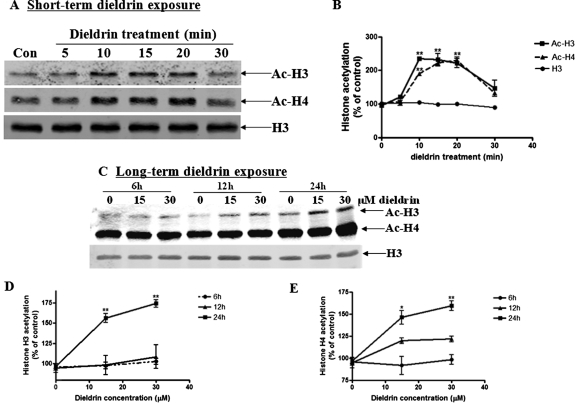
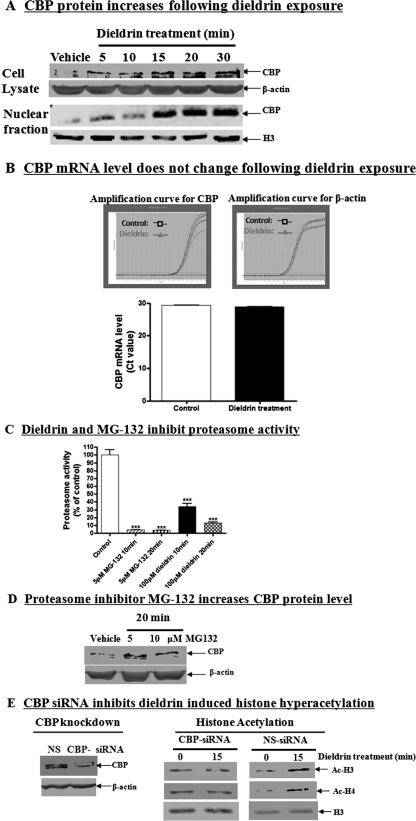
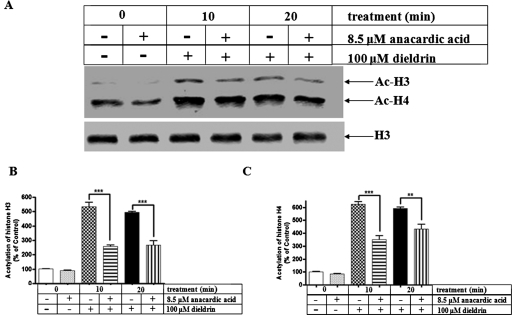
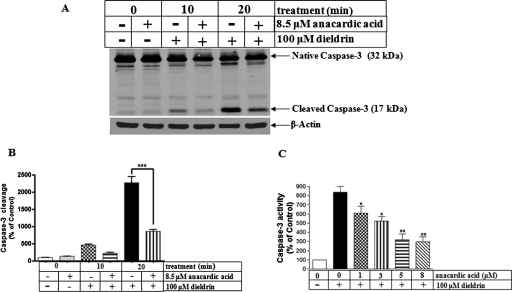
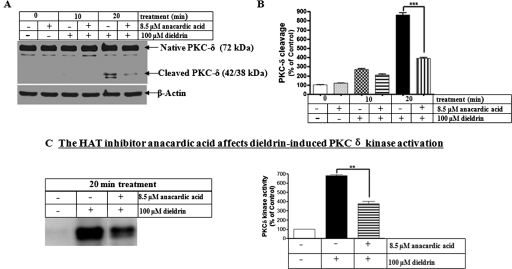
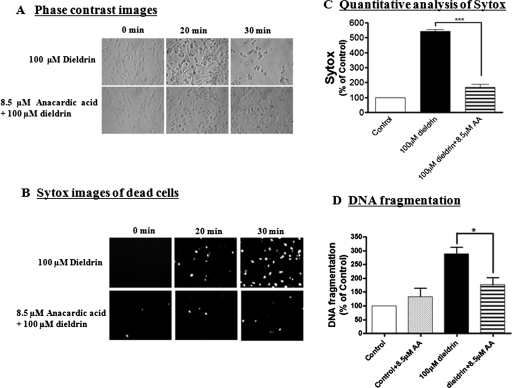
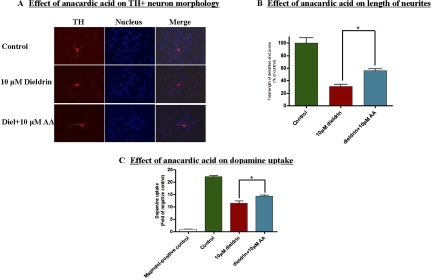
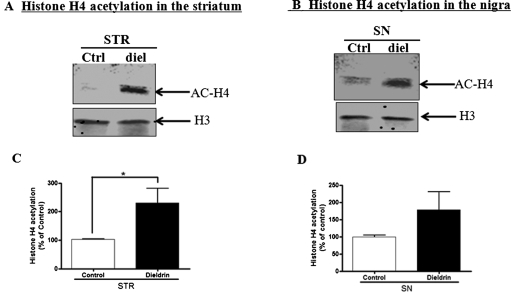
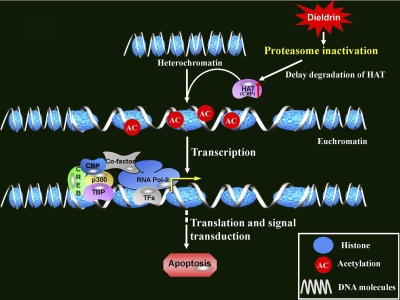
Pesticide exposure has been implicated in the etiopathogenesis of Parkinson's disease (PD); in particular, the organochlorine insecticide dieldrin is believed to be associated with PD. Emerging evidence indicates that histone modifications play a critical role in cell death. In this study, we examined the effects of dieldrin treatment on histone acetylation and its role in dieldrin-induced apoptotic cell death in dopaminergic neuronal cells. In mesencephalic dopaminergic neuronal cells, dieldrin induced a time-dependent increase in the acetylation of core histones H3 and H4. Histone acetylation occurred within 10 min of dieldrin exposure indicating that acetylation is an early event in dieldrin neurotoxicity. The hyperacetylation was attributed to dieldrin-induced proteasomal dysfunction, resulting in accumulation of a key histone acetyltransferase (HAT), cAMP response element-binding protein. The novel HAT inhibitor anacardic acid significantly attenuated dieldrin-induced histone acetylation, Protein kinase C delta proteolytic activation and DNA fragmentation in dopaminergic cells protected against dopaminergic neuronal degeneration in primary mesencephalic neuronal cultures. Furthermore, 30-day exposure of dieldrin in mouse models induced histone hyperacetylation in the striatum and substantia nigra. For the first time, our results collectively demonstrate that exposure to the neurotoxic pesticide dieldrin induces acetylation of core histones because of proteasomal dysfunction and that hyperacetylation plays a key role in dopaminergic neuronal degeneration after exposure of dieldrin.
Figures
References
-
- Afeseh Ngwa H, Kanthasamy A, Anantharam V, Song C, Witte T, Houk R, Kanthasamy AG. (2009) Vanadium induces dopaminergic neurotoxicity via protein kinase Cdelta dependent oxidative signaling mechanisms: relevance to etiopathogenesis of Parkinson's disease. Toxicol Appl Pharmacol 240:273–285 - PMC - PubMed
-
- Aron JL, Parthun MR, Marcucci G, Kitada S, Mone AP, Davis ME, Shen T, Murphy T, Wickham J, Kanakry C, et al. (2003) Depsipeptide (FR901228) induces histone acetylation and inhibition of histone deacetylase in chronic lymphocytic leukemia cells concurrent with activation of caspase 8-mediated apoptosis and down-regulation of c-FLIP protein. Blood 102:652–658 - PubMed
-
- Bader N, Jung T, Grune T. (2007) The proteasome and its role in nuclear protein maintenance. Exp Gerontol 42:864–870 - PubMed
-
- Balasubramanyam K, Swaminathan V, Ranganathan A, Kundu TK. (2003) Small molecule modulators of histone acetyltransferase p300. J Biol Chem 278:19134–40 - PubMed
-
- Boutillier AL, Trinh E, Loeffler JP. (2003) Selective E2F-dependent gene transcription is controlled by histone deacetylase activity during neuronal apoptosis. J Neurochem 84:814–828 - PubMed
Publication types
MeSH terms
Substances
Grants and funding
LinkOut - more resources
Full Text Sources
Medical
