


Microtubules regulate migratory polarity through Rho/ROCK signaling in T cells
- PMID: 20098744
- PMCID: PMC2808253
- DOI: 10.1371/journal.pone.0008774
Microtubules regulate migratory polarity through Rho/ROCK signaling in T cells
Abstract
Background: Migrating leukocytes normally have a polarized morphology with an actin-rich lamellipodium at the front and a uropod at the rear. Microtubules (MTs) are required for persistent migration and chemotaxis, but how they affect cell polarity is not known.
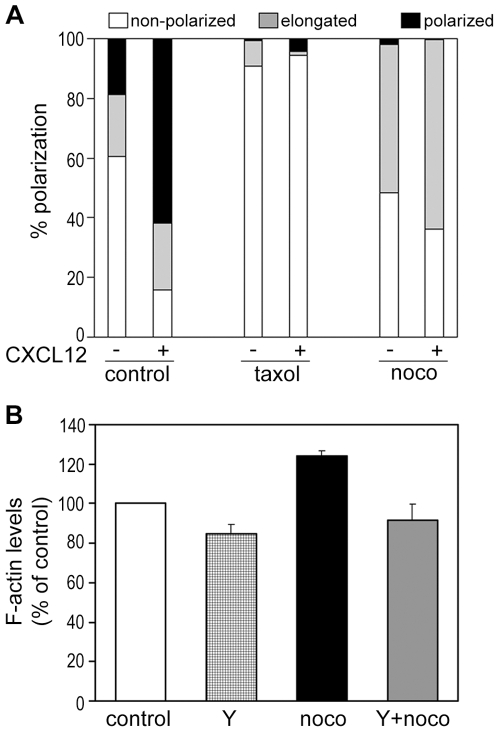
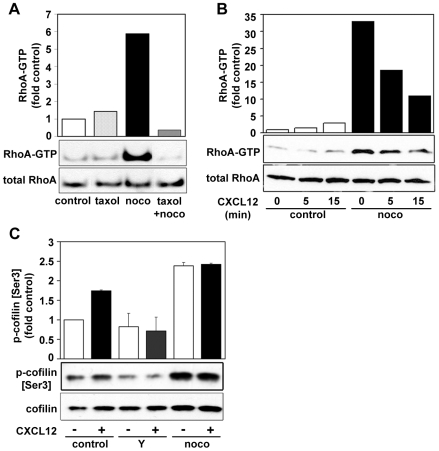
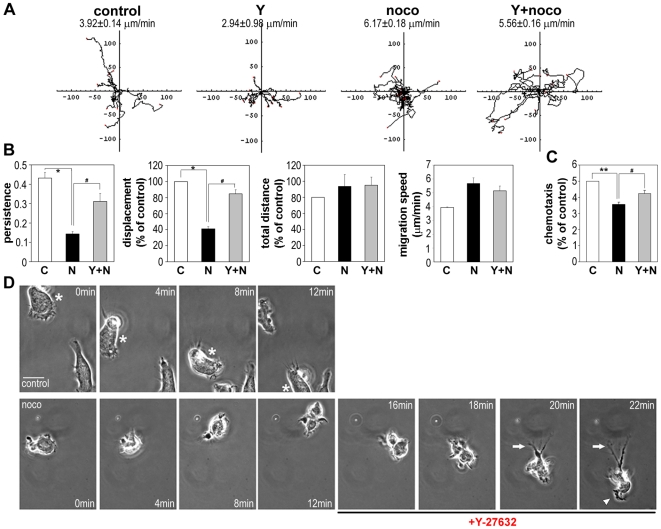
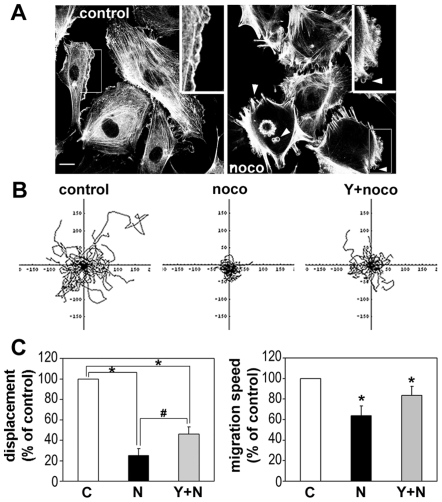
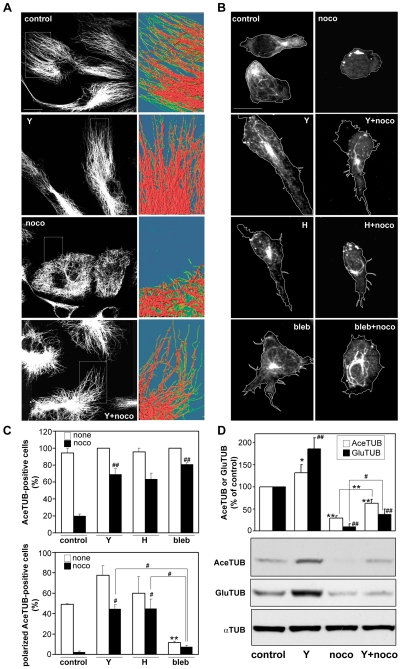
Methodology/principal findings: Here we report that T cells treated with nocodazole to disrupt MTs are unable to form a stable uropod or lamellipodium, and instead often move by membrane blebbing with reduced migratory persistence. However, uropod-localized receptors and ezrin/radixin/moesin proteins still cluster in nocodazole-treated cells, indicating that MTs are required specifically for uropod stability. Nocodazole stimulates RhoA activity, and inhibition of the RhoA target ROCK allows nocodazole-treated cells to re-establish lamellipodia and uropods and persistent migratory polarity. ROCK inhibition decreases nocodazole-induced membrane blebbing and stabilizes MTs. The myosin inhibitor blebbistatin also stabilizes MTs, indicating that RhoA/ROCK act through myosin II to destabilize MTs.
Conclusions/significance: Our results indicate that RhoA/ROCK signaling normally contributes to migration by affecting both actomyosin contractility and MT stability. We propose that regulation of MT stability and RhoA/ROCK activity is a mechanism to alter T-cell migratory behavior from lamellipodium-based persistent migration to bleb-based migration with frequent turning.
Conflict of interest statement
Figures





References
-
- Hogg N, Smith A, McDowall A, Giles K, Stanley P, et al. How T cells use LFA-1 to attach and migrate. Immunol Lett. 2004;92:51–54. - PubMed
-
- Smith A, Bracke M, Leitinger B, Porter JC, Hogg N. LFA-1-induced T cell migration on ICAM-1 involves regulation of MLCK-mediated attachment and ROCK-dependent detachment. J Cell Sci. 2003;116:3123–3133. - PubMed
Publication types
MeSH terms
Substances
Grants and funding
LinkOut - more resources
Full Text Sources
Other Literature Sources
Research Materials
