


Gender-related dimorphism in aortic insufficiency in murine mucopolysaccharidosis type I
- PMID: 20099693
- PMCID: PMC3541017
Gender-related dimorphism in aortic insufficiency in murine mucopolysaccharidosis type I
Abstract
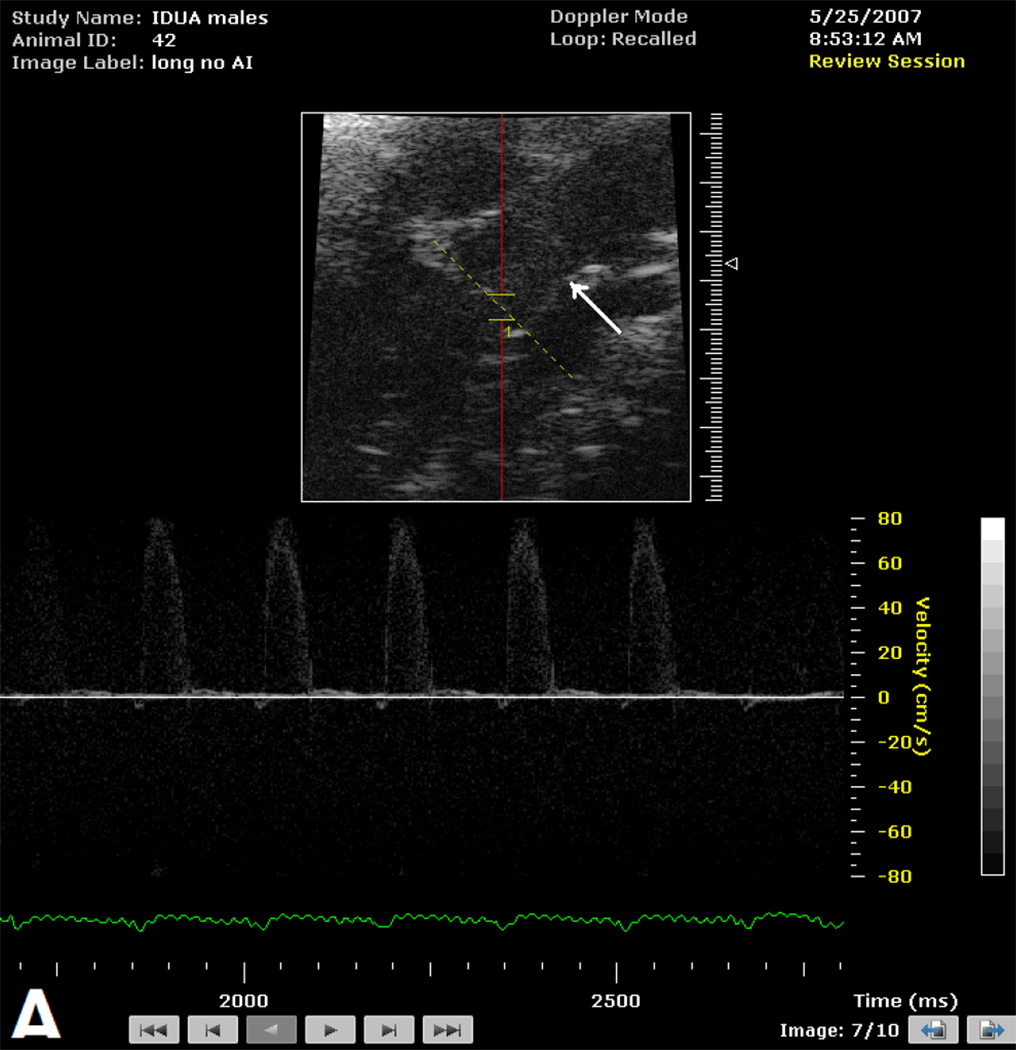
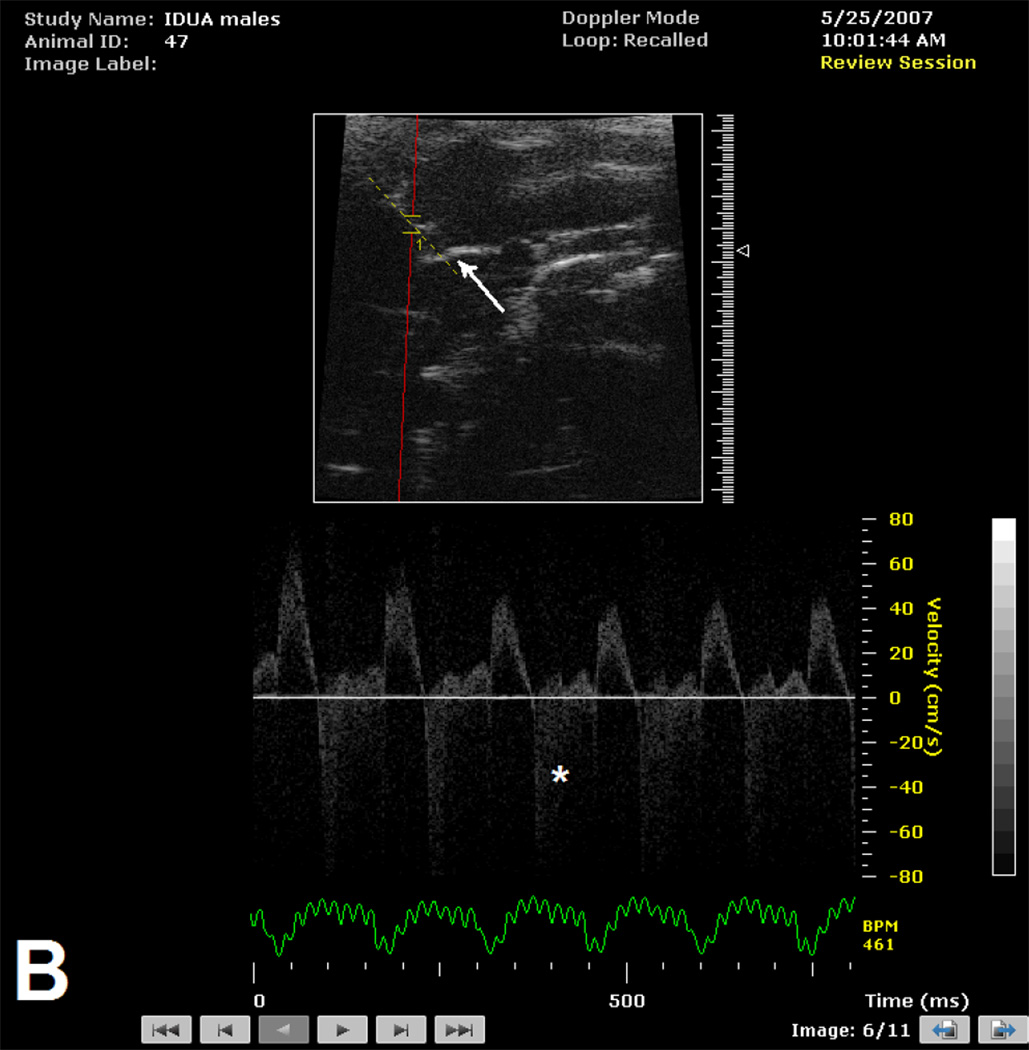
Background and aim of the study: Hurler syndrome (mucopolysaccharidosis type I/H; MPS I/H) is a lethal heritable enzymopathy that leads to an accumulation of glycosaminoglycans (GAGs) and dysfunction of multiple organs of the body, including the heart. As gender-related differences are common in heart disease and a murine model for mucopolysaccharidosis type I (MPSI) has been used for the preclinical evaluation of strategies to correct heart valve disease in Hurler syndrome, the study aim was to determine the impact of gender on heart disease in the murine MPSI model.
Methods: Murine hearts were examined by high-resolution ultrasound biomicroscopy, the tissue and urinary contents of GAGs were measured, and the quantitative reverse transcribed ribonucleic acid polymerase chain reaction for metalloproteinase (MMP) -9 and -12 determined.
Results: In MPSI mice, aortic insufficiency (AI) in conjunction with depressed myocardial function was observed significantly more often in males than females. Neither the total body GAG burden nor myocardial GAG content was responsible for this difference. In contrast, in the aorta the expression of extracellular matrix tissue MMP-12, but not MMP-9, was significantly elevated in males with AI when compared to females with AI.
Conclusion: Gender-related dimorphism occurs in cardiac valvular disease in MPSI mice. Male MPSI mice showed an increased incidence of AI associated with an increase in the MMP-12 content of the aortic arch. The evaluation of findings in relation to gender is important in the experimental treatment of murine models of disease, so that gender-related variations in genetic penetrance are not mistaken for disease correction.
Conflict of interest statement
There are no relevant conflicts of interest to disclose.
Figures
References
-
- Mak KH, Ma S, Heng D, Tan CE, Tai ES, Topol EJ, et al. Impact of sex, metabolic syndrome, and diabetes mellitus on cardiovascular events. Am J Cardiol. 2007;100:227–233. - PubMed
-
- Kurtulmus N, Bos S, Arslan S, Kurt T, Tukek T, Ince N. Differences in risk factors for acute coronary syndromes between men and women. Acta Cardiol. 2007;62:251–255. - PubMed
-
- Singh JP, Evans JC, Levy D, Larson MG, Freed LA, Fuller DL, Lehman B, Benjamin EJ. Prevalence and clinical determinants of mitral, tricuspid, and aortic regurgitation (the Framingham Heart Study) Am J Cardiol. 1999;83:897–902. - PubMed
-
- Lederle FA, Johnson GR, Wilson SE, Chute EP, Littooy FN, Bandyk D, Krupski WC, Barone GW, Archer CW, Ballard DJ. Prevalence and association of abdominal aortic aneurysm detected through screening. Aneurysm Detection and Management (ADAM) Veterns Affairs Cooperative Study Group. Ann Int Med. 1997;126:441–449. - PubMed
-
- Cavasin MA, Tao Z, Menon S, Yang XP. Gender differences in cardiac function during early remodeling after acute myocardial infarction in mice. Life Sci. 2004;75:2181–2192. - PubMed
Publication types
MeSH terms
Substances
Grants and funding
LinkOut - more resources
Full Text Sources
Research Materials
Miscellaneous