


In vitro comparison of digital and conventional bitewing radiographs for the detection of approximal caries in primary teeth exposed and viewed by a new wireless handheld unit
- PMID: 20100920
- PMCID: PMC3520193
- DOI: 10.1259/dmfr/15182314
In vitro comparison of digital and conventional bitewing radiographs for the detection of approximal caries in primary teeth exposed and viewed by a new wireless handheld unit
Abstract
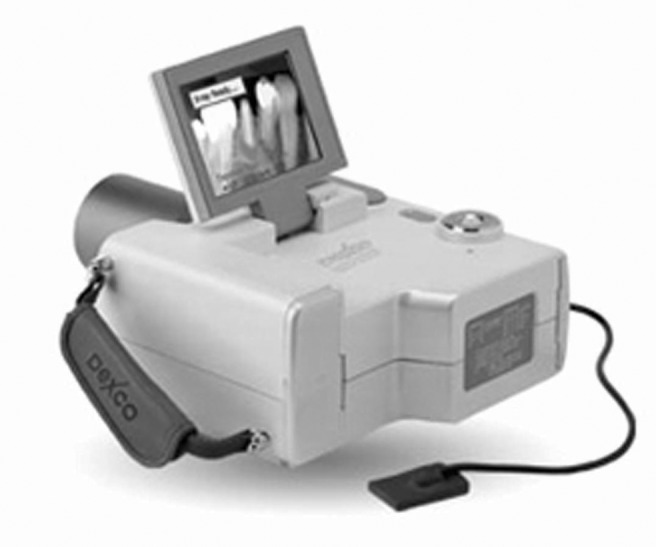
Objectives: The aim of this study was to compare the diagnostic quality of a new wireless handheld unit (ADX4000; Dexcowin Co. Ltd, Korea) on conventional bitewings and its LCD screen for the detection of approximal caries in primary teeth.
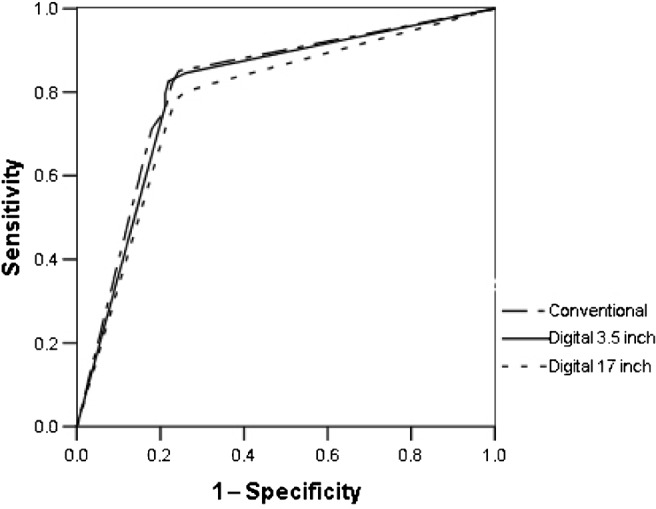
Methods: In total, 108 approximal surfaces of primary teeth were examined in vitro by 3 observers. Conventional films were viewed under subdued lighting conditions on a conventional view box. Digital 3.5 inch images were displayed on the built-in monitor of the ADX4000 and digital 17 inch images were viewed on a 17 inch monitor. The true caries diagnosis was based on histological assessment of the approximal surfaces after sectioning the primary teeth. Receiver operating characteristic (ROC) curve (A(z)) analysis was used to assess the diagnostic quality of imaging modalities.
Results: The areas under the ROC curves ranged from 0.786 (digital 17 inch) to 0.813 (digital 3.5 inch). No statistically significant differences were found between the three modalities for detecting approximal caries.
Conclusions: It was concluded that the diagnostic quality of conventional film and digital images, which were exposed and viewed by a new wireless handheld unit, was comparable.
Figures
Comment in
-
In vitro comparison of digital and conventional bitewing radiographs.Dentomaxillofac Radiol. 2010 Jul;39(5):320; author reply 321. doi: 10.1259/dmfr/69119164. Dentomaxillofac Radiol. 2010. PMID: 20587657 Free PMC article. No abstract available.
References
-
- Haak R, Wicht MJ, Noack MJ. Conventional, digital and contrast-enhanced bitewing radiographs in the decision to restore approximal carious lesions. Caries Res 2001;35:193–199 - PubMed
-
- Li G, van derStelt PF, Verheij JG, Speller R, Galbiati A, Psomadellis F, et al. End-user survey for digital sensor characteristics: a pilot questionnaire study. Dentomaxillofac Radiol 2006;35:147–151 - PubMed
-
- Syriopoulos K, Sanderink GC, Velders XL, van derStelt PF. Radiographic detection of approximal caries: a comparison of dental films and digital imaging systems. Dentomaxillofac Radiol 2000;29:312–318 - PubMed
-
- Hintze H, Frydenberg M, Wenzel A. Influence of number of surfaces and observers on statistical power in a multiobserver ROC radiographic caries detection study. Caries Res 2003;37:200–205 - PubMed
-
- Castro VM, Katz JO, Hardman PK, Glaros AG, Spencer P. In vitro comparison of conventional film and direct digital imaging in the detection of approximal caries. Dentomaxillofac Radiol 2007;36:138–142 - PubMed
Publication types
MeSH terms
LinkOut - more resources
Full Text Sources
Medical
