Neighborhood socioeconomic status and non school physical activity and body mass index in adolescent girls
- PMID: 20101916
- PMCID: PMC2854409
- DOI: 10.1123/jpah.6.6.731
Neighborhood socioeconomic status and non school physical activity and body mass index in adolescent girls
Abstract
Background: Socioeconomic status (SES) has well known associations with a variety of health conditions and behaviors in adults but is unknown in adolescents.
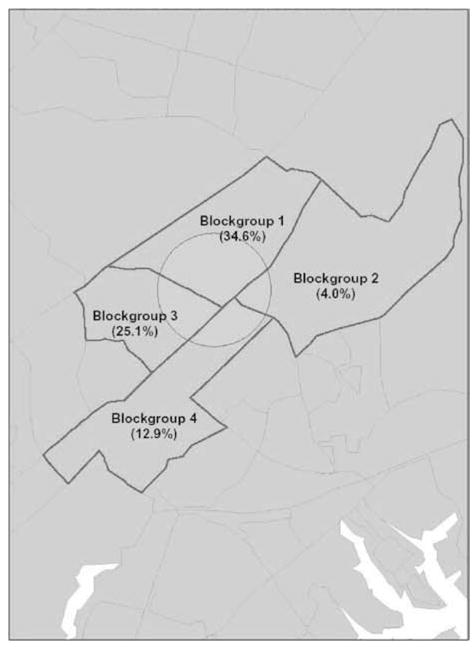
Methods: Multilevel analysis was conducted to examine the associations between individual and neighborhood-level measures of SES and physical activity and body mass index in a sample of 1554 6th grade girls selected at random from 36 middle schools across 6 geographic regions in the United States that participated in the Trial of Activity for Adolescent Girls (TAAG). Data on parental education and employment, and receipt of subsidized school lunch were collected by questionnaire. Neighborhood-level SES was measured by the Townsend Index. Nonschool physical activity levels were measured by accelerometer and type, location and context was measured using a 3 day physical activity recall (3DPAR).
Results: After controlling for race, lower parental education and higher levels of social deprivation were associated with higher BMI. In a model with both variables, effects were attenuated and only race remained statistically significant. None of the indices of SES were related to accelerometer measured physical activity. Bivariate associations with self-reported Moderate-Vigorous Physical Activity (MVPA) location and type (3DPAR) varied by SES.
Conclusion: Among adolescent girls in the TAAG Study, the prevalence of overweight is high and inversely related to individual and neighborhood SES.
Figures

References
-
- Lynch J, Kaplan G. Socioeconomic Position. New York: Oxford University Press; 2000.
-
- Mensah GA, Mokdad AH, Ford ES, Greenlund KJ, Croft JB. State of disparities in cardiovascular health in the United States. Circulation. 2005;111(10):1233–1241. - PubMed
-
- Lee JR, Paultre F, Mosca L. The association between educational level and risk of cardiovascular disease fatality among women with cardiovascular disease. Womens Health Issues. 2005;2:80–88. - PubMed
-
- Winkleby MA, Kraemer HC, Ahn DK, Varady AN. Ethnic and socioeconomic differences in cardiovascular disease risk factors: findings for women from the Third National Health and Nutrition Examination Survey, 1988–1994. JAMA. 1998;280:356–362. - PubMed
Publication types
MeSH terms
Grants and funding
- U01HL66845/HL/NHLBI NIH HHS/United States
- U01HL66855/HL/NHLBI NIH HHS/United States
- U01HL66857/HL/NHLBI NIH HHS/United States
- U01 HL066855/HL/NHLBI NIH HHS/United States
- U01 HL066858/HL/NHLBI NIH HHS/United States
- U01 HL066856/HL/NHLBI NIH HHS/United States
- U01 HL066845/HL/NHLBI NIH HHS/United States
- U01HL66852/HL/NHLBI NIH HHS/United States
- R01HL71244/HL/NHLBI NIH HHS/United States
- U01HL66856/HL/NHLBI NIH HHS/United States
- U01 HL066852/HL/NHLBI NIH HHS/United States
- U01 HL066853/HL/NHLBI NIH HHS/United States
- U01HL66858/HL/NHLBI NIH HHS/United States
- R01 HL071244/HL/NHLBI NIH HHS/United States
- U01 HL066857/HL/NHLBI NIH HHS/United States
- U01HL66853/HL/NHLBI NIH HHS/United States
LinkOut - more resources
Full Text Sources