


Nek4 status differentially alters sensitivity to distinct microtubule poisons
- PMID: 20103636
- PMCID: PMC2946156
- DOI: 10.1158/0008-5472.CAN-09-2113
Nek4 status differentially alters sensitivity to distinct microtubule poisons
Abstract
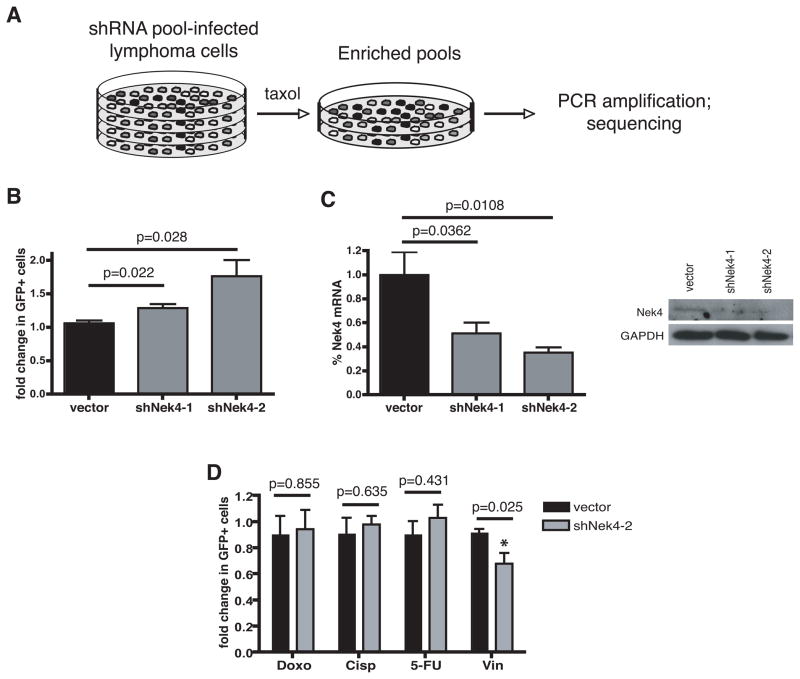
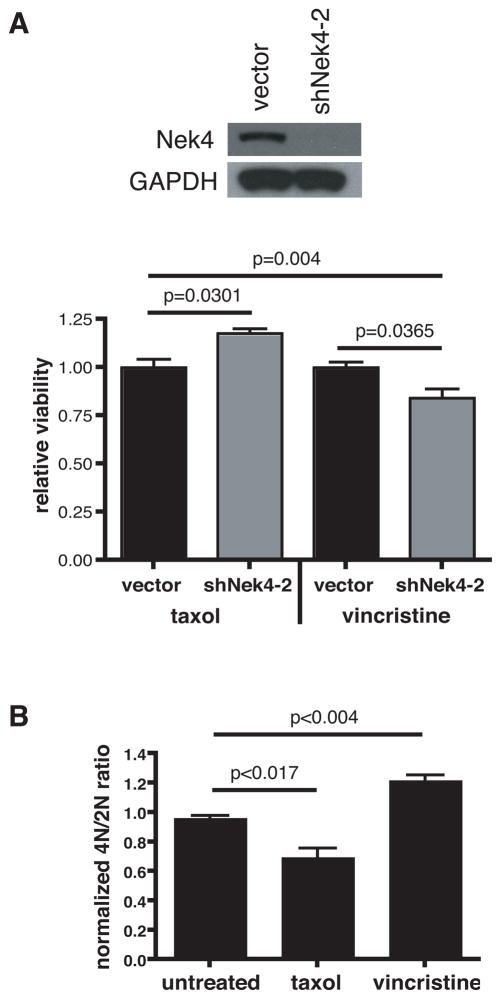
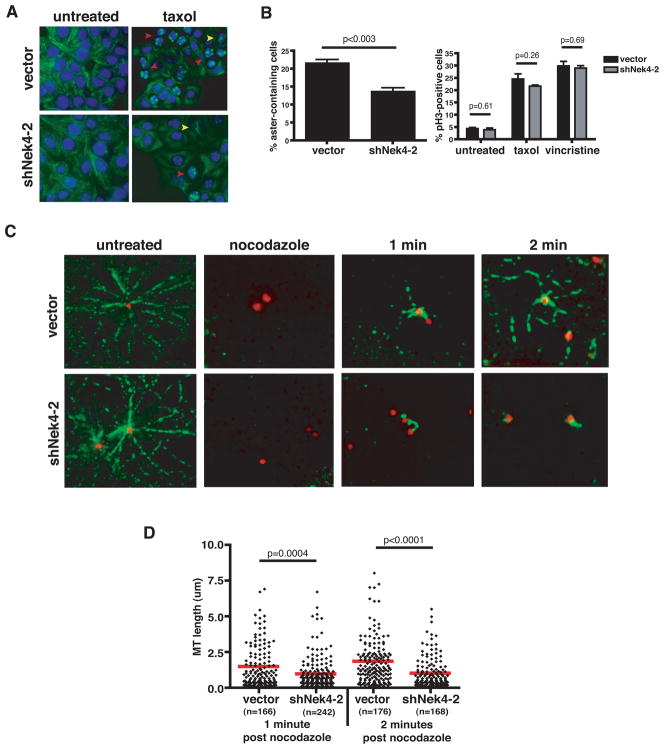
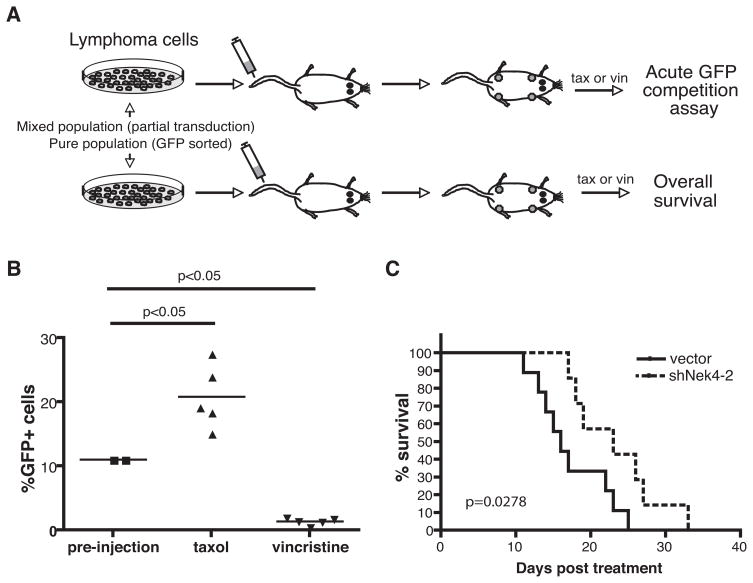
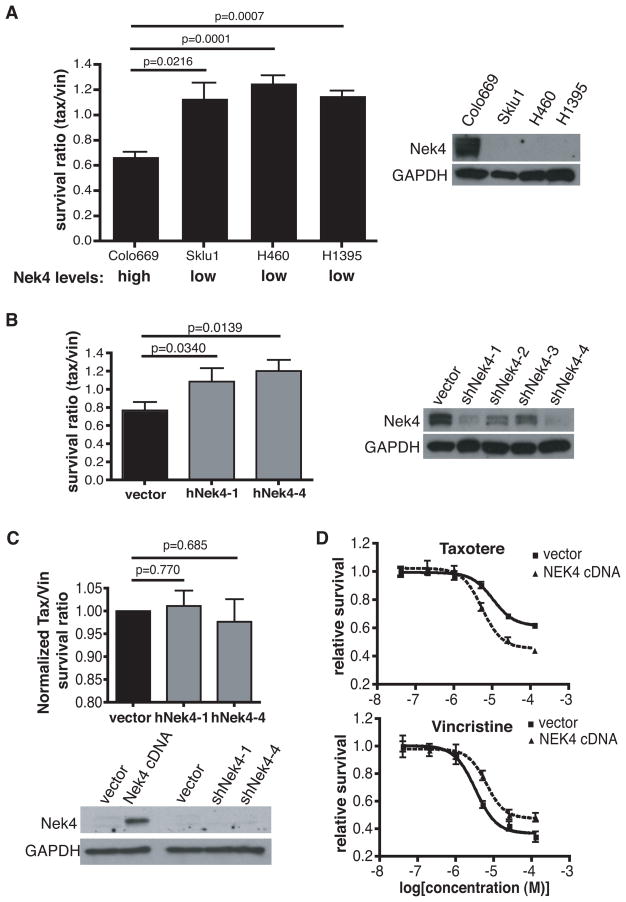
Microtubule poisons are widely used in cancer treatment, but the factors determining the relative efficacy of different drugs in this class remain obscure. In this study, we identified the NIMA kinase Nek4 in a genetic screen for mediators of the response to Taxol, a chemotherapeutic agent that stabilizes microtubules. After Taxol treatment, Nek4 promoted microtubule outgrowth, whereas Nek4 deficiency impaired G(2)-M arrest and decreased formation of mitotic-like asters. In contrast, Nek4 deficiency sensitized cells to vincristine, which destabilizes microtubules. Therefore, Nek4 deficiency may either antagonize or agonize the effects of microtubule poisons, depending on how they affect microtubule polymerization. Of note, Nek4 gene maps to a commonly deleted locus in non-small cell lung cancer. Thus, Nek4 deletion in this disease may rationalize the use of particular types of microtubule poisons for lung cancer therapy.
Figures
References
-
- Jordan MA, Wilson L. Microtubules and actin filaments: dynamic targets for cancer chemotherapy. Curr Opin Cell Biol. 1998;10(1):123–30. - PubMed
-
- Bhalla K, Ibrado AM, Tourkina E, Tang C, Mahoney ME, Huang Y. Taxol induces internucleosomal DNA fragmentation associated with programmed cell death in human myeloid leukemia cells. Leukemia. 1993;7(4):563–8. - PubMed
-
- Danesi R, Figg WD, Reed E, Myers CE. Paclitaxel (taxol) inhibits protein isoprenylation and induces apoptosis in PC-3 human prostate cancer cells. Mol Pharmacol. 1995;47(6):1106–11. - PubMed
-
- Martin SJ, Cotter TG. Disruption of microtubules induces an endogenous suicide pathway in human leukaemia HL-60 cells. Cell Tissue Kinet. 1990;23(6):545–59. - PubMed
Publication types
MeSH terms
Substances
Grants and funding
LinkOut - more resources
Full Text Sources
Other Literature Sources
Molecular Biology Databases
