


Radiosensitization of epidermal growth factor receptor/HER2-positive pancreatic cancer is mediated by inhibition of Akt independent of ras mutational status
- PMID: 20103665
- PMCID: PMC2818631
- DOI: 10.1158/1078-0432.CCR-09-1324
Radiosensitization of epidermal growth factor receptor/HER2-positive pancreatic cancer is mediated by inhibition of Akt independent of ras mutational status
Abstract
Purpose: Epidermal growth factor receptor (EGFR) family members (e.g., EGFR, HER2, HER3, and HER4) are commonly overexpressed in pancreatic cancer. We investigated the effects of inhibition of EGFR/HER2 signaling on pancreatic cancer to elucidate the role(s) of EGFR/HER2 in radiosensitization and to provide evidence in support of further clinical investigations.
Experimental design: Expression of EGFR family members in pancreatic cancer lines was assessed by quantitative reverse transcription-PCR. Cell growth inhibition was determined by MTS assay. The effects of inhibition of EGFR family receptors and downstream signaling pathways on in vitro radiosensitivity were evaluated using clonogenic assays. Growth delay was used to evaluate the effects of nelfinavir on in vivo tumor radiosensitivity.
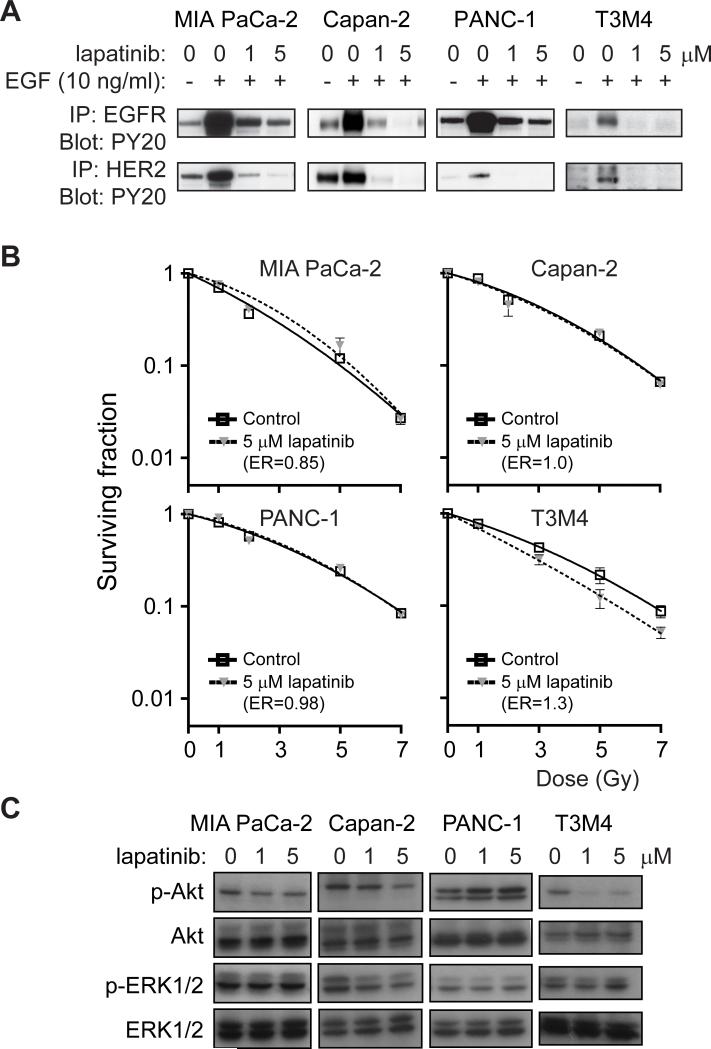
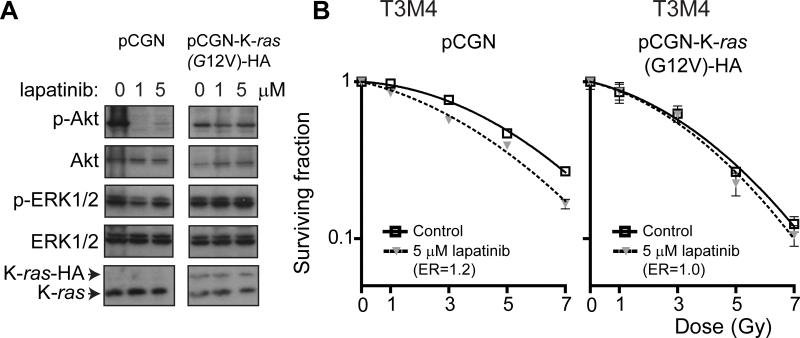
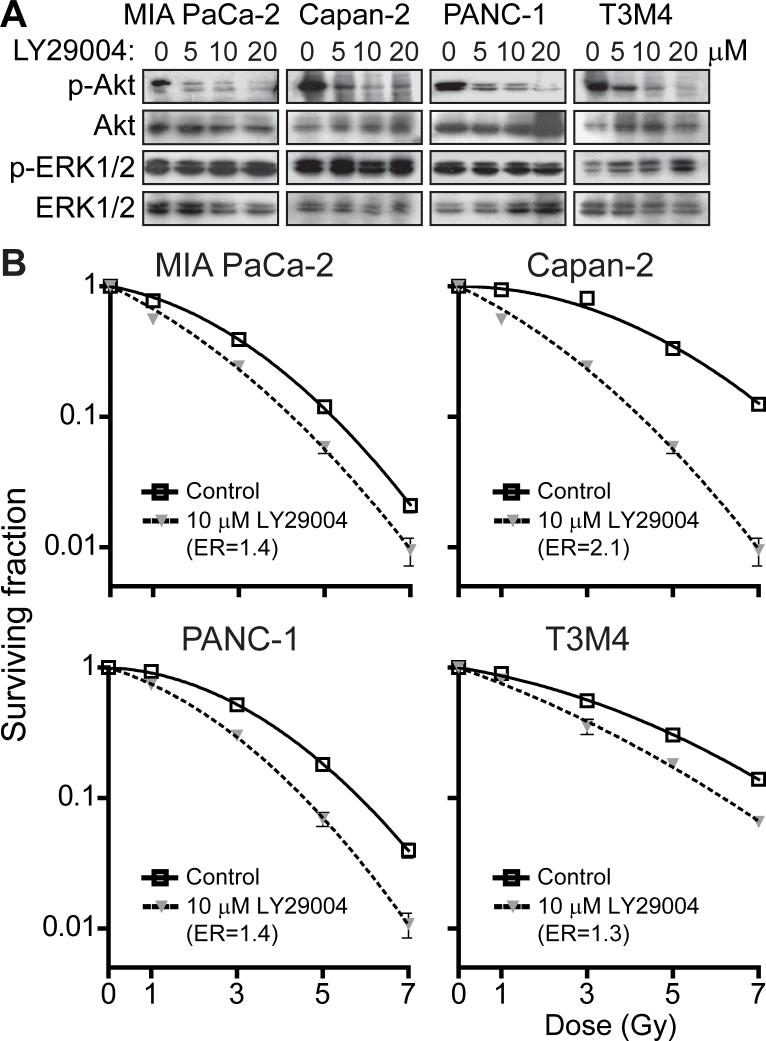
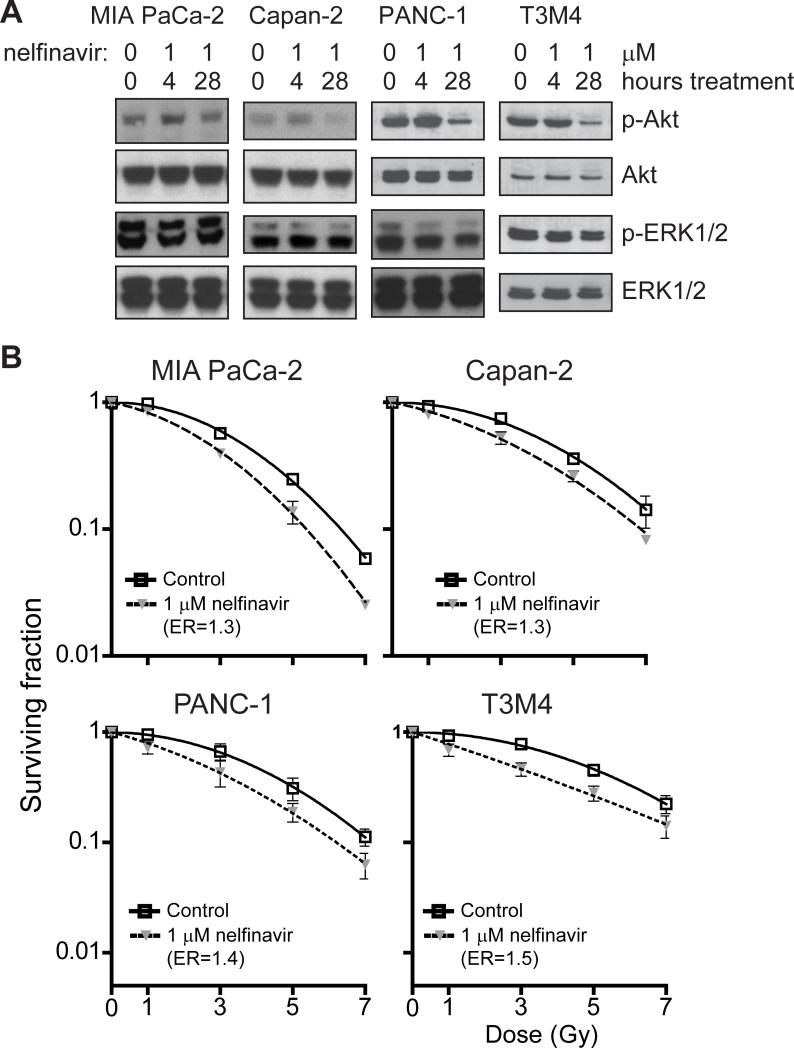
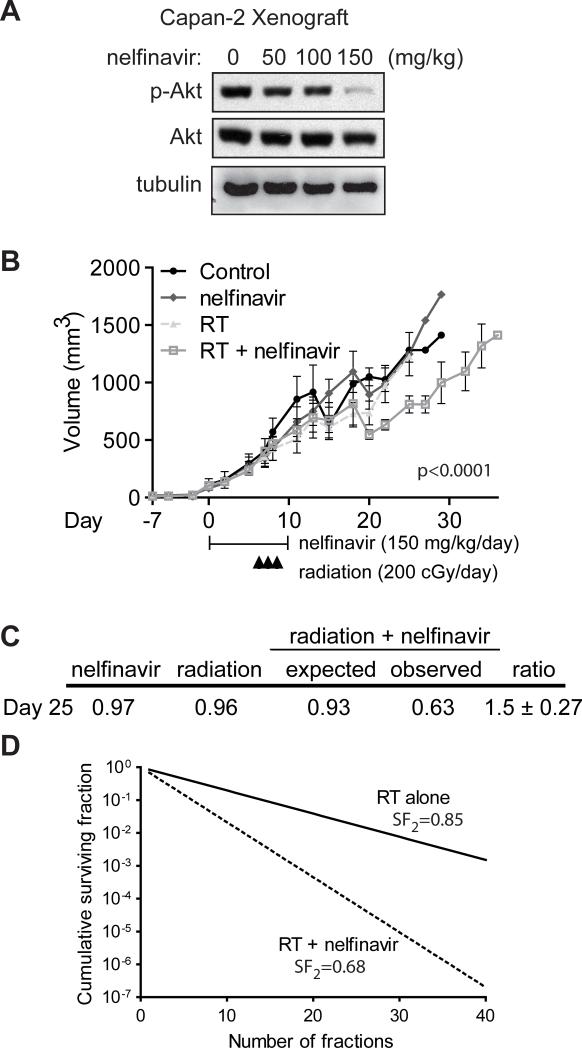
Results: Lapatinib inhibited cell growth in four pancreatic cancer cell lines, but radiosensitized only wild-type K-ras-expressing T3M4 cells. Akt activation was blocked in a wild-type K-ras cell line, whereas constitutive phosphorylation of Akt and extracellular signal-regulated kinase (ERK) was seen in lines expressing mutant K-ras. Overexpression of constitutively active K-ras (G12V) abrogated lapatinib-mediated inhibition of both Akt phosphorylation and radiosensitization. Inhibition of MAP/ERK kinase/ERK signaling with U0126 had no effect on radiosensitization, whereas inhibition of activated Akt with LY294002 (enhancement ratio, 1.2-1.8) or nelfinavir (enhancement ratio, 1.2-1.4) radiosensitized cells regardless of K-ras mutation status. Oral nelfinavir administration to mice bearing mutant K-ras-containing Capan-2 xenografts resulted in a greater than additive increase in radiation-mediated tumor growth delay (synergy assessment ratio of 1.5).
Conclusions: Inhibition of EGFR/HER2 enhances radiosensitivity in wild-type K-ras pancreatic cancer. Nelfinavir, and other phosphoinositide 3-kinase/Akt inhibitors, are effective pancreatic radiosensitizers regardless of K-ras mutation status.
Figures
References
-
- American Cancer Society . Cancer Facts and Figures 2007. American Cancer Society; Atlanta: 2007.
-
- Harari PM, Huang SM. Radiation response modification following molecular inhibition of epidermal growth factor receptor signaling. Semin Radiat Oncol. 2001;11:281–9. - PubMed
-
- Moore MJ, Goldstein D, Hamm J, et al. Erlotinib plus gemcitabine compared with gemcitabine alone in patients with advanced pancreatic cancer: a phase III trial of the National Cancer Institute of Canada Clinical Trials Group. J Clin Oncol. 2007;25:1960–6. - PubMed
-
- Yamanaka Y, Friess H, Kobrin MS, Buchler M, Beger HG, Korc M. Coexpression of epidermal growth factor receptor and ligands in human pancreatic cancer is associated with enhanced tumor aggressiveness. Anticancer Res. 1993;13:565–9. - PubMed
-
- Dong M, Nio Y, Guo KJ, Tamura K, Tian YL, Dong YT. Epidermal growth factor and its receptor as prognostic indicators in Chinese patients with pancreatic cancer. Anticancer Res. 1998;18:4613–9. - PubMed
Publication types
MeSH terms
Substances
Grants and funding
LinkOut - more resources
Full Text Sources
Medical
Research Materials
Miscellaneous
