Characteristics of pandemic influenza A (H1N1) infection in patients presenting to a university hospital in Riyadh, Saudi Arabia
- PMID: 20103959
- PMCID: PMC2850183
- DOI: 10.4103/0256-4947.59377
Characteristics of pandemic influenza A (H1N1) infection in patients presenting to a university hospital in Riyadh, Saudi Arabia
Abstract
Background and objectives: A national plan of management for flu-like illnesses was developed by the Saudi Ministry of Health after the first outbreak in Saudi Arabia in June. We describe the clinical presentation of the H1N1 cases attending King Khalid University Hospital (KKUH) between July through September 2009 and identify the high-risk age groups.
Methods: All patients presenting with influenza-like illnesses (ILI) in the H1N1 clinics during the specified period were clinically examined and tested using reverse transcription polymerase chain reaction (RT-PCR). Those who were clinically diagnosed and confirmed positive for novel influenza A (H1N1) were included in the study.
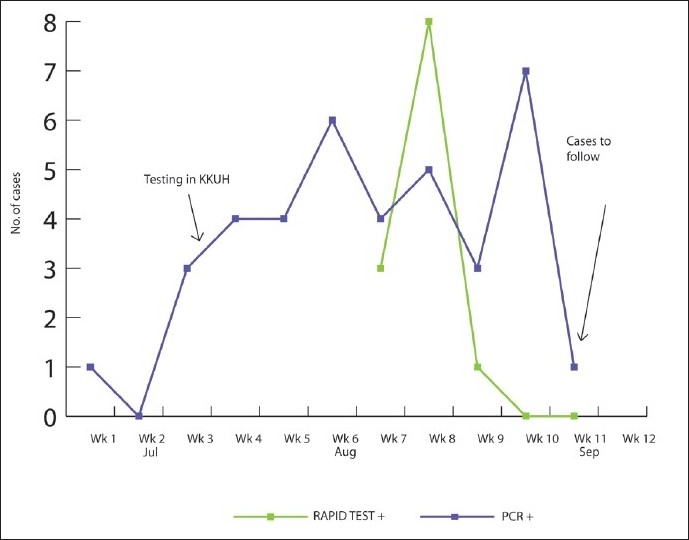
Results: Over a 6-week period, 117 cases of laboratory-confirmed cases were reported in KKUH with a mean (SD) age of 19.6 (16.7) years, of whom 72 (62.1%) were males. Most reported cases were Saudis (n=99, 85.3%); 94 (81%) had no travel history outside the country; 100 (86.2%) had had no contact with an H1N1-identified patient; 33% were aged 5-14 years and 28.4% were aged 15-29 years. The most commonly reported symptoms were fever in 99 (85.3%), cough in 9 (81%), runny nose (33.6%) and sore throat (21.3%). All 117 cases were confirmed positive using real time RT-PCR testing. Thirty-one cases (26%) were admitted and 22 of those (71%) recovered after receiving oseltamivir. Two deaths were attributed to the 2009 pandemic. One patient died of chronic pulmonary disease. The other cause of death was unknown.
Conclusion: These findings indicate indigenous influenza A (H1N1) transmission, and confirm the urgent need for prevention strategies which specifically target children and young adults, who appear to have a higher risk of infection and hospitalization. Such measures include immunization, improved personal hygiene, and increased ventilation in habitations.
Figures
References
-
- World Health Organization (WHO) Pandemic influenza vaccines: Current status. Available from: http://www.who.int/csr/disease/swineflu/notes/pandemic_influenza_vaccine... (last accessed on 2009 Sep 25)
-
- Saudi Arabia confirms first H1N1 flu case. Available from: http://www.reuters.com/article/latestCrisis/idUSL31005359 (last accessed on 2009 Sep 19)
-
- Saudi Ministry of Health. The national plan for preventing Flu pandemics (1430 – 2009) Available from: http://www.health.moh.gov.sa/swine/nationalplan.pdf (last accessed on 2009 Sep 19)
-
- Rasheed A. New Saudi rules aim to combat H1N1. Available from: http://www.gulfnews.com/nation/Health/10347706.html (last accessed on 2009 Sep 25)
-
- Centers for Disease Control and Prevention (CDC) 2009. Pandemic Influenza A (H1N1) Virus Infections-Chicago, Illinois, April-July 2009. MMWR Morb Mortal Wkly Rep. 2009;58:913–8. - PubMed
MeSH terms
LinkOut - more resources
Full Text Sources
Medical