


Impact of dendritic spine preservation in medium spiny neurons on dopamine graft efficacy and the expression of dyskinesias in parkinsonian rats
- PMID: 20105237
- PMCID: PMC2940228
- DOI: 10.1111/j.1460-9568.2010.07077.x
Impact of dendritic spine preservation in medium spiny neurons on dopamine graft efficacy and the expression of dyskinesias in parkinsonian rats
Abstract
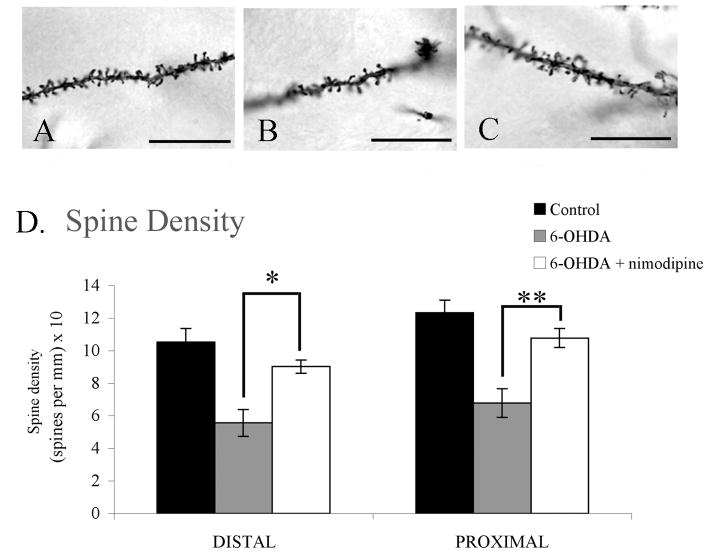
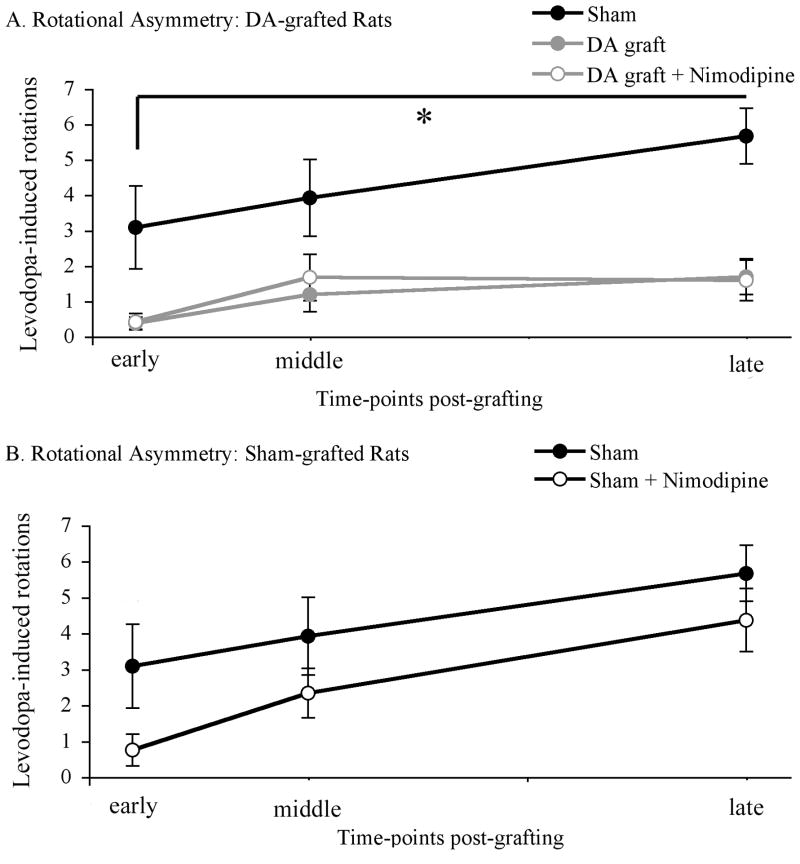
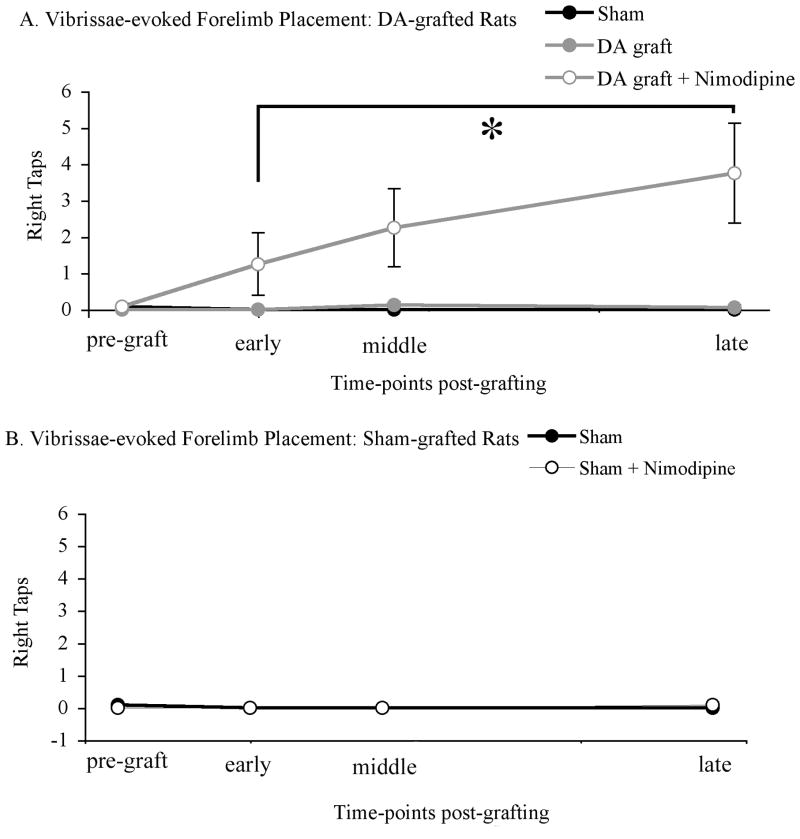
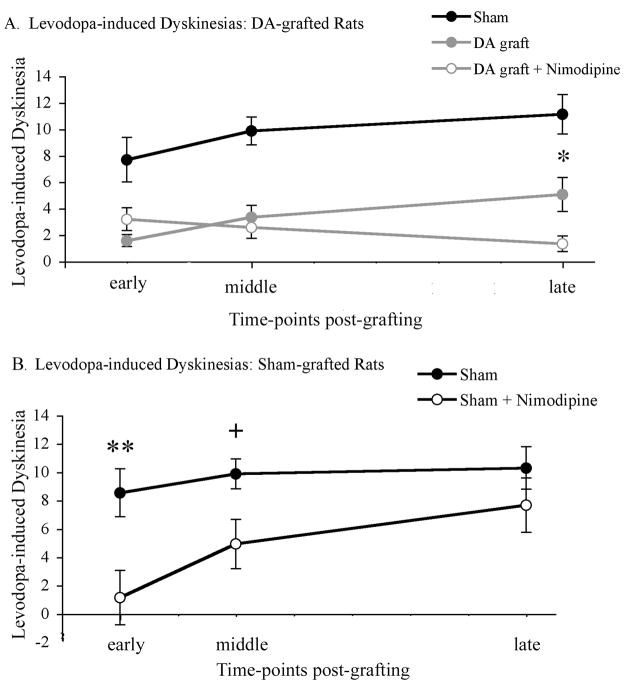
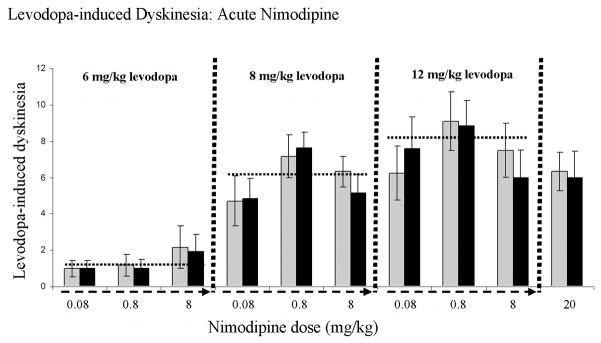
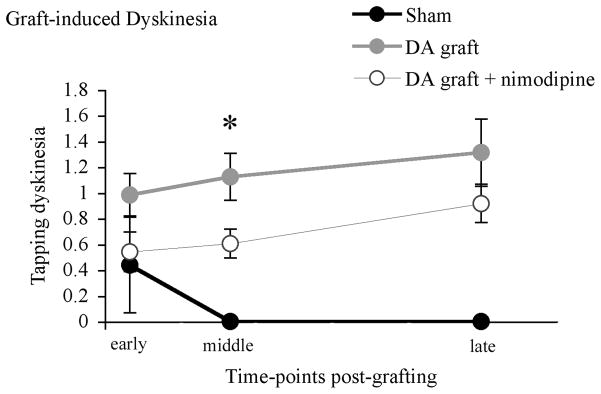
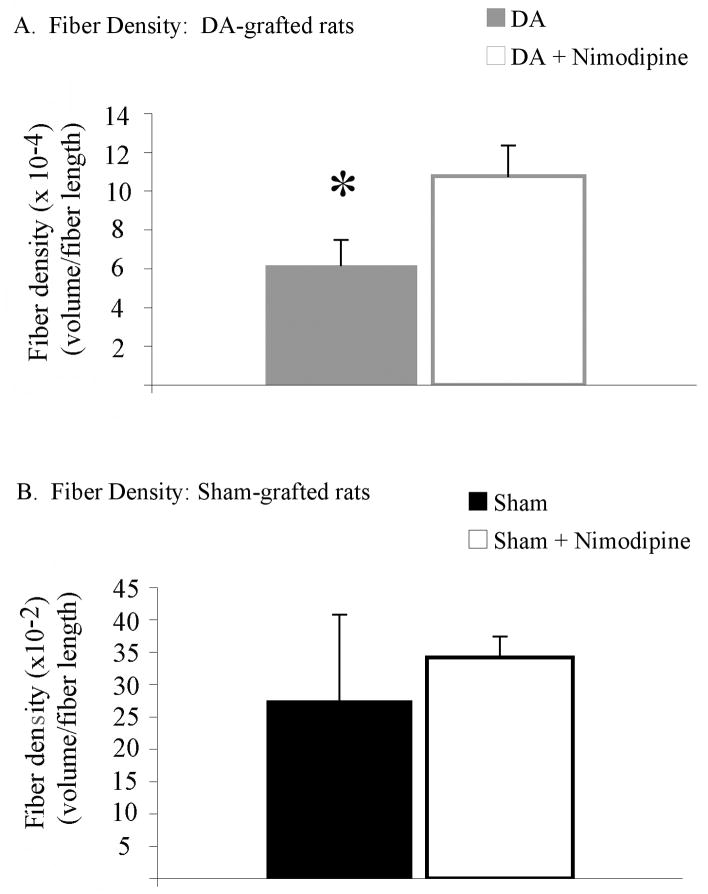
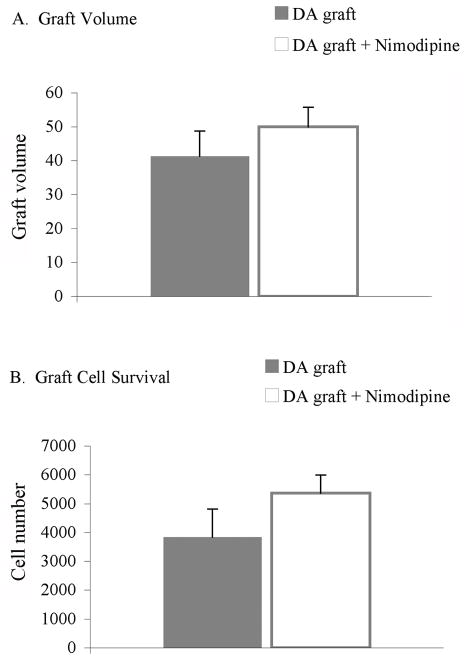
Dopamine deficiency associated with Parkinson's disease (PD) results in numerous changes in striatal transmitter function and neuron morphology. Specifically, there is marked atrophy of dendrites and dendritic spines on striatal medium spiny neurons (MSN), primary targets of inputs from nigral dopamine and cortical glutamate neurons, in advanced PD and rodent models of severe dopamine depletion. Dendritic spine loss occurs via dysregulation of intraspine Cav1.3 L-type Ca(2+)channels and can be prevented, in animal models, by administration of the calcium channel antagonist, nimodipine. The impact of MSN dendritic spine loss in the parkinsonian striatum on dopamine neuron graft therapy remains unexamined. Using unilaterally parkinsonian Sprague-Dawley rats, we tested the hypothesis that MSN dendritic spine preservation through administration of nimodipine would result in improved therapeutic benefit and diminished graft-induced behavioral abnormalities in rats grafted with embryonic ventral midbrain cells. Analysis of rotational asymmetry and spontaneous forelimb use in the cylinder task found no significant effect of dendritic spine preservation in grafted rats. However, analyses of vibrissae-induced forelimb use, levodopa-induced dyskinesias and graft-induced dyskinesias showed significant improvement in rats with dopamine grafts associated with preserved striatal dendritic spine density. Nimodipine treatment in this model did not impact dopamine graft survival but allowed for increased graft reinnervation of striatum. Taken together, these results demonstrate that even with grafting suboptimal numbers of cells, maintaining normal spine density on target MSNs results in overall superior behavioral efficacy of dopamine grafts.
Figures


Comment in
-
Treating Parkinson's disease: preserve the spines! (Commentary on Soderstrom et al.).Eur J Neurosci. 2010 Feb;31(3):477. doi: 10.1111/j.1460-9568.2010.07117.x. Epub 2010 Jan 25. Eur J Neurosci. 2010. PMID: 20105227 No abstract available.
References
-
- Brundin P, Karlsson J, Emgard M, Schierle GS, Hansson O, Petersen A, Castilho RF. Improving the survival of grafted dopaminergic neurons: a review over current approaches. Cell Transplant. 2000;9:179–95. - PubMed
-
- Caligiuri MP, Lohr JB. Worsening of postural tremor in patients with levodopa- induced dyskinesia: a quantitative analysis. Clin Neuropharmacol. 1993;16:244–50. - PubMed
-
- Collier TJ, Lipton J, Daley BF, Palfi S, Chu Y, Sortwell C, Bakay RA, Sladek JR, Jr, Kordower JH. Aging-related changes in the nigrostriatal dopamine system and the response to MPTP in nonhuman primates: diminished compensatory mechanisms as a prelude to parkinsonism. Neurobiol Dis. 2007;26:56–65. - PMC - PubMed
Publication types
MeSH terms
Substances
Grants and funding
LinkOut - more resources
Full Text Sources
Medical
Research Materials
Miscellaneous
