


Interactions of the circadian CLOCK system and the HPA axis
- PMID: 20106676
- PMCID: PMC2862789
- DOI: 10.1016/j.tem.2009.12.011
Interactions of the circadian CLOCK system and the HPA axis
Abstract
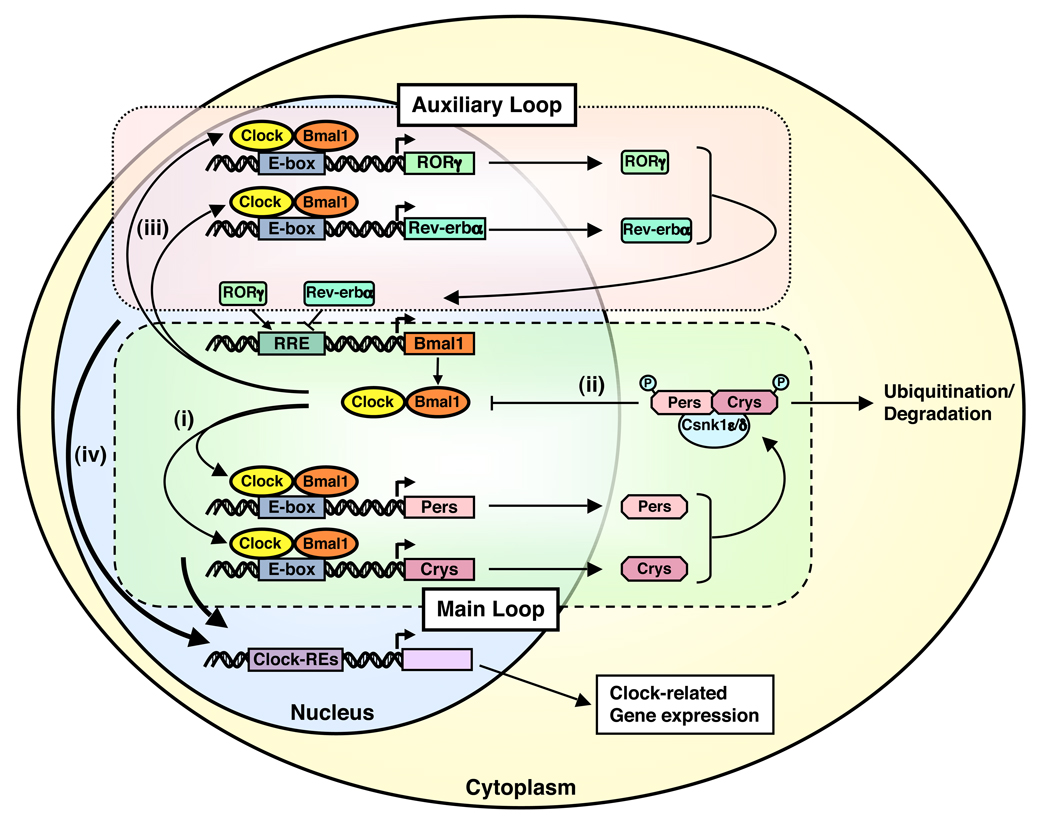
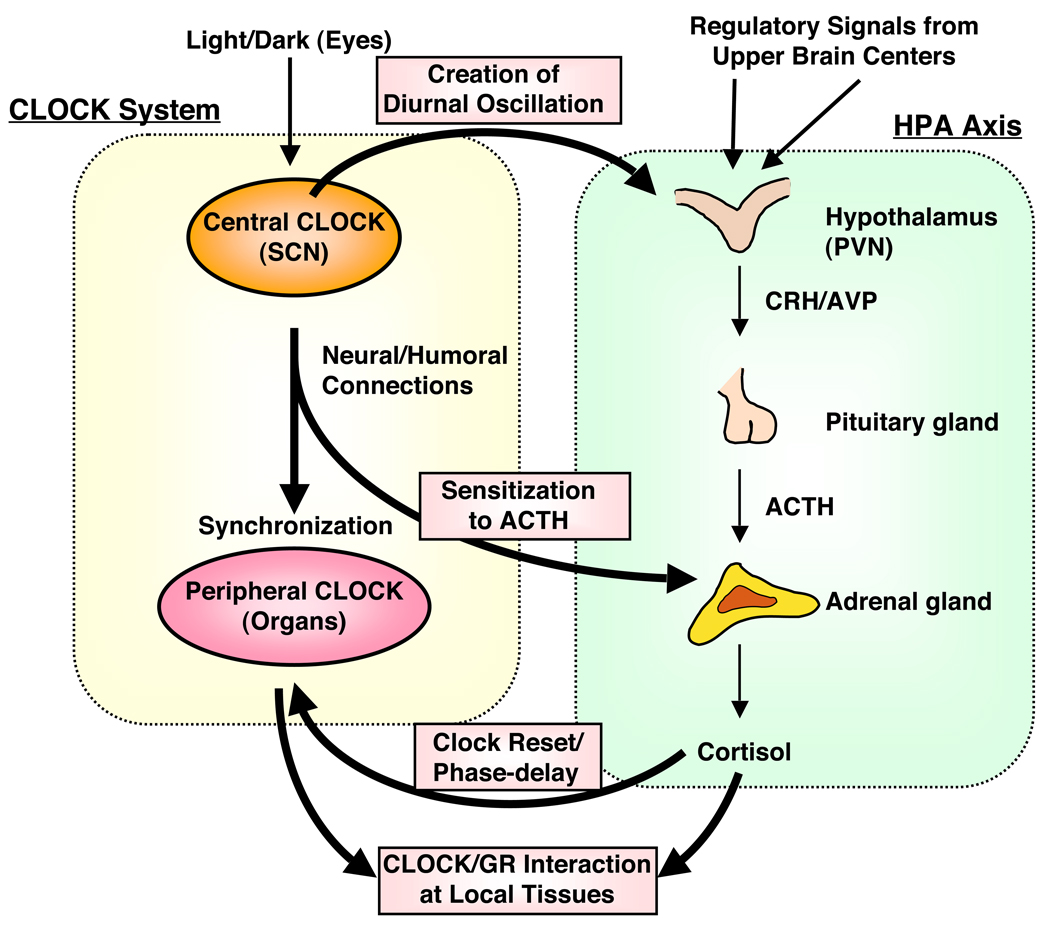
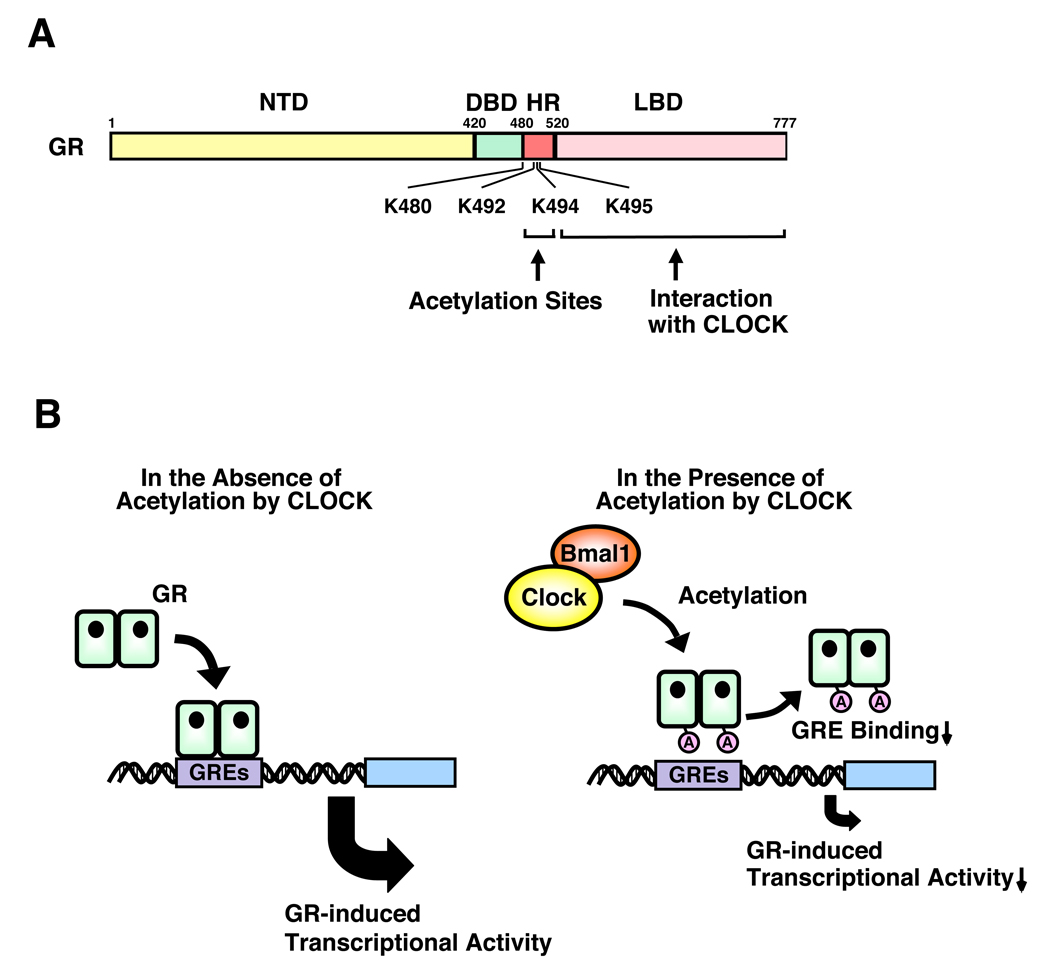
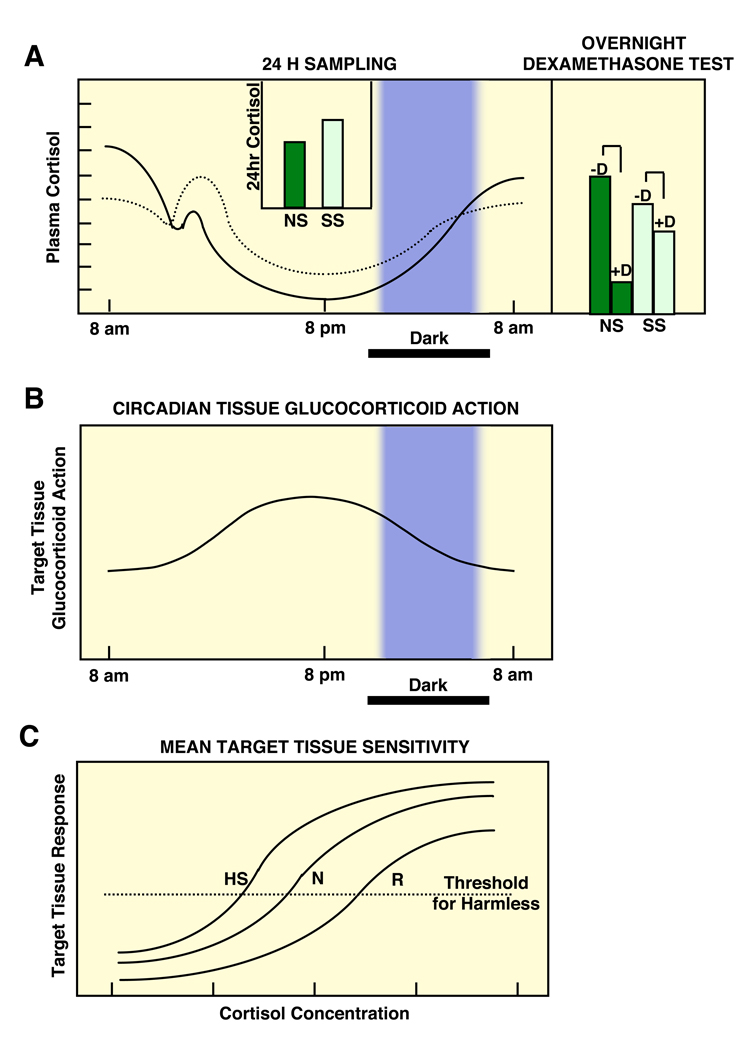
Organisms have developed concurrent behavioral and physiological adaptations to the strong influence of day/night cycles, as well as to unforeseen, random stress stimuli. These circadian and stress-related responses are achieved by two highly conserved and interrelated regulatory networks, the circadian CLOCK and stress systems, which respectively consist of oscillating molecular pacemakers, the Clock/Bmal1 transcription factors, and the hypothalamic-pituitary-adrenal (HPA) axis and its end-effector, the glucocorticoid receptor. These systems communicate with one another at different signaling levels and dysregulation of either system can lead to development of pathologic conditions. In this review, we summarize the mutual physiologic interactions between the circadian CLOCK system and the HPA axis, and discuss their clinical implications.
2010. Published by Elsevier Ltd.
Figures
References
-
- Ko CH, Takahashi JS. Molecular components of the mammalian circadian clock. Hum Mol Genet. 2006;15(Spec No 2):R271–R277. - PubMed
-
- Hastings M, et al. Circadian clocks: regulators of endocrine and metabolic rhythms. J Endocrinol. 2007;195:187–198. - PubMed
-
- Chrousos GP. Stress and disorders of the stress system. Nat Rev Endocrinol. 2009;5:374–381. - PubMed
-
- Chrousos GP, Kino T. Glucocorticoid action networks and complex psychiatric and/or somatic disorders. Stress. 2007;10:213–219. - PubMed
Publication types
MeSH terms
Substances
Grants and funding
LinkOut - more resources
Full Text Sources
Other Literature Sources
