. 2010 Mar 11;464(7286):297-301.
doi: 10.1038/nature08783. Epub 2010 Jan 27.

The cells and peripheral representation of sodium taste in mice

Affiliations

The cells and peripheral representation of sodium taste in mice

Jayaram Chandrashekar et al. Nature. .

Abstract

Salt taste in mammals can trigger two divergent behavioural responses. In general, concentrated saline solutions elicit robust behavioural aversion, whereas low concentrations of NaCl are typically attractive, particularly after sodium depletion. Notably, the attractive salt pathway is selectively responsive to sodium and inhibited by amiloride, whereas the aversive one functions as a non-selective detector for a wide range of salts. Because amiloride is a potent inhibitor of the epithelial sodium channel (ENaC), ENaC has been proposed to function as a component of the salt-taste-receptor system. Previously, we showed that four of the five basic taste qualities-sweet, sour, bitter and umami-are mediated by separate taste-receptor cells (TRCs) each tuned to a single taste modality, and wired to elicit stereotypical behavioural responses. Here we show that sodium sensing is also mediated by a dedicated population of TRCs. These taste cells express the epithelial sodium channel ENaC, and mediate behavioural attraction to NaCl. We genetically engineered mice lacking ENaCalpha in TRCs, and produced animals exhibiting a complete loss of salt attraction and sodium taste responses. Together, these studies substantiate independent cellular substrates for all five basic taste qualities, and validate the essential role of ENaC for sodium taste in mice.


Figures
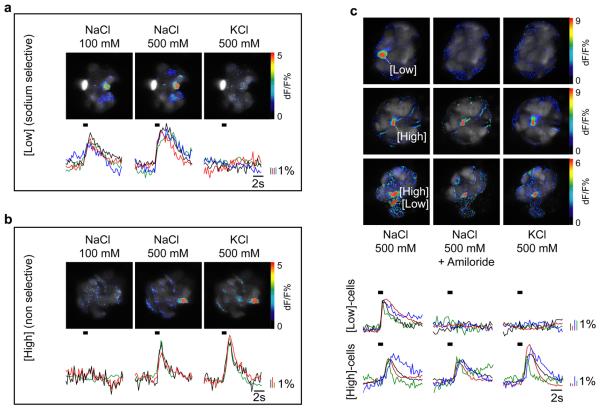
Figure 1
Figure 1. Two classes of TRCs mediate distinct salt taste responses
Fungiform taste buds loaded with the activity sensor calcium green respond with high selectivity and specificity to different concentrations of salt. (a) A unique subset of TRCs (labeled as [Low]) respond to low concentrations of sodium chloride (100 mM) as well as higher concentrations (500 mM NaCl) but not other salts (KCl). Shown below the imaging data are individual traces from 4 different TRCs depicting the kinetic and amplitude changes in intracellular calcium levels following salt stimulation; calcium changes were pseudo-coloured as depicted (b) A different population of TRCs (labeled as [High]) are activated only at elevated concentrations of NaCl (500 mM) and are also stimulated by KCl; shown are individual traces for 3 different TRCs. (c) Amiloride selectively blocks [Low] responses but has no effect on [High] responses; shown are individual traces for 4 different TRCs; the duration of tastant application is denoted by black bars. See supplementary Fig. S1 for a diagram of the preparation, quantitations and responses to additional salts.
Figure 2
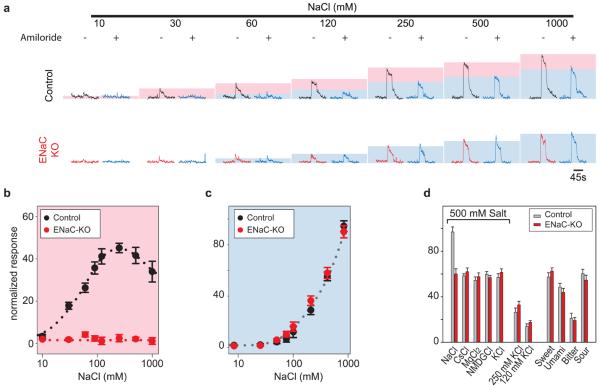
Figure 2. ENaC is necessary for high sensitivity taste responses to sodium salts
Conditional knockout of ENaCα in TRCs (ENaC-KO) abolishes responses to low concentrations of NaCl, and eliminates amiloride-sensitivity. (a) Integrated neural recordings from the chorda tympani nerve of normal (Control) and ENaC-KO mice in the presence (blue traces) or absence of 10 μM amiloride. Shaded boxes illustrate the amiloride-sensitive (pink) and insensitive (blue) components. (b-c) Quantitations of integrated neural responses of control and KO animals; the coloured boxes are as in panel a (n=4, mean ± s.e.m, P < 0.001 for amiloride sensititive responses of control and mutant groups at 30 - 1000 mM NaCl). (d) ENaC-KO mice retain normal responses to other salts or other taste qualities (n=4, mean ± s.e.m); see Methods for details of calculations, tastants used, concentrations, genotype of strains and abbreviations.
Figure 3
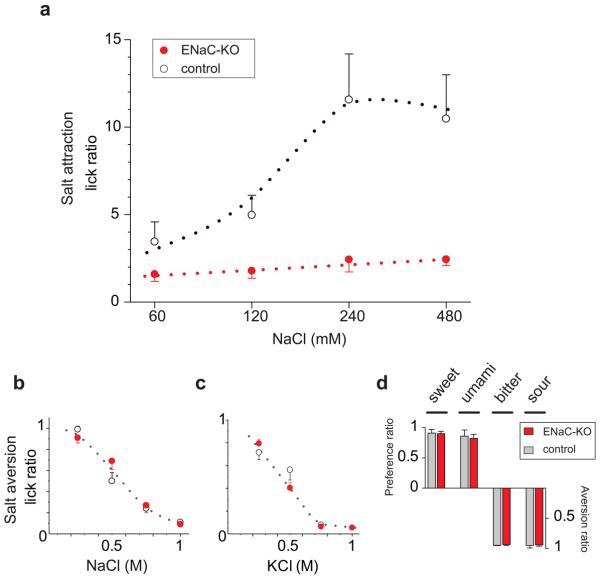
Figure 3. ENaC function in TRCs is required for behavioural attraction to salt
Conditional knockout of ENaCα in TRCs (ENaC-KO) selectively abolishes the attractive taste of NaCl. (a) After diuretic induced Na+-depletion, ENaC-KO mice show little or no preference for NaCl solutions relative to water whereas littermate controls exhibit very robust attractive responses (P < 0.02 between control and mutant groups at 120 - 480 mM NaCl). In contrast, in salt aversion assays, water deprived ENaC-KO and controls are indistinguishable in their responses to (b) NaCl or (c) KCl. (d) Behavioural responses to other taste qualities are unaffected in the ENaC-KO animals; shown are means ± s.e.m. (n≥7); see Methods for additional details.
Figure 4
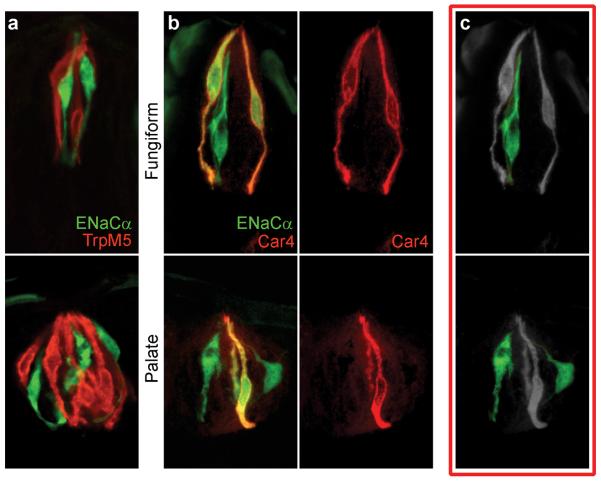
Figure 4. ENaC defines a novel population of TRCs
Transgenic mice expressing GFP under the control of ENaCα (see Methods for details) were immunostained for markers of known classes of TRC. (a) No overlap in the expression of ENaCα (green) and TrpM5 (red; a marker of sweet, bitter and umami TRCs) was observed in fungiform or palate taste buds. In contrast, (b) Car4-expressing sour cells (red label) co-express ENaCα (green label; compare red and yellow-labeled cells). However, ENaCα is also expressed in a unique subset of "ENaC-alone" TRCs (green-only cells in panels b and c); see Methods for details of mice and the illustration in panel c. Note that since Car4-expressing sour cells do not express the essential ENaCβ subunit they do not respond to salt (see Supplementary Fig. S6).

References

    1. Contreras R,J. Gustatory mechanisms of a specific appetite. In: Cagan RH, editor. Neural Mechanisms in Taste. CRC; Boca Raton, FL: 1989. pp. 119–145.
    1. Duncan CJ. Salt Preferences of Birds and Mammals. Physiological Zoology. 1962;35:120–132.
    1. Lindemann B. Receptors and transduction in taste. Nature. 2001;413:219–225. - PubMed
    1. Beauchamp GK, Bertino M, Burke D, Engelman K. Experimental sodium depletion and salt taste in normal human volunteers. Am J Clin Nutr. 1990;51:881–889. - PubMed
    1. Mueller KL, et al. The receptors and coding logic for bitter taste. Nature. 2005;434:225–229. - PubMed

Publication types