. 2010 Jan 22;6(1):e1000823.
doi: 10.1371/journal.pgen.1000823.

Environmental and genetic determinants of colony morphology in yeast

Affiliations

Environmental and genetic determinants of colony morphology in yeast

Joshua A Granek et al. PLoS Genet. .

Abstract

Nutrient stresses trigger a variety of developmental switches in the budding yeast Saccharomyces cerevisiae. One of the least understood of such responses is the development of complex colony morphology, characterized by intricate, organized, and strain-specific patterns of colony growth and architecture. The genetic bases of this phenotype and the key environmental signals involved in its induction have heretofore remained poorly understood. By surveying multiple strain backgrounds and a large number of growth conditions, we show that limitation for fermentable carbon sources coupled with a rich nitrogen source is the primary trigger for the colony morphology response in budding yeast. Using knockout mutants and transposon-mediated mutagenesis, we demonstrate that two key signaling networks regulating this response are the filamentous growth MAP kinase cascade and the Ras-cAMP-PKA pathway. We further show synergistic epistasis between Rim15, a kinase involved in integration of nutrient signals, and other genes in these pathways. Ploidy, mating-type, and genotype-by-environment interactions also appear to play a role in the controlling colony morphology. Our study highlights the high degree of network reuse in this model eukaryote; yeast use the same core signaling pathways in multiple contexts to integrate information about environmental and physiological states and generate diverse developmental outputs.


Conflict of interest statement

The authors have declared that no competing interests exist.

Figures
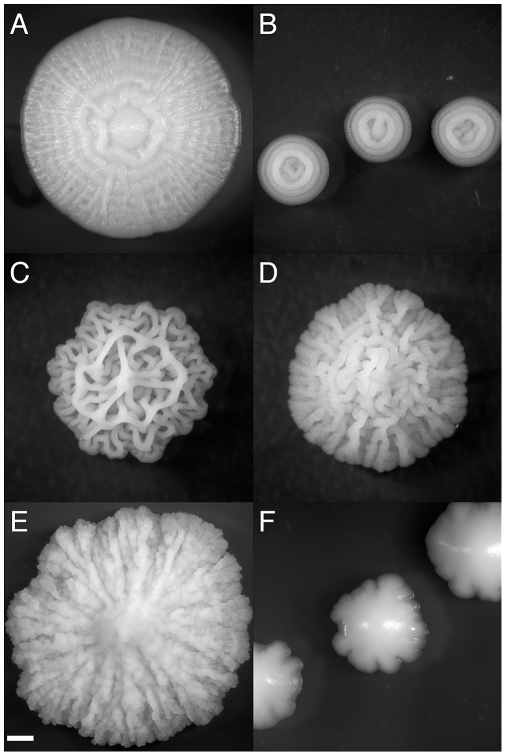
Figure 1
Figure 1. Strain-specific variation in complex colony morphotype.
Characteristic CCM morphotypes fall into several categories (A) spokes (with weak concentric rings in this case)(OS17, YEPLD, day 6), (B) concentric rings (YJM224, 0.25% dextrose YEPD, day 3) (C) lacy (YJM311 on YEPLD, day 6), (D) coralline (NKY292, 1% dextrose YEPD, day 6), (E) mountainous (PMY348, 4% agar YEPD, day 6), (F) irregular (BY4743, YEPSucrose, day 5). Scale bar is 1 mm.
Figure 2
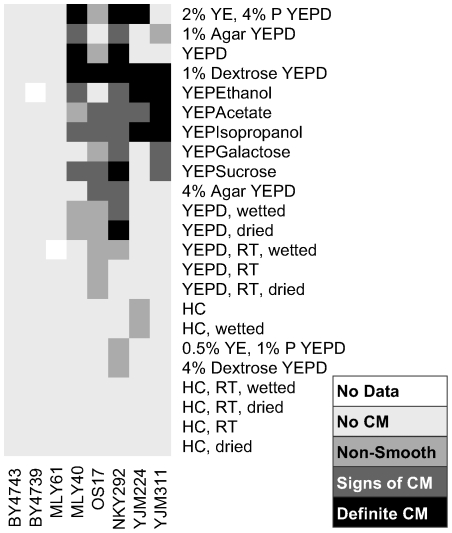
Figure 2. Extent of complex colony morphology under a variety of growth conditions.
Summary of colony morphology phenotypes for eight strains under thirty-four growth conditions. Darker colors from light gray to black indicate increasing colony morphology response. 0.5% YE, 1% P YEPD: 0.5% yeast extract, 1% peptone YEPD. RT: grown at room temperature, dried: media partially dried in oven, wetted: media to which 400 µl H2O was added after plates set, HC: Hartwell's Complete media.
Figure 3
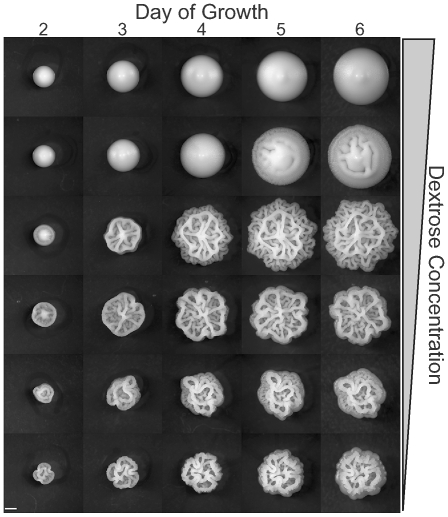
Figure 3. Colony morphology as a function of time and dextrose concentration.
Colonies of YJM311 were grown on YEPD with dextrose concentrations ranging from 2% to 1/16% in two-fold steps, and imaged daily for six days. Lower dextrose concentrations more strongly induce the colony morphology response. Scale bar is 1 mm.
Figure 4
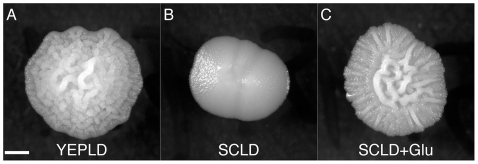
Figure 4. A rich nitrogen source is required for induction of the colony morphology response.
The complex colony response is induced in PMY574 by growth on (A) YEPLD, but not on (B) SCLD. Growth on (C) SCLD supplemented with glutamate (SCLD+Glu) recovers the complex colony response. Scale bar is 1 mm.
Figure 5
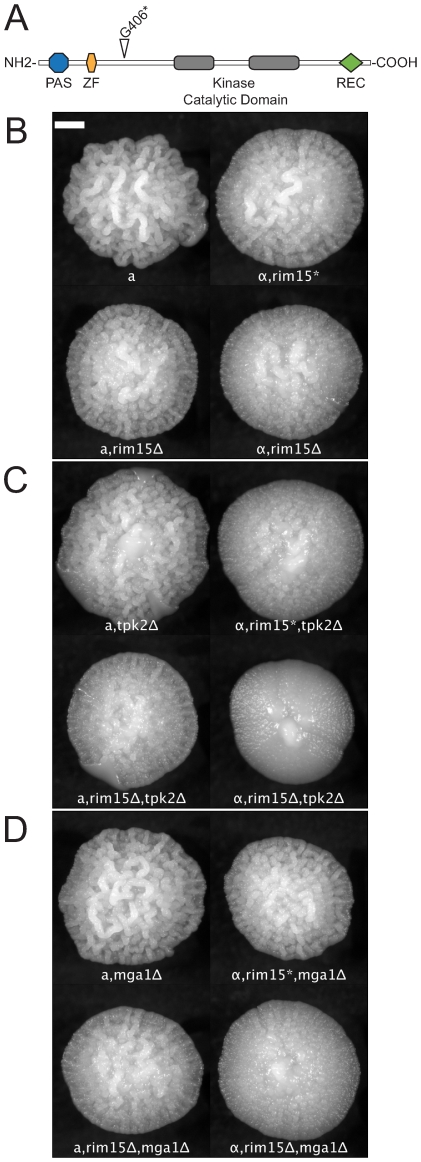
Figure 5. Synergistic epistatic effects of RIM15 mutations.
(A) The domain structure of Rim15p . The nonsense mutation at residue 406, identified in the strain MLY40α (Σ1278b, Heitman lineage) is indicated by the open triangle. rim15, tpk2Δ, and mga1Δ mutants show weak or no effect on colony morphology by themselves but the double mutants exhibit a synergistic interaction. (B) rim15Δ and rim15* (opal allele, 1216G>T) mutations in MATa and MATα backgrounds; (C) tpk2Δ single mutant and rim15, tpk2Δ double mutants in MATa and MATα backgrounds. (D) mga1Δ single mutant and rim15, mga1Δ double mutants in MATa and MATα backgrounds. Scale bar is 1 mm.
Figure 6
Figure 6. Ploidy affects colony morphotypes and strength of induction of the colony morphology response.
The S288c background [(A) BY4743, (B) BY4739] forms only simple colonies. Σ1278b diploid colonies [(C) MLY61a/α] are simple, while the haploid colonies [(D) MLY40α] are complex. Both SK1 [(E) OS17] and YJM311 [(F) NKY292] diploids form complex colonies, but the morphotypes are distinct from haploids [(G) YJM311, (H) PMY556] in these backgrounds. Day 6 of growth on YEPLD. Scale bar is 1 mm.
Figure 7
Figure 7. The role of nutrients in complex colony morphology and the underlying genetic network.
(A) The quantity and quality of available carbon and nitrogen controls developmental responses in S. cerevisiae. (B) Many genes involved in the colony morphology response play roles in the MAPK, cAMP-PKA, or Nitrogen Discrimination pathways. These pathways are responsible for sensing glucose, nitrogen, pheromone, and osmolarity. Mutant phenotypes include both gain (orange pentagon pointing up) and loss (blue pentagon pointing down) of complex colony morphology (relative to WT).

References

    1. Gagiano M, Bauer FF, Pretorius IS. The sensing of nutritional status and the relationship to filamentous growth in Saccharomyces cerevisiae. FEMS Yeast Res. 2002;2:433–470. - PubMed
    1. Gancedo JM. Control of pseudohyphae formation in Saccharomyces cerevisiae. FEMS Microbiol Rev. 2001;25:107–123. - PubMed
    1. Pan X, Harashima T, Heitman J. Signal transduction cascades regulating pseudohyphal differentiation of Saccharomyces cerevisiae. Curr Opin Microbiol. 2000;3:567–572. - PubMed
    1. Cullen PJ, Sprague GF. Glucose depletion causes haploid invasive growth in yeast. Proc Natl Acad Sci USA. 2000;97:13619–13624. - PMC - PubMed
    1. Dickinson JR. Filament formation in Saccharomyces cerevisiae–a review. Folia Microbiol (Praha) 2008;53:3–14. - PubMed

Publication types

MeSH terms