


Chemical diversity and defence metabolism: how plants cope with pathogens and ozone pollution
- PMID: 20111684
- PMCID: PMC2812827
- DOI: 10.3390/ijms10083371
Chemical diversity and defence metabolism: how plants cope with pathogens and ozone pollution
Abstract
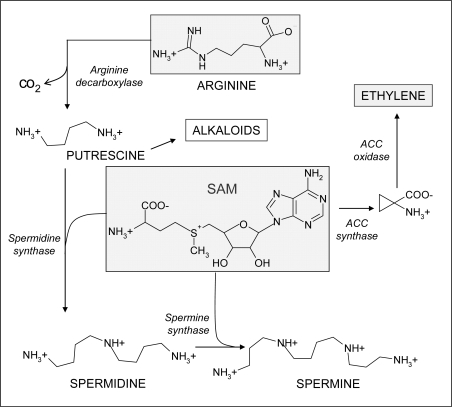
Chemical defences represent a main trait of the plant innate immune system. Besides regulating the relationship between plants and their ecosystems, phytochemicals are involved both in resistance against pathogens and in tolerance towards abiotic stresses, such as atmospheric pollution. Plant defence metabolites arise from the main secondary metabolic routes, the phenylpropanoid, the isoprenoid and the alkaloid pathways. In plants, antibiotic compounds can be both preformed (phytoanticipins) and inducible (phytoalexins), the former including saponins, cyanogenic glycosides and glucosinolates. Chronic exposure to tropospheric ozone (O(3)) stimulates the carbon fluxes from the primary to the secondary metabolic pathways to a great extent, inducing a shift of the available resources in favour of the synthesis of secondary products. In some cases, the plant defence responses against pathogens and environmental pollutants may overlap, leading to the unspecific synthesis of similar molecules, such as phenylpropanoids. Exposure to ozone can also modify the pattern of biogenic volatile organic compounds (BVOC), emitted from plant in response to herbivore feeding, thus altering the tritrophic interaction among plant, phytophagy and their natural enemies. Finally, the synthesis of ethylene and polyamines can be regulated by ozone at level of S-adenosylmethionine (SAM), the biosynthetic precursor of both classes of hormones, which can, therefore, mutually inhibit their own biosynthesis with consequence on plant phenotype.
Keywords: phytoalexins; phytoanticipins; phytochemicals; secondary metabolism; stress physiology; tropospheric ozone pollution; volatile organic compounds.
Figures

Comment in
-
Plant neurobiology, a fascinating perspective in the field of research on plant secondary metabolites.Int J Mol Sci. 2013 May 23;14(6):10819-21. doi: 10.3390/ijms140610819. Int J Mol Sci. 2013. PMID: 23702849 Free PMC article.
References
-
- Lichtenthaler HK. The stress concept in plants: An introduction. Ann. N.Y. Acad. Sci. 1998;851:187–198. - PubMed
-
- Heiser I, Elstner EF. The biochemistry of plant stress and disease. Ann. N.Y. Acad. Sci. 1998;851:224–232.
-
- Firn RD, Jones CG. A Darwinian view of metabolism: Molecular properties determine fitness. J. Exp. Bot. 2009;60:719–726. - PubMed
-
- Paiva N. An introduction to the biosynthesis of chemicals used in plant-microbe communication. J. Plant Growth Regul. 2000;19:131–143. - PubMed
-
- Facchini PJ. Alkaloid biosynthesis in plants: Biochemistry, cell biology, molecular regulation and metabolic engineering. Annu. Rev. Plant Physiol. Plant Mol. Biol. 2001;52:29–66. - PubMed
Publication types
MeSH terms
Substances
LinkOut - more resources
Full Text Sources
Other Literature Sources
Medical
