


Plant antimicrobial agents and their effects on plant and human pathogens
- PMID: 20111686
- PMCID: PMC2812829
- DOI: 10.3390/ijms10083400
Plant antimicrobial agents and their effects on plant and human pathogens
Abstract
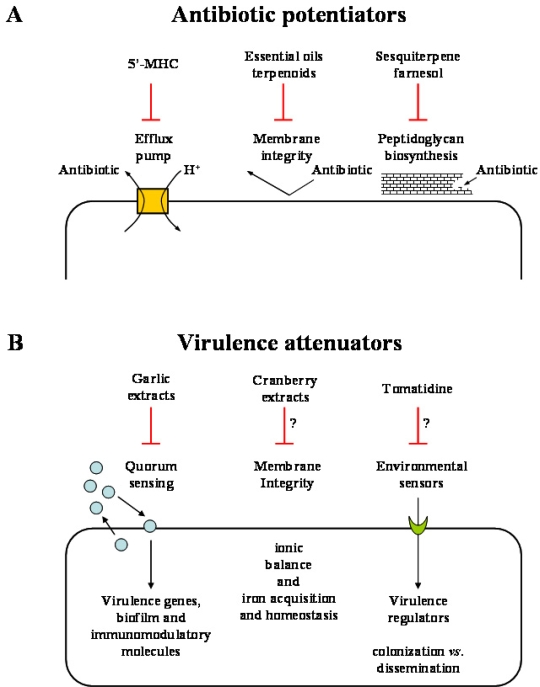
To protect themselves, plants accumulate an armoury of antimicrobial secondary metabolites. Some metabolites represent constitutive chemical barriers to microbial attack (phytoanticipins) and others inducible antimicrobials (phytoalexins). They are extensively studied as promising plant and human disease-controlling agents. This review discusses the bioactivity of several phytoalexins and phytoanticipins defending plants against fungal and bacterial aggressors and those with antibacterial activities against pathogens affecting humans such as Pseudomonas aeruginosa and Staphylococcus aureus involved in respiratory infections of cystic fibrosis patients. The utility of plant products as "antibiotic potentiators" and "virulence attenuators" is also described as well as some biotechnological applications in phytoprotection.
Keywords: antimicrobial; cystic fibrosis; infectious disease; phytoalexin; phytoanticipin; phytoprotection; secondary metabolites.
Figures
References
-
- Bais HP, Weir TL, Perry LG, Gilroy S, Vivanco JM. The role of root exudates in rhizosphere interactions with plants and other organisms. Annu. Rev. Plant Biol. 2006;57:233–266. - PubMed
-
- Grayer RJ, Kokubun T. Plant-fungal interactions: The search for phytoalexins and other antifungal compounds from higher plants. Phytochemistry. 2001;56:253–263. - PubMed
-
- Jones JD, Dangl JL. The plant immune system. Nature. 2006;444:323–329. - PubMed
-
- Lindsay WP, Lamb CJ, Dixon RA. Microbial recognition and activation of plant defense systems. Trends Microbiol. 1993;1:181–187. - PubMed
-
- Bednarek P, Osbourn A. Plant-microbe interactions: Chemical diversity in plant defense. Science. 2009;324:746–748. - PubMed
Publication types
MeSH terms
Substances
LinkOut - more resources
Full Text Sources
Other Literature Sources
