


A participatory parent-focused intervention promoting physical activity in preschools: design of a cluster-randomized trial
- PMID: 20113522
- PMCID: PMC2835684
- DOI: 10.1186/1471-2458-10-49
A participatory parent-focused intervention promoting physical activity in preschools: design of a cluster-randomized trial
Erratum in
- BMC Public Health. 2012;12:355
Abstract
Background: With rates of childhood obesity increasing, physical activity (PA) promotion especially in young children has assumed greater importance. Given the limited effectiveness of most interventions to date, new approaches are needed. The General Systems theory suggests that involving parents as intervention targets may be effective in fostering healthier life styles in children. We describe the development of a parent-focused participatory intervention and the procedures used to evaluate its effectiveness in increasing daily PA in preschoolers.
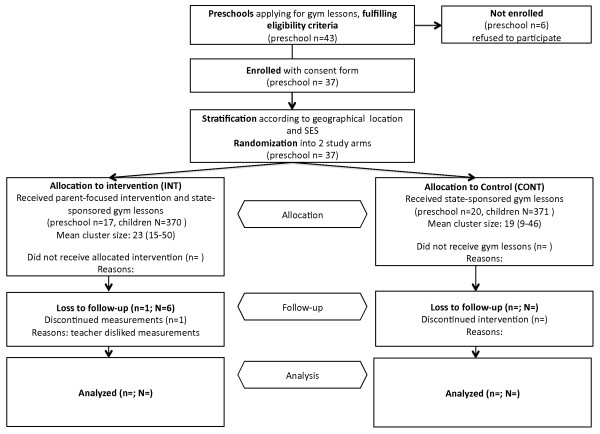
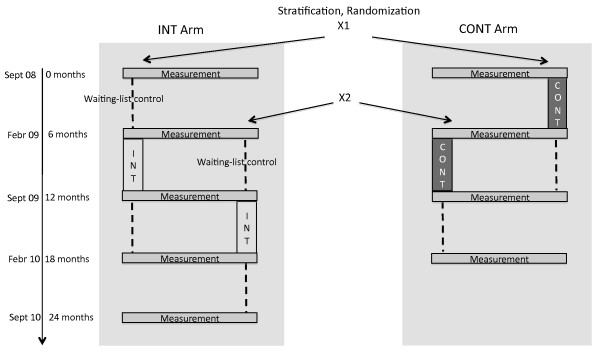
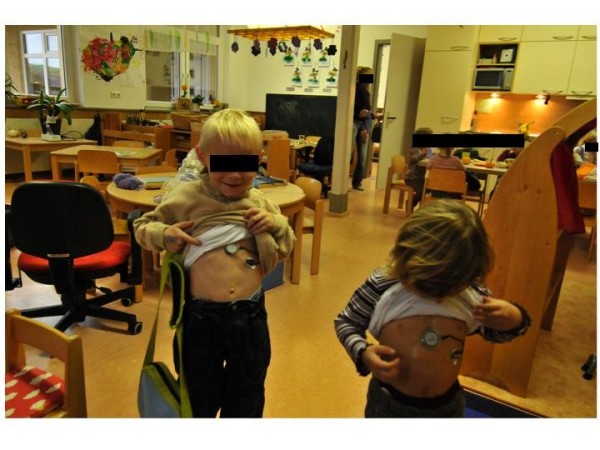
Methods/design: Thirty-seven South German preschools were identified for this study and agreed to participate. Using a two-armed, controlled cluster-randomized trial design we test a participatory intervention with parents as the primary target group and potential agents of behavioural change. Specifically, the intervention is designed to engage parents in the development, refinement and selection of project ideas to promote PA and in incorporating these ideas into daily routines within the preschool community, consisting of children, teachers and parents. Our study is embedded within an existing state-sponsored programme providing structured gym lessons to preschool children. Thus, child-based PA outcomes from the study arm with the parent-focused intervention and the state-sponsored programme are compared with those from the study arm with the state-sponsored programme alone. The evaluation entails baseline measurements of study outcomes as well as follow-up measurements at 6 and 12 months. Accelerometry measures PA intensity over a period of six days, with the mean over six days used as the primary outcome measure. Secondary outcomes include childrens' BMI, a sum of averaged skin fold thickness measurements across multiple sites, and PA behaviour. Longitudinal multilevel models are used to assess within-subject change and between-group differences in study outcomes, adjusted for covariates at the preschool and individual levels. Teacher qualitative interviews monitor the intervention implementation process.
Discussion: Participatory approaches that actively involve parents have the potential to promote PA in ways that might be better tailored to local needs and more sustainable. Our mixed methods approach to assess the intervention efficacy and implementation employing both quantitative and qualitative measures within a cluster-randomized controlled trial may serve as a framework for evaluating public health interventions in preschool settings.
Trial registration: clinicaltrials.gov No: NCT00987532.
Figures
References
-
- Wilkinson KM. Increasing obesity in children and adolescents: an alarming epidemic. JAAPA. 2008;21:31–36. - PubMed
-
- Stevens J, Murray DM, Baggett CD, Elder JP, Lohman TG, Lytle LA, Pate RR, Pratt CA, Treuth MS, Webber LS. Objectively assessed associations between physical activity and body composition in middle-school girls: the Trial of Activity for Adolescent Girls. Am J Epidemiol. 2007;166:1298–1305. doi: 10.1093/aje/kwm202. - DOI - PMC - PubMed
