


Epidemiology of Cryptococcus gattii, British Columbia, Canada, 1999-2007
- PMID: 20113555
- PMCID: PMC2958008
- DOI: 10.3201/eid1602.090900
Epidemiology of Cryptococcus gattii, British Columbia, Canada, 1999-2007
Erratum in
- Emerg Infect Dis. 2010 Apr;16(4):750. Kidd, Sarah [added]; Morshed, Mohammad [added]; British Columbia Cryptococcus gattii Working Group [added]
- Emerg Infect Dis. 2011 Sep;17(9):1784
Abstract
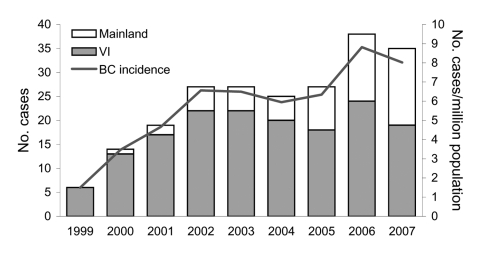
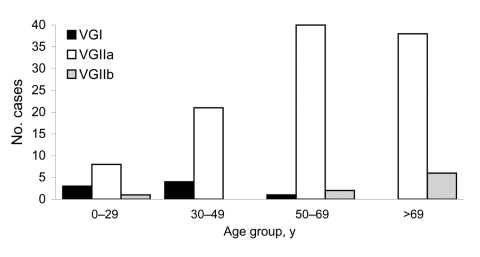
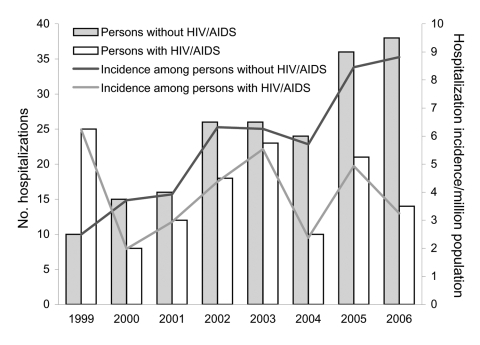
British Columbia, Canada, has the largest reported population of Cryptococcus gattii-infected persons worldwide. To assess the impact of illness, we retrospectively analyzed demographic and clinical features of reported cases, hospitalizations, and deaths during 1999-2007. A total of 218 cases were reported (average annual incidence 5.8 per million persons). Most persons who sought treatment had respiratory illness (76.6%) or lung cryptococcoma (75.4%). Persons without HIV/AIDS hospitalized with cryptococcosis were more likely than those with HIV/AIDS to be older and admitted for pulmonary cryptococcosis. The 19 (8.7%) persons who died were more likely to be older and to have central nervous system disease and infection from the VGIIb strain. Although incidence in British Columbia is high, the predominant strain (VGIIa) does not seem to cause greater illness or death than do other strains. Further studies are needed to explain host and strain characteristics for regional differences in populations affected and disease outcomes.
Figures
References
-
- Fyfe M, MacDougall L, Romney M, Starr M, Pearce M, Mak S, et al. Cryptococcus gattii infections on Vancouver Island, British Columbia, Canada: emergence of a tropical fungus in a temperate climate. Can Commun Dis Rep. 2008;34:1–13. - PubMed
-
- Kwon-Chung KJ, Bennett JE. Epidemiologic differences between the two varieties of Cryptococcus neoformans. Am J Epidemiol. 1984;120:123–30. - PubMed
-
- Sorrell TC. Cryptococcus neoformans variety gattii. Med Mycol. 2001;39:155–68. - PubMed
-
- Kidd SE, Chow Y, Mak S, Bach PJ, Chen H, Hingston AO, et al. Characterization of environmental sources of the human and animal pathogen Cryptococcus gattii in British Columbia, Canada, and the Pacific Northwest of the United States. Appl Environ Microbiol. 2007;73:1433–43. 10.1128/AEM.01330-06 - DOI - PMC - PubMed
MeSH terms
LinkOut - more resources
Full Text Sources
Other Literature Sources