


Emergence of increased resistance and extensively drug-resistant tuberculosis despite treatment adherence, South Africa
- PMID: 20113557
- PMCID: PMC2958014
- DOI: 10.3201/eid1602.090968
Emergence of increased resistance and extensively drug-resistant tuberculosis despite treatment adherence, South Africa
Abstract
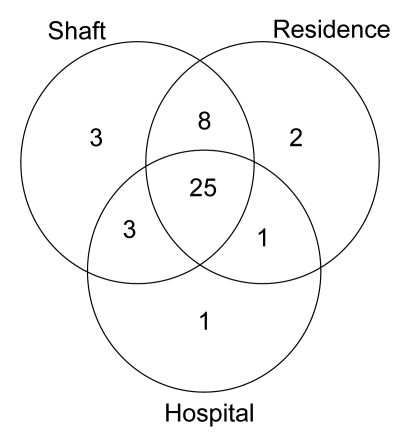
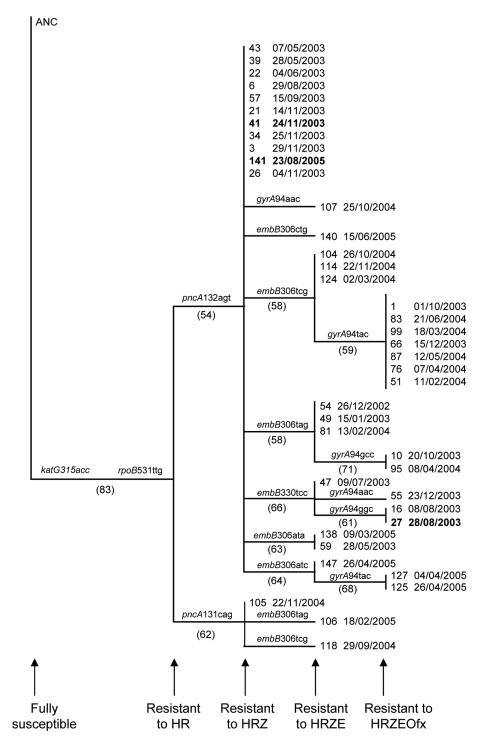
We investigated the emergence and evolution of drug-resistant tuberculosis (TB) in an HIV co-infected population at a South African gold mine with a well-functioning TB control program. Of 128 patients with drug-resistant TB diagnosed during January 2003-November 2005, a total of 77 had multidrug-resistant (MDR) TB, 26 had pre-extensively drug-resistant TB (XDR TB), and 5 had XDR TB. Genotyping suggested ongoing transmission of drug-resistant TB, and contact tracing among case-patients in the largest cluster demonstrated multiple possible points of contact. Phylogenetic analysis demonstrated stepwise evolution of drug resistance, despite stringent treatment adherence. These findings suggested that existing TB control measures were inadequate to control the spread of drug-resistant TB in this HIV co-infected population. Diagnosis delay and inappropriate therapy facilitated disease transmission and drug-resistance. These data call for improved infection control measures, implementation of rapid diagnostics, enhanced active screening strategies, and pharmacokinetic studies to determine optimal dosages and treatment regimens.
Figures
References
-
- Crofton J, Chaulet P, Maher D. Guidelines for the management of drug resistant tuberculosis. 1997. [cited 2008 Mar 1]. http://whqlibdoc.who.int/hq/1997/WHO_TB_96.210_(Rev.1).pdf
-
- Weyer K. Survey of tuberculosis drug resistance, 2001–2002, Western Cape. 2001. [cited 2008 Mar 1]. http://www.sahealthinfo.org/tb/tbdrugresistance.htm
-
- Global WHO-IUTALD. Project on anti-tuberculosis drug resistance surveillance. Anti-tuberculosis drug resistance in the world (Report no. 4). 2008. [cited 2008 Apr 1]. http://www.who.int/tb/publications/2008/drs_report4_26feb08.pdf.
-
- Centers for Disease Control and Prevention (CDC). Emergence of Mycobacterium tuberculosis with extensive resistance to second-line drugs—worldwide, 2000–2004. MMWR Morb Mortal Wkly Rep. 2006;55:301–5. - PubMed
MeSH terms
Substances
LinkOut - more resources
Full Text Sources
Miscellaneous