


An inhibitory role of the G-protein regulator AGS3 in mTOR-dependent macroautophagy
- PMID: 20126274
- PMCID: PMC2811177
- DOI: 10.1371/journal.pone.0008877
An inhibitory role of the G-protein regulator AGS3 in mTOR-dependent macroautophagy
Abstract
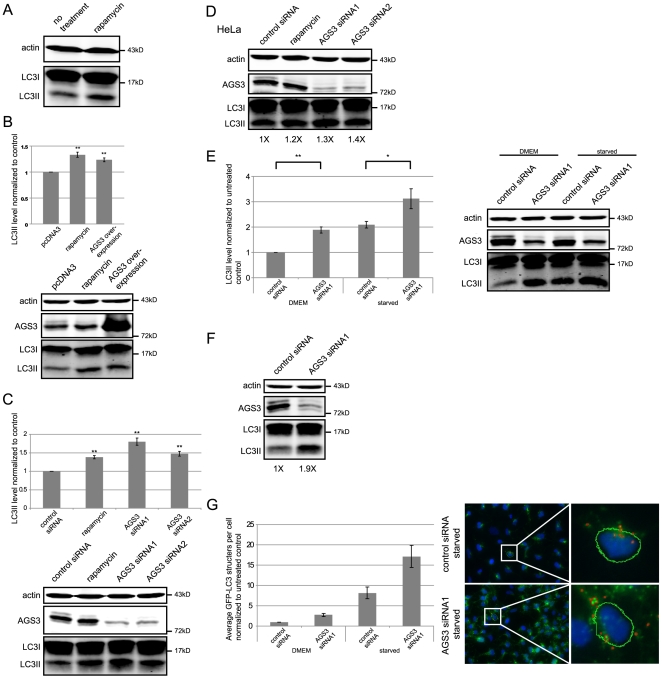
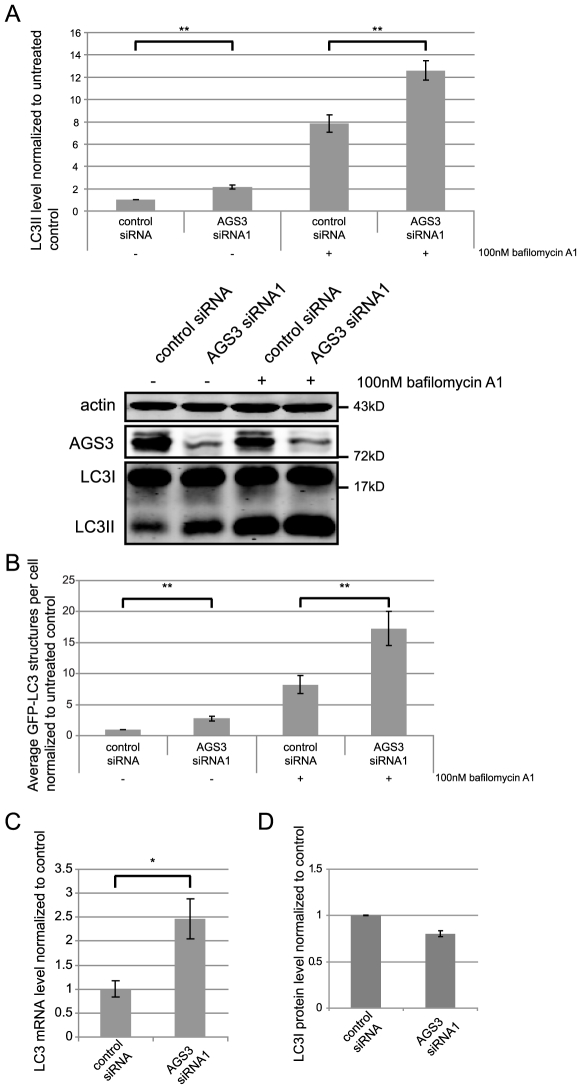
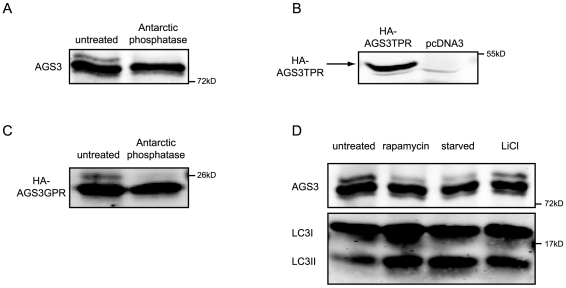
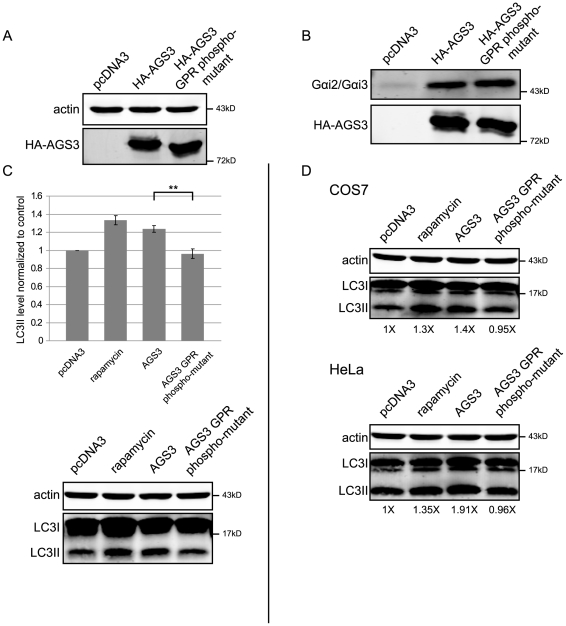
Macroautophagy is a cellular process whereby the cell sequesters and recycles cytosolic constituents in a lysosome-dependent manner. It has also been implicated in a number of disorders, including cancer and neurodegeneration. Although a previous report that AGS3 over-expression promotes macroautophagy suggests a stimulatory role of AGS3 in this process, we have found that knock-down of AGS3, unexpectedly, also induces macroautophagy, indicating an inhibitory function of endogenous AGS3 in macroautophagy. Interestingly, AGS3 phosphorylation is decreased upon induction of mammalian target of rapamycin (mTOR)-dependent macroautophagy. Moreover, unlike wild-type AGS3, over-expression of an AGS3 mutant lacking this modification fails to enhance macroautophagic activity. These observations imply that AGS3 phosphorylation may participate in the modulation of macroautophagy.
Conflict of interest statement
Figures

References
-
- Mizushima N, Ohsumi Y, Yoshimori T. Autophagosome formation in mammalian cells. Cell Struct Funct. 2002;27:421–429. - PubMed
-
- Komatsu M, Waguri S, Chiba T, Murata S, Iwata J, et al. Loss of autophagy in the central nervous system causes neurodegeneration in mice. Nature. 2006;441:880–884. - PubMed
-
- Cuervo AM. Autophagy: in sickness and in health. Trends Cell Biol. 2004;14:70–77. - PubMed
Publication types
MeSH terms
Substances
LinkOut - more resources
Full Text Sources
Miscellaneous
