. 2010 Jan 29;5(1):e8956.
doi: 10.1371/journal.pone.0008956.

Alternative splicing and extensive RNA editing of human TPH2 transcripts

Affiliations

Alternative splicing and extensive RNA editing of human TPH2 transcripts

Maik Grohmann et al. PLoS One. .

Abstract

Brain serotonin (5-HT) neurotransmission plays a key role in the regulation of mood and has been implicated in a variety of neuropsychiatric conditions. Tryptophan hydroxylase (TPH) is the rate-limiting enzyme in the biosynthesis of 5-HT. Recently, we discovered a second TPH isoform (TPH2) in vertebrates, including man, which is predominantly expressed in brain, while the previously known TPH isoform (TPH1) is primarly a non-neuronal enzyme. Overwhelming evidence now points to TPH2 as a candidate gene for 5-HT-related psychiatric disorders. To assess the role of TPH2 gene variability in the etiology of psychiatric diseases we performed cDNA sequence analysis of TPH2 transcripts from human post mortem amygdala samples obtained from individuals with psychiatric disorders (drug abuse, schizophrenia, suicide) and controls. Here we show that TPH2 exists in two alternatively spliced variants in the coding region, denoted TPH2a and TPH2b. Moreover, we found evidence that the pre-mRNAs of both splice variants are dynamically RNA-edited in a mutually exclusive manner. Kinetic studies with cell lines expressing recombinant TPH2 variants revealed a higher activity of the novel TPH2B protein compared with the previously known TPH2A, whereas RNA editing was shown to inhibit the enzymatic activity of both TPH2 splice variants. Therefore, our results strongly suggest a complex fine-tuning of central nervous system 5-HT biosynthesis by TPH2 alternative splicing and RNA editing. Finally, we present molecular and large-scale linkage data evidencing that deregulated alternative splicing and RNA editing is involved in the etiology of psychiatric diseases, such as suicidal behaviour.


Conflict of interest statement

Competing Interests: The authors have declared that no competing interests exist.

Figures

Figure 1
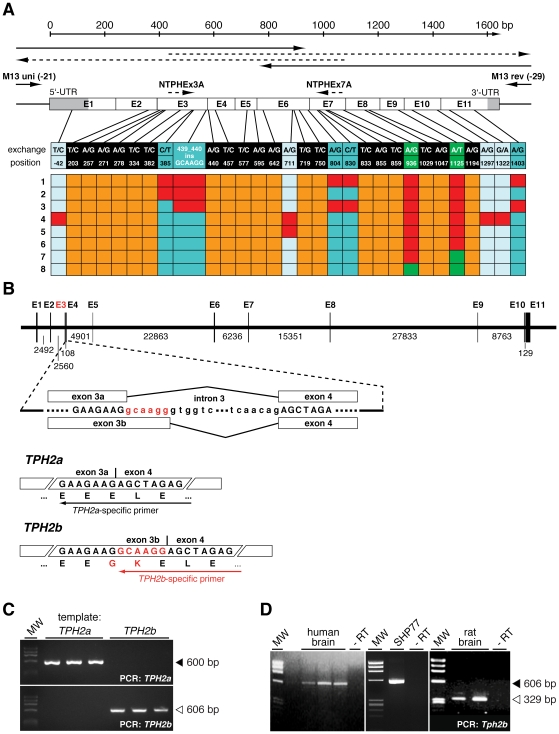
Figure 1. Human TPH2 exists in two splice variants.
(A) Sequencing strategy of TPH2 cDNA clones obtained from human amygdala of patients with psychopathological disorders and controls. Sequence alignments with the TPH2 mRNA reference sequence (GenBank NM_173353) led to the identification of 29 SNPs and a 6 bp insertion in exon 3 (n = 104 independent sequences). A compilation of representative TPH2 cDNA clones (1–8) and the positions of all found SNPs are shown; red boxes indicate the presence of a SNP in the corresponding clone. Eight SNPs were present in dependence of the insertion, forming two mutually exclusive polymorphism patterns. SNPs detectable in presence of the insertion (TPH2a) are indicated in dark blue, light blue SNPs were found only in their absence (TPH2b). The SNPs at the green positions correspond to the known SNPs rs7305115 and rs4290270. The insertion is a product of alternative splicing of intron 3. (B) Schematic representation of the alternative splicing of TPH2 pre-mRNA. In higher vertebrates splicing of intron 3 usually occurs at the highly conserved GC splicing donor site (SDS) resulting in the known TPH2, now called TPH2a. In humans, primates and rats a GT dinucleotide exists 6 bp downstream of the GC SDS, and acts an alternative SDS leading to the inclusion of two additional amino acids, Gly and Lys. This longer TPH2 isoform is now referred to as TPH2b. (C) Specificity of splice-specific TPH2 primers on plasmid DNA. (D) RT-PCR using splice-specific primers showed the presence of TPH2b transcripts in normal human and rat brain and also human neuroendocrine SHP77 cells.
Figure 2
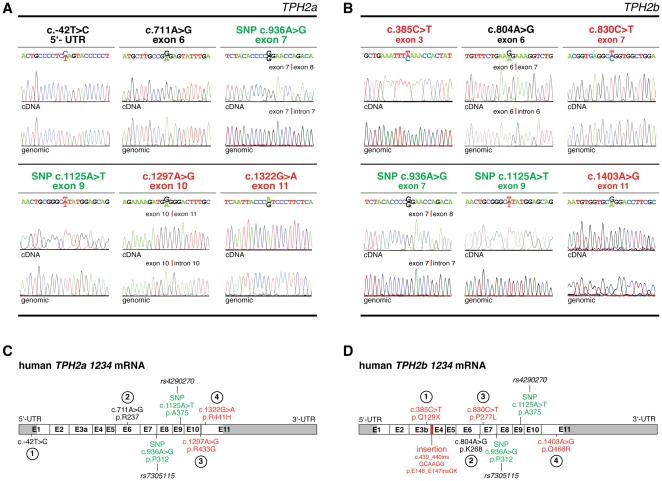
Figure 2. TPH2a and TPH2b undergo extensive mRNA editing.
(A, B) Alignment of genomic TPH2 sequences and corresponding cDNA traces of TPH2a and TPH2b transcripts revealed that neither the TPH2a SNPs c.-42T>C, c.711A>G, c.1297A>G and c.1322G>A (A) nor the TPH2b polymorphisms c.385C>T, c.804A>G, c.830C>T and c.1403A>G are encoded genomically (B), indicating posttranscriptional RNA editing for those positions. Only the SNPs rs7305115 (c.936A>G) and rs4290270 (c.1125A>T) could be verified as genuine SNPs at the genomic level. (C, D) The editing patterns for TPH2a and TPH2b transcripts are mutually exclusive. Four edited positions exist in each alternatively spliced variant, indicated by arabic numbers. Schematic representation of TPH2a 1234 (C) and TPH2b 1234 (D) transcripts. Synonymous and non-synonymous base substitutions are indicated in black and red, respectively; SNPs are shown in green.
Figure 3
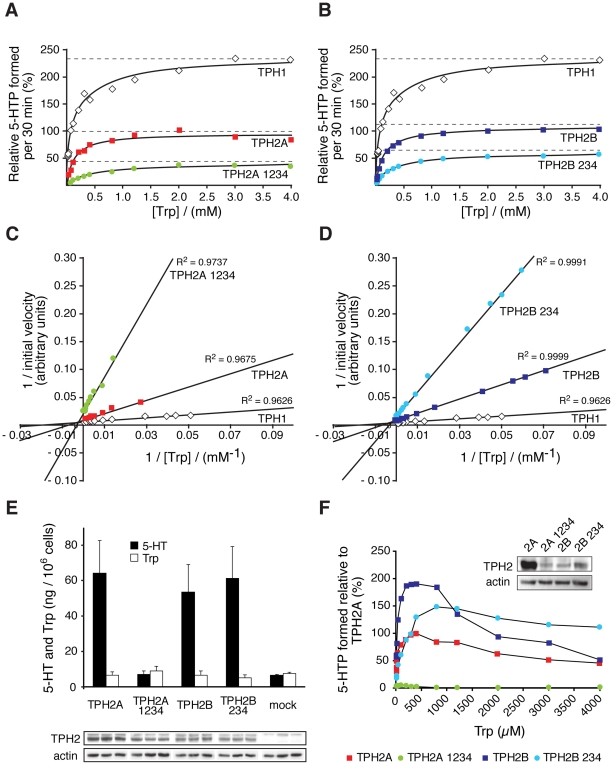
Figure 3. Kinetic properties of TPH2 variants are modulated by RNA editing.
(A, B) 5-hydroxytryptophan (5-HTP) formation of TPH2 containing cellular PC12 lysates in presence of the synthetic cofactor 6-methyl-tetrahydrobiopterin (6MPH4). (C, D) Double reciprocal Lineweaver-Burk plots for Km(W) determination of TPH2 variants. Enzymatic activities of TPH2A and TPH2B, and TPH2A 1234 and TPH2B 234 isoforms were similar, respectively, when using the synthetic cofactor 6MPH4. TPH1 served as a control. RNA editing decreased enzyme activity in both isoforms. Shown are combined data of 4–7 independent experiments. (E) 5-HT and Trp contents of stably transfected PC12 cells. Western blots of the TPH2 variants were used for normalization of 5-HT levels (n = 10 independent experiments). (F) Enzymatic activity of TPH2 variants expressed in non-neuronal HEK293 cells in presence of the natural cofactor tetrahydrobiopterin (BH4). At concentrations above the physiological Trp range of 30–50 µM, all variants except TPH2B 234, exhibit strong substrate inhibition. Shown are combined data of 6 independent experiments.
Figure 4
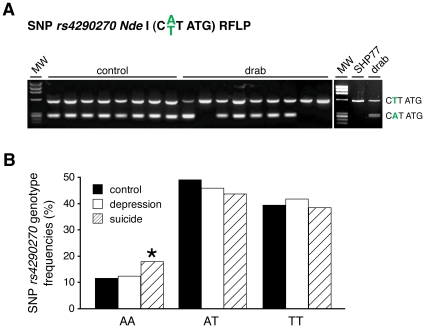
Figure 4. Alternative splicing and editing only occurs in presence of SNP rs4290270 T.
(A) The individual genotype of SNP rs4290270 can be easily detected by restriction fragment length polymorphism (RFLP) analysis with Nde I in drug abusers (drab) and controls. (B) Large scale rs4290270 genotyping revealed a genetic predisposition for suicidality of homozygous A/A-carriers. The distribution was in the Hardy Weinberg equilibrium. *: p<0.05; controls: n = 373; major depression: n = 436; suicide: n = 369.

References

    1. Walther DJ, Bader M. A unique central tryptophan hydroxylase isoform. Biochemical Pharmacology. 2003;66:1673–1680. - PubMed
    1. Fitzpatrick PF. Tetrahydropterin-dependent amino acid hydroxylases. Annual Review of Biochemistry. 1999;68:355–381. - PubMed
    1. Rosen JB, Donley MP. Animal studies of amygdala function in fear and uncertainty: relevance to human research. Biological Psychiatry. 2006;73:49–60. - PubMed
    1. Baxter MG, Murray EA. The amygdala and reward. Nature Reviews Neuroscience. 2002;3:563–573. - PubMed
    1. Talarovicova A, Krskova L, Kiss A. Some assessments of the amygdala role in suprahypothalamic neuroendocrine regulation: a minireview. Endocrine Regulations. 2007;41:155–162. - PubMed

Publication types

LinkOut - more resources