


Stem cells from human-exfoliated deciduous teeth can differentiate into dopaminergic neuron-like cells
- PMID: 20131979
- PMCID: PMC3073455
- DOI: 10.1089/scd.2009.0258
Stem cells from human-exfoliated deciduous teeth can differentiate into dopaminergic neuron-like cells
Abstract
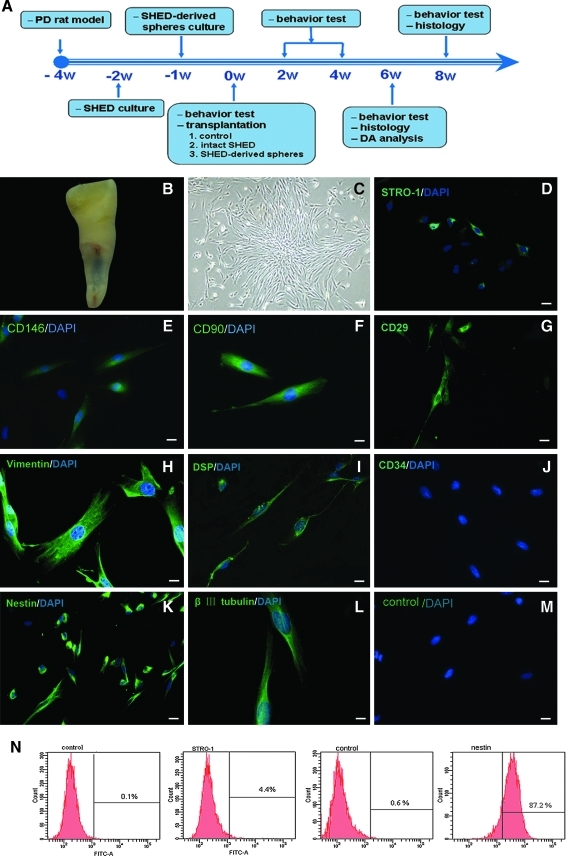
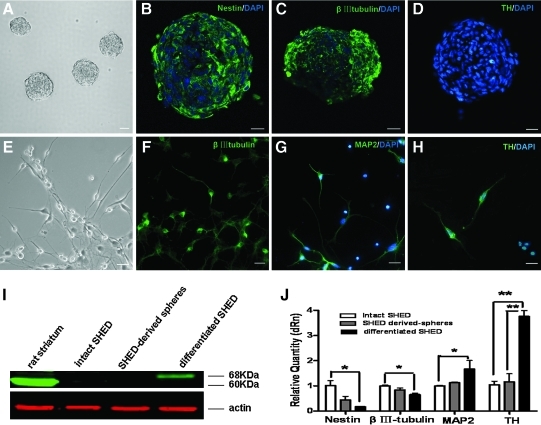
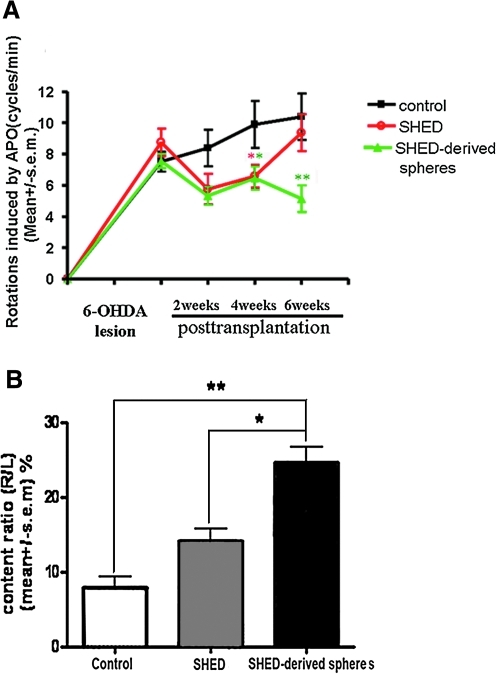
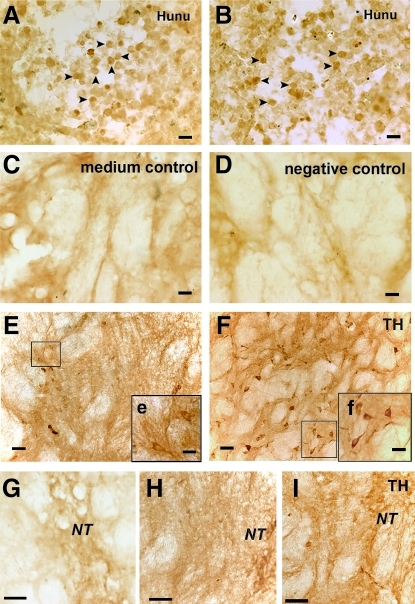
Stem cells from human exfoliated deciduous teeth (SHED) have been identified as a novel population of postnatal stem cells capable of differentiating into neural cells, odontogenic cells, and adipocytes. SHED were reported to differentiate into neural cells based on cellular morphology and the expression of early neuronal markers when cultured under neural inductive conditions. This study therefore investigated the therapeutic efficacy of SHED in alleviating Parkinson's disease (PD) in a rat model. We found that SHED could be induced to form neural-like spheres in a medium optimized for neural stem cells in vitro. After incubation with a cocktail of cytokines including sonic hedgehog, fibroblast growth factor 8, glial cell line-derived neurotrophic factor, and forskolin, these SHED-derived spheres further differentiated into a cell population that contained specific dopaminergic neurons. Moreover, transplantation of SHED spheres into the striatum of parkinsonian rats partially improved the apomorphine-evoked rotation of behavorial disorders compared to transplantation of control SHED. Our data indicate that SHED, potentially derived from neural crest cells, may be an optimal source of postnatal stem cells for PD treatment.
Figures
References
-
- Dauer W. Przedborski S. Parkinson's disease: mechanisms and models. Neuron. 2003;39:889–909. - PubMed
-
- Lindvall O. Brundin P. Widner H. Rehncrona S. Gustavii B. Frackowiak R. Leenders KL. Sawle G. Rothwell JC. Marsden CD. Grafts of fetal dopamine neurons survive and improve motor function in Parkinson's disease. Science. 1990;247:574–577. - PubMed
-
- Freed CR. Breeze RE. Rosenberg NL. Schneck SA. Kriek E. Qi JX. Lone T. Zhang YB. Snyder JA. Wells TH. Survival of implanted fetal dopamine cells and neurologic improvement 12 to 46 months after transplantation for Parkinson's disease. N Engl J Med. 1992;327:1549–1555. - PubMed
-
- Olanow CW. Kordower JH. Freeman TB. Fetal nigral transplantation as a therapy for Parkinson's disease. Trends Neurosci. 1996;19:102–109. - PubMed
-
- Greely HT. Hamm T. Johnson R. Price CR. Weingarten R. Raffin T. The ethical use of human fetal tissue in medicine. Stanford University Medical Center Committee on Ethics. N Engl J Med. 1989;320:1093–1096. - PubMed
Publication types
MeSH terms
Substances
Grants and funding
LinkOut - more resources
Full Text Sources
Other Literature Sources
Medical
