


Energized outer membrane and spatial separation of metabolic processes in the hyperthermophilic Archaeon Ignicoccus hospitalis
- PMID: 20133662
- PMCID: PMC2840320
- DOI: 10.1073/pnas.0911711107
Energized outer membrane and spatial separation of metabolic processes in the hyperthermophilic Archaeon Ignicoccus hospitalis
Abstract
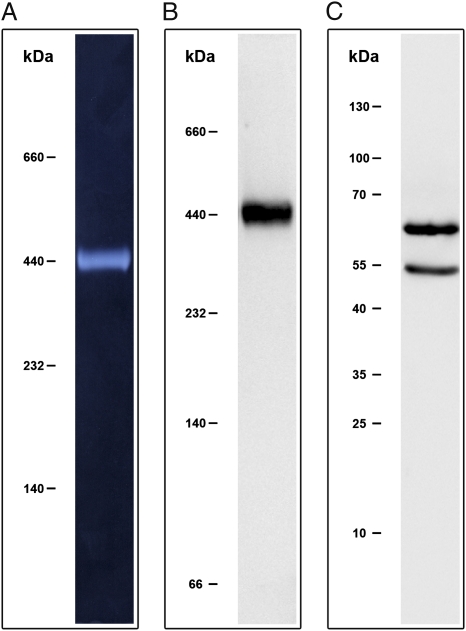
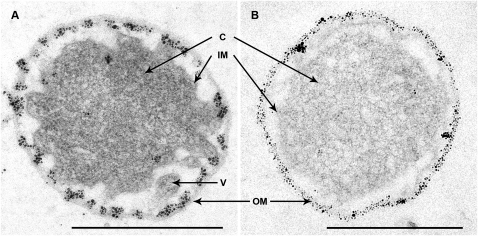
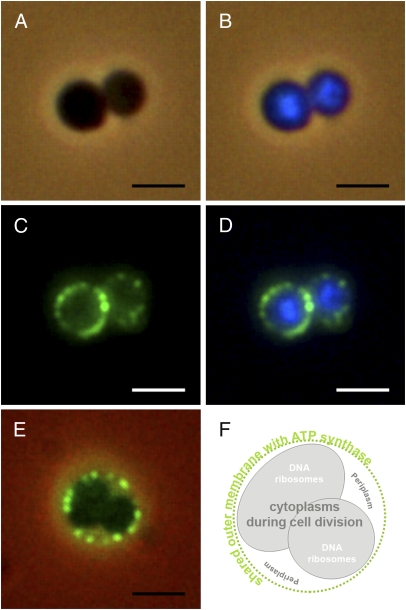
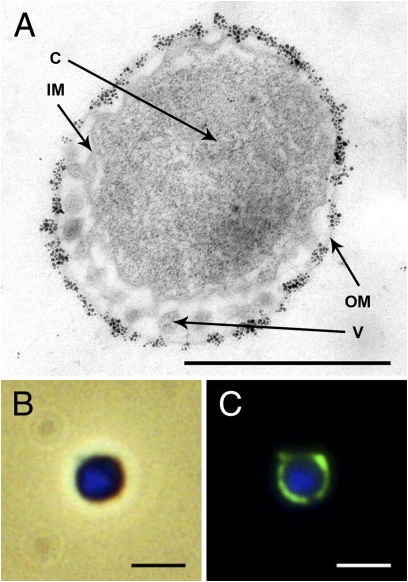
ATP synthase catalyzes ATP synthesis at the expense of an electrochemical ion gradient across a membrane that can be generated by different exergonic reactions. Sulfur reduction is the main energy-yielding reaction in the hyperthermophilic strictly anaerobic Crenarchaeon Ignicoccus hospitalis. This organism is unusual in having an inner and an outer membrane that are separated by a huge intermembrane compartment. Here we show, on the basis of immuno-EM analyses of ultrathin sections and immunofluorescence experiments with whole I. hospitalis cells, that the ATP synthase and H(2):sulfur oxidoreductase complexes of this organism are located in the outer membrane. These two enzyme complexes are mandatory for the generation of an electrochemical gradient and for ATP synthesis. Thus, among all prokaryotes possessing two membranes in their cell envelope (including Planctomycetes, gram-negative bacteria), I. hospitalis is a unique organism, with an energized outer membrane and ATP synthesis within the periplasmic space. In addition, DAPI staining and EM analyses showed that DNA and ribosomes are localized in the cytoplasm, leading to the conclusion that in I. hospitalis energy conservation is separated from information processing and protein biosynthesis. This raises questions regarding the function of the two membranes, the interaction between these compartments, and the general definition of a cytoplasmic membrane.
Conflict of interest statement
The authors declare no conflict of interest.
Figures
References
-
- Paper W, et al. Ignicoccus hospitalis sp. nov., the host of ’Nanoarchaeum equitans’. Int J Syst Evol Microbiol. 2007;57:803–808. - PubMed
-
- Huber H, et al. A new phylum of Archaea represented by a nanosized hyperthermophilic symbiont. Nature. 2002;417:63–67. - PubMed
-
- Huber H, et al. Ignicoccus gen. nov., a novel genus of hyperthermophilic, chemolithoautotrophic Archaea, represented by two new species, Ignicoccus islandicus sp. nov. and Ignicoccus pacificus sp. nov. Int J Syst Evol Microbiol. 2000;50:2093–2100. - PubMed
Publication types
MeSH terms
Substances
LinkOut - more resources
Full Text Sources
Other Literature Sources
Molecular Biology Databases
