


Reactive oxygen species-independent activation of the IL-1beta inflammasome in cells from patients with chronic granulomatous disease
- PMID: 20133696
- PMCID: PMC2840365
- DOI: 10.1073/pnas.0914795107
Reactive oxygen species-independent activation of the IL-1beta inflammasome in cells from patients with chronic granulomatous disease
Abstract
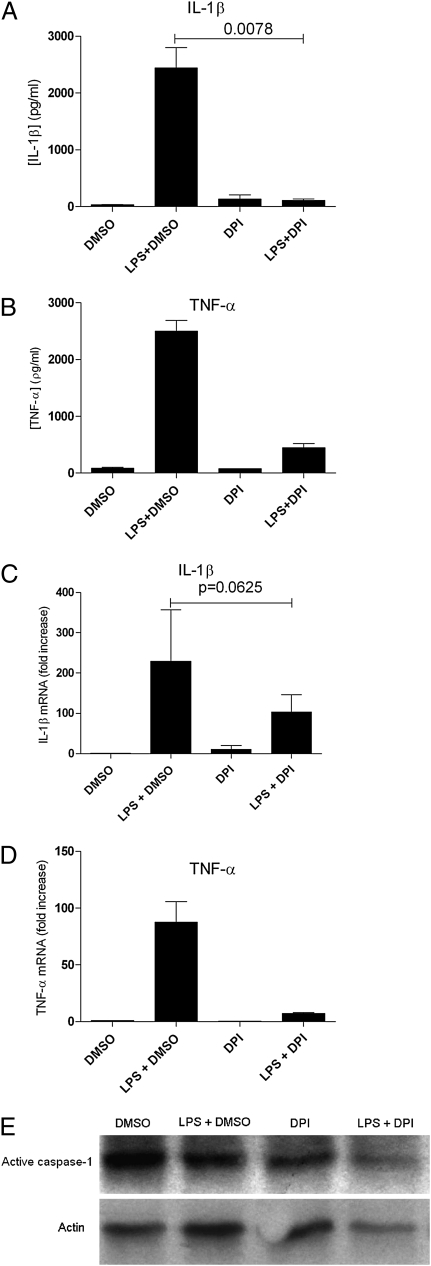
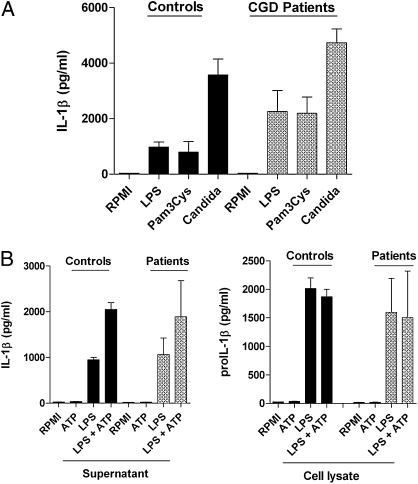
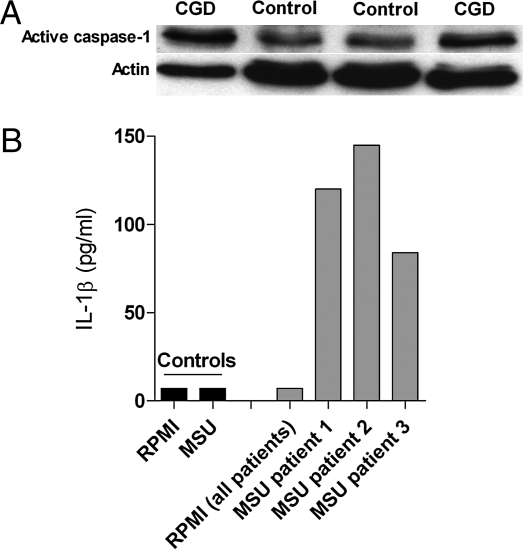
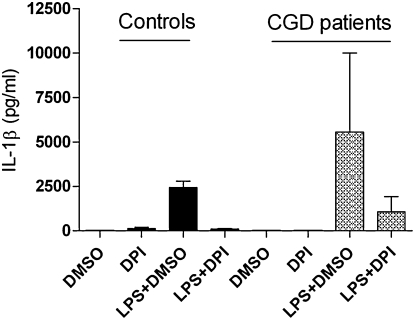
Humans with chronic granulomatous diseases (CGDs) due to mutations in p47-phox have defective NADPH activity and thus cannot generate NADPH-dependent reactive oxygen species (ROS). The role of ROS in inflammation is controversial; some in vitro studies suggest that ROS are crucial for secretion of IL-1beta via inflammasome activation, whereas mice defective for ROS and patients with CGD have a proinflammatory phenotype. In this study, we evaluated activation of the IL-1beta inflammasome in cells from CGD patients. In contrast to previous studies using the small molecule diphenylene iodonium (DPI) as a ROS inhibitor, we found no decrease in either caspase-1 activation or secretion of IL-1beta and IL-18 in primary CGD monocytes. Moreover, activation of CGD monocytes by uric acid crystals induced a 4-fold higher level of IL-1beta secretion compared with that seen in monocytes from unaffected subjects, and this increase was not due to increased synthesis of the IL-1beta precursor. In addition, Western blot analysis of CGD cells revealed that caspase-1 activation was not decreased, but rather was increased compared with control cells. Examination of the effects exerted by the inhibition of ROS activity by DPI revealed that the decrease in IL-1beta secretion by DPI was actually due to inhibition of IL-1beta gene expression. Thus, inconsistent with the proinflammatory role of ROS, the present findings support the concept that ROS likely dampen inflammasome activation. The absence of ROS in CGD monocytes may explain the presence of an inflammatory phenotype characterized by granulomas and inflammatory bowel disease occurring in CGD patients.
Conflict of interest statement
The authors declare no conflict of interest.
Figures
References
-
- Moser C, et al. Successful treatment of familial Mediterranean fever with anakinra and outcome after renal transplantation. Nephrol Dial Transplant. 2009;24:676–678. - PubMed
-
- O’Connell SM, et al. Response to IL-1 receptor antagonist in a child with familial cold autoinflammatory syndrome. Pediatr Dermatol. 2007;24:85–89. - PubMed
-
- Yamazaki T, et al. Anakinra improves sensory deafness in a Japanese patient with Muckle-Wells syndrome, possibly by inhibiting the cryopyrin inflammasome. Arthritis Rheum. 2008;58:864–868. - PubMed
-
- Hoffman HM, Firestein GS. Anakinra for the treatment of neonatal-onset multisystem inflammatory disease. Nat Rev Rheumatol. 2006;2:646–647. - PubMed
-
- Bodar EJ, van der Hilst JC, Drenth JP, van der Meer JW, Simon A. Effect of etanercept and anakinra on inflammatory attacks in the hyper-IgD syndrome: Introducing a vaccination provocation model. Neth J Med. 2005;63:260–264. - PubMed
Publication types
MeSH terms
Substances
LinkOut - more resources
Full Text Sources
Miscellaneous
