


Mechanisms involved in antibody- and complement-mediated allograft rejection
- PMID: 20135240
- PMCID: PMC2892186
- DOI: 10.1007/s12026-009-8136-3
Mechanisms involved in antibody- and complement-mediated allograft rejection
Abstract
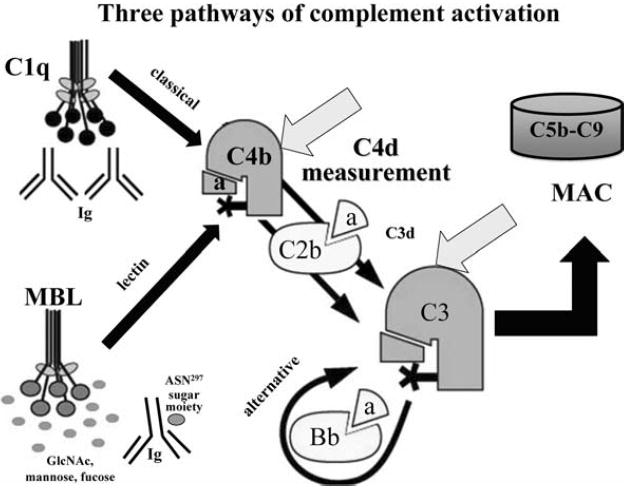
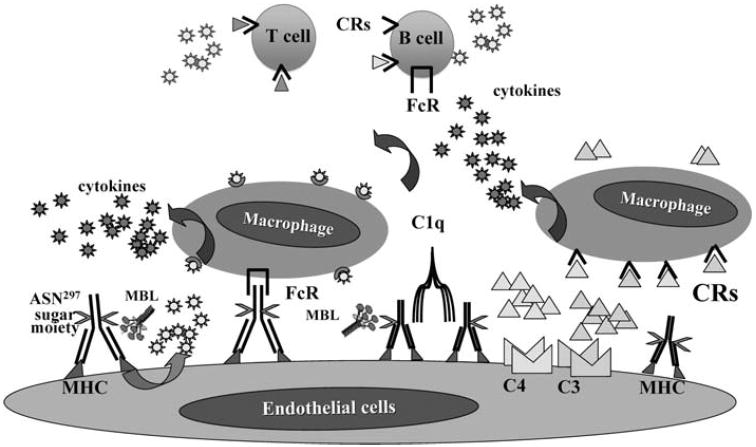
Antibody-mediated rejection has become critical clinically because this form of rejection is usually unresponsive to conventional anti-rejection therapy, and therefore, it has been recognized as a major cause of allograft loss. Our group developed experimental animal models of vascularized organ transplantation to study pathogenesis of antibody- and complement-mediated endothelial cell injury leading to graft rejection. In this review, we discuss mechanisms of antibody-mediated graft rejection resulting from activation of complement by C1q- and MBL (mannose-binding lectin)-dependent pathways and interactions with a variety of effector cells, including macrophages and monocytes through Fcgamma receptors and complement receptors.
Figures
References
-
- Patel R, Terasaki PI. Significance of the positive crossmatch test in kidney transplantation. N Engl J Med. 1969;280:735–9. - PubMed
-
- Lederer SR, Schneeberger H, Albert E, Johnson JP, Gruber R, Land W, et al. Early renal graft dysfunction. The role of preformed antibodies to DR-typed lymphoblastoid cell lines. Transplantation. 1996;61:213–9. - PubMed
-
- Baldwin WM, III, Pruitt SK, Brauer RB, Daha MR, Sanfilippo F. Complement in organ transplantation: contribution to inflammation, injury and rejection. Transplantation. 1995;59:797–808. - PubMed
-
- Smith RN, Brousaides N, Grazette L, Saidman S, Semigran M, Disalvo T, et al. C4d deposition in cardiac allografts correlates with alloantibody. J Heart Lung Transpl. 2005;24:1202–10. - PubMed
Publication types
MeSH terms
Substances
Grants and funding
LinkOut - more resources
Full Text Sources
Miscellaneous
