


Treatment with the catalytic metalloporphyrin AEOL 10150 reduces inflammation and oxidative stress due to inhalation of the sulfur mustard analog 2-chloroethyl ethyl sulfide
- PMID: 20138141
- PMCID: PMC2847650
- DOI: 10.1016/j.freeradbiomed.2010.01.039
Treatment with the catalytic metalloporphyrin AEOL 10150 reduces inflammation and oxidative stress due to inhalation of the sulfur mustard analog 2-chloroethyl ethyl sulfide
Abstract
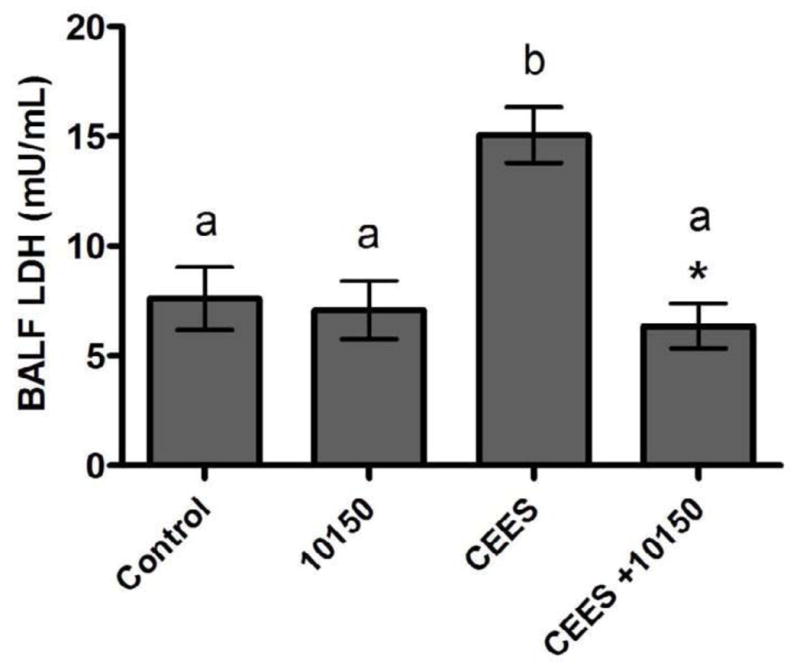
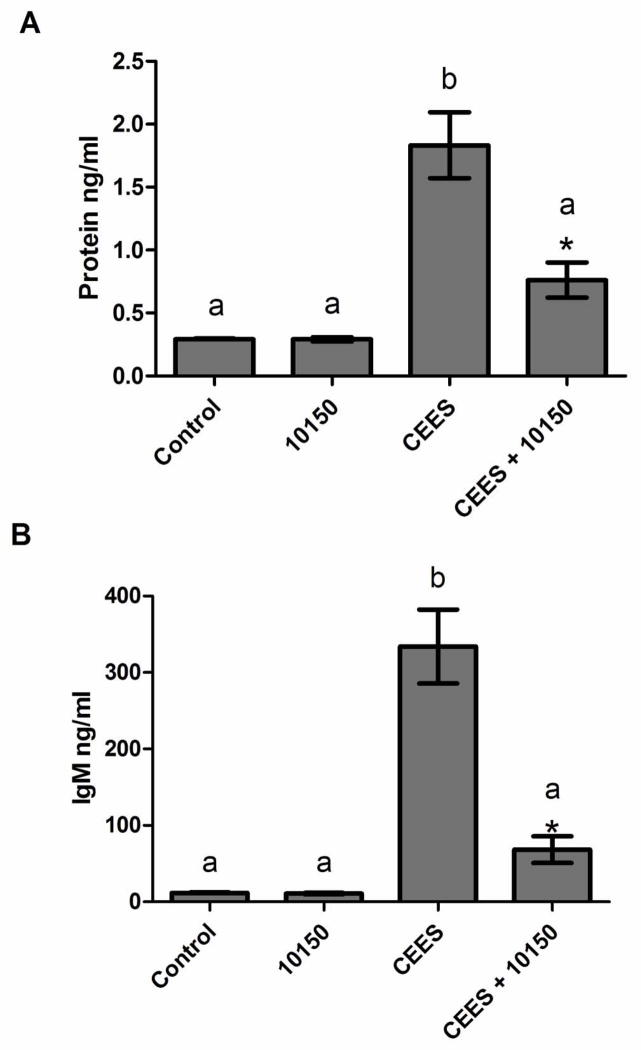
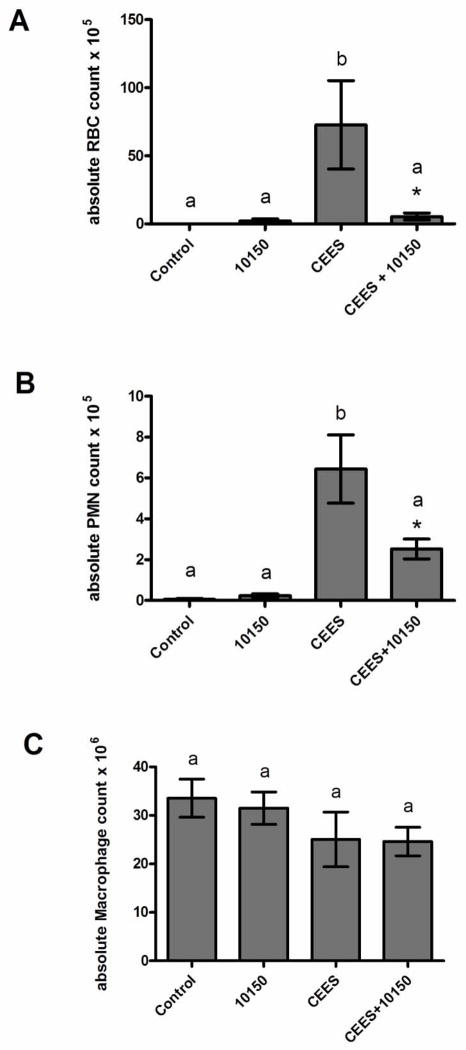
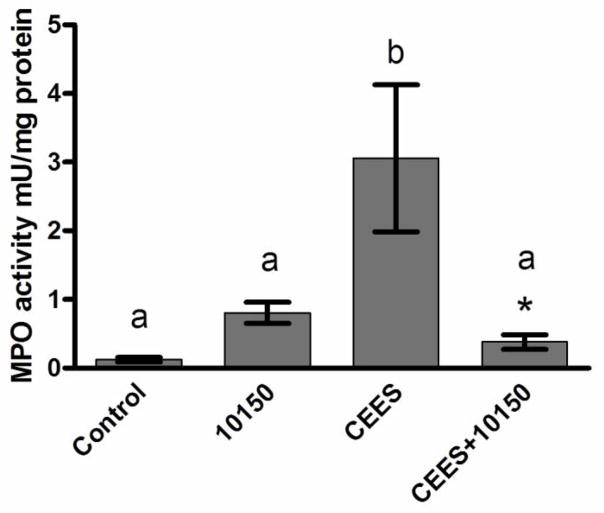
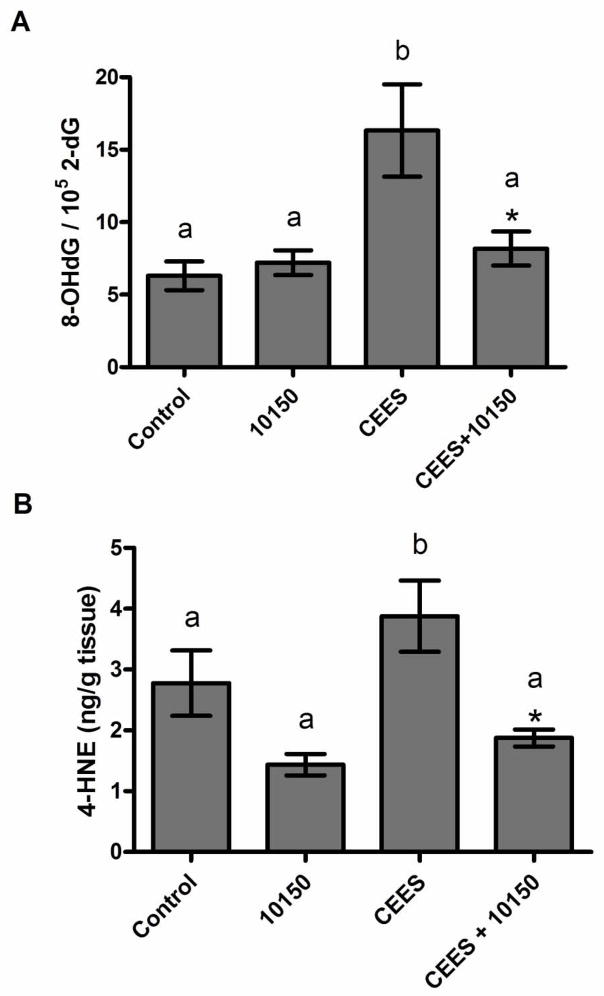
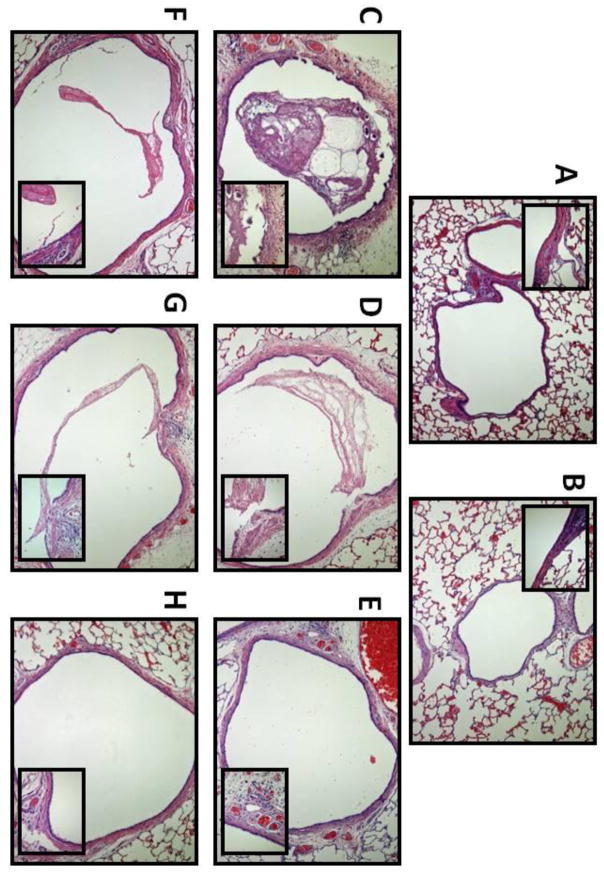
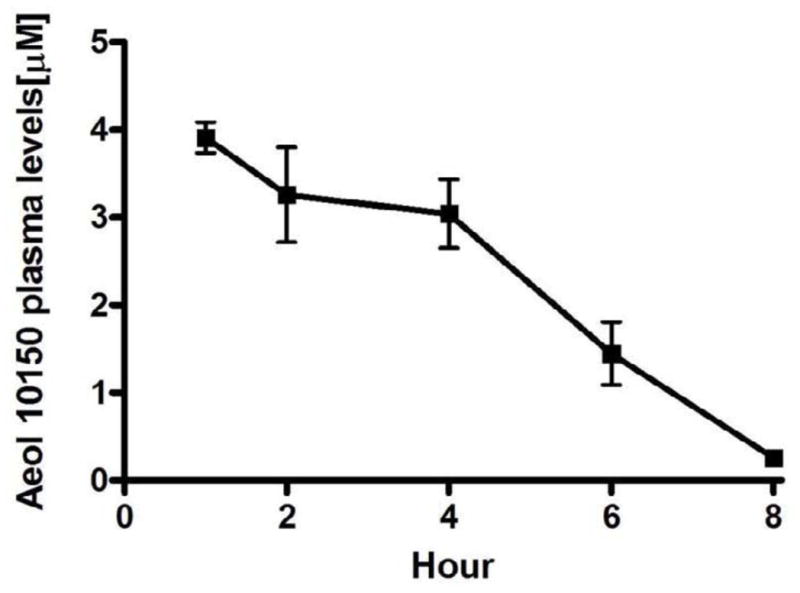
Sulfur mustard (bis-2-(chloroethyl) sulfide; SM) is a highly reactive vesicating and alkylating chemical warfare agent. A SM analog, 2-chloroethyl ethyl sulfide (CEES), has been utilized to elucidate mechanisms of toxicity and as a screen for therapeutics. Previous studies with SM and CEES have demonstrated a role for oxidative stress as well as decreased injury with antioxidant treatment. We tested whether posttreatment with the metalloporphyrin catalytic antioxidant AEOL 10150 would improve outcome in CEES-induced lung injury. Anesthetized rats inhaled 5% CEES for 15 min via a nose-only inhalation system. At 1 and 9 h after CEES exposure, rats were given AEOL 10150 (5 mg/kg, sc). At 18 h post-CEES exposure BALF lactate dehydrogenase activity, protein, IgM, red blood cells, and neutrophils were elevated but were decreased by AEOL 10150 treatment. Lung myeloperoxidase activity was increased after CEES inhalation and was ameliorated by AEOL 10150. The lung oxidative stress markers 8-OHdG and 4-HNE were elevated after CEES exposure and significantly decreased by AEOL 10150 treatment. These findings demonstrate that CEES inhalation increased lung injury, inflammation, and oxidative stress, and AEOL 10150 was an effective rescue agent. Further investigation utilizing catalytic antioxidants as treatment for SM inhalation injury is warranted.
(c) 2010 Elsevier Inc. All rights reserved.
Figures
References
-
- Kehe K, Szinicz L. Medical aspects of sulphur mustard poisoning. Toxicology. 2005;214:198–209. - PubMed
-
- Dacre JC, Goldman M. Toxicology and pharmacology of the chemical warfare agent sulfur mustard. Pharmacol Rev. 1996;48:289–326. - PubMed
-
- Papirmeister B, Gross CL, Meier HL, Petrali JP, Johnson JB. Molecular basis for mustard-induced vesication. Fundam Appl Toxicol. 1985;5:S134–149. - PubMed
-
- Elsayed NM, Omaye ST, Klain GJ, Korte DW., Jr Free radical-mediated lung response to the monofunctional sulfur mustard butyl 2-chloroethyl sulfide after subcutaneous injection. Toxicology. 1992;72:153–165. - PubMed
-
- Elsayed NM, Omaye ST. Biochemical changes in mouse lung after subcutaneous injection of the sulfur mustard 2-chloroethyl 4-chlorobutyl sulfide. Toxicology. 2004;199:195–206. - PubMed
MeSH terms
Substances
Grants and funding
LinkOut - more resources
Full Text Sources
Other Literature Sources
Medical
Research Materials
Miscellaneous
