. 2010 Mar;16(3):308-12.
doi: 10.1038/nm.2098. Epub 2010 Feb 7.

Pharmacological inhibition of gut-derived serotonin synthesis is a potential bone anabolic treatment for osteoporosis

Affiliations

Pharmacological inhibition of gut-derived serotonin synthesis is a potential bone anabolic treatment for osteoporosis

Vijay K Yadav et al. Nat Med. 2010 Mar.

Abstract

Osteoporosis is a disease of low bone mass most often caused by an increase in bone resorption that is not sufficiently compensated for by a corresponding increase in bone formation. As gut-derived serotonin (GDS) inhibits bone formation, we asked whether hampering its biosynthesis could treat osteoporosis through an anabolic mechanism (that is, by increasing bone formation). We synthesized and used LP533401, a small molecule inhibitor of tryptophan hydroxylase-1 (Tph-1), the initial enzyme in GDS biosynthesis. Oral administration of this small molecule once daily for up to six weeks acts prophylactically or therapeutically, in a dose-dependent manner, to treat osteoporosis in ovariectomized rodents because of an isolated increase in bone formation. These results provide a proof of principle that inhibiting GDS biosynthesis could become a new anabolic treatment for osteoporosis.


Figures
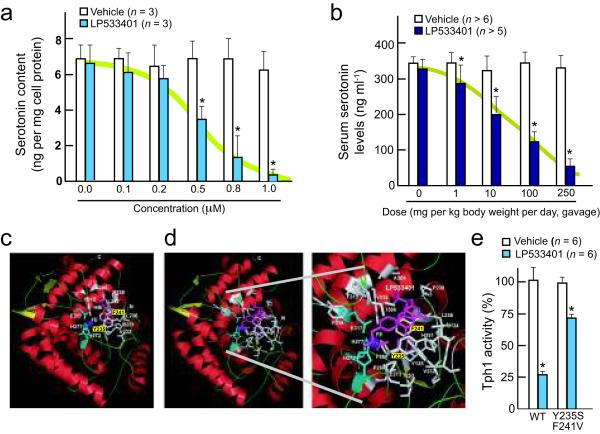
Fig. 1
Fig. 1. Analysis of LP533401 inhibition of Tph1 activity
(a–b) In vitro (a) and in vivo (b) dose response of inhibition of serotonin synthesis by LP533401. (c) Crystal structure of human TPH1 bound to 7,8–dihydro–L–biopterin co–factor (HBI, in magenta) and Fe(III) (in blue) (PDB ID: 1mlw). Amino acid side-chains interacting with HBI are in white and those binding the metal ion are in cyan. (d) Left panel, crystal structure of human TPH1 docked to the generated 3D model of LP533401. LP533401 is in magenta and the metal ion is in blue. The side-chains of amino acid residues interacting with LP533401 and metal ion are in white and cyan respectively. The residues interacting with LP533401 include Val232, Tyr235, Leu236, Pro238, Phe241, His251, Ala309 and Tyr312. Right panel, Zoom image for the binding of LP533401 to TPH1. The structure figures have been made using PyMOL (http://www.pymol.org/). (e) In vitro activity of wild–type or mutated (Y235S, F241V) TPH1 in the presence of LP533401 (0.01 μM). All values are expressed as means ± SEM. * p < 0.05 vs vehicle.
Fig. 2
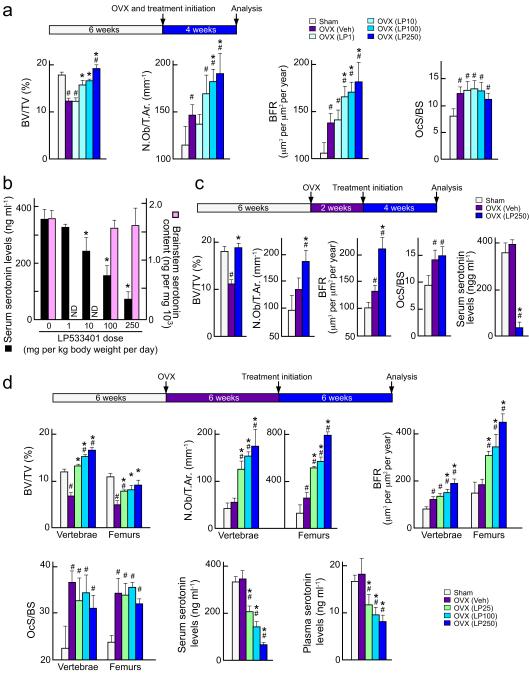
Fig. 2. LP533401 can prevent and rescue osteoporosis in ovariectomized mice
(a–b) Histological analysis of L3–L4 vertebrae (a) and serum and brain serotonin levels (b) of sham–operated (sham) and ovariectomized (OVX) mice treated orally with vehicle (Veh) or the indicated dose (1, 10, 100 or 250 mg per kg body weight per day) of LP533401 (LP) for 4 weeks post–ovariectomy. (c) Histological analysis of L3–L4 vertebrae of sham and OVX mice treated with vehicle or LP533401 (LP) from week 2 to 6 post–ovariectomy. (n =8–10 animals each group). (d) Histological analysis of L3–L4 vertebrae or distal femurs of sham and OVX mice treated with vehicle or the indicated dose (25, 100 or 250 mg per kg body weight per day) of LP533401 (LP) from week 6 to 12 post–ovariectomy. (n=8–10 animals each group). BV/TV, Bone volume over total volume; Nb.Ob/T.Ar, osteoblast number over trabecular area; BFR, bone formation rate; OcS/BS, osteoclast surface over bone surface; ND, not determined. All values are expressed as means ± SEM. # p < 0.05 vs sham and * p < 0.05 vs OVX (Veh).
Fig. 3
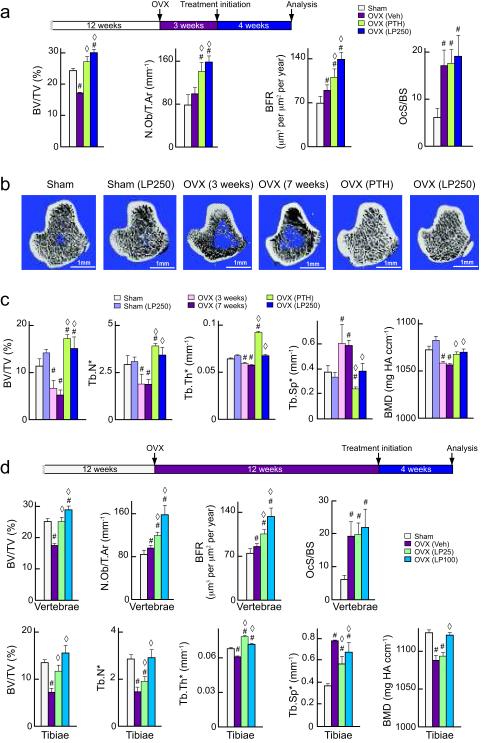
Fig. 3. LP533401 rescues osteoporosis in ovariectomized rats
(a–c) Histomorphometric analysis of L2 vertebra (a) and micro–computed tomography analysis of the proximal tibiae (b,c) collected from rat sham-operated (sham) vehicle treated control, ovariectomized (OVX) and treated with vehicle, intermittent injections of PTH or 250 mg per kg body weight per day of LP533401 (LP) from week 3 to 7 post–ovariectomy (n =8–10 animals each group). (d) Histomorphometric analysis of L2 vertebra and micro–computed tomography analysis of the proximal tibiae collected from rat sham-operated (sham) vehicle treated control, ovariectomized (OVX) and treated with vehicle, intermittent injections of PTH or LP533401 (25, 100 mg per kg body weight per day) from week 12 to 16 post–ovariectomy (n =8–10 animals each group). BV/TV, Bone volume over trabecular volume; Tb.N*, trabecular number; Tb.Th*, trabecular thickness; Tb.Sp*, trabecular spacing; Nb.Ob/T.Ar, osteoblast number over trabecular area; BFR, bone formation rate; OcS/BS, osteoclast surface over bone surface. All values are expressed as means ± SEM. * means the parameter is measured without a plate or rod model assumption, # p < 0.05 vs sham and ◇ p < 0.05 vs OVX (Veh).
Fig. 4
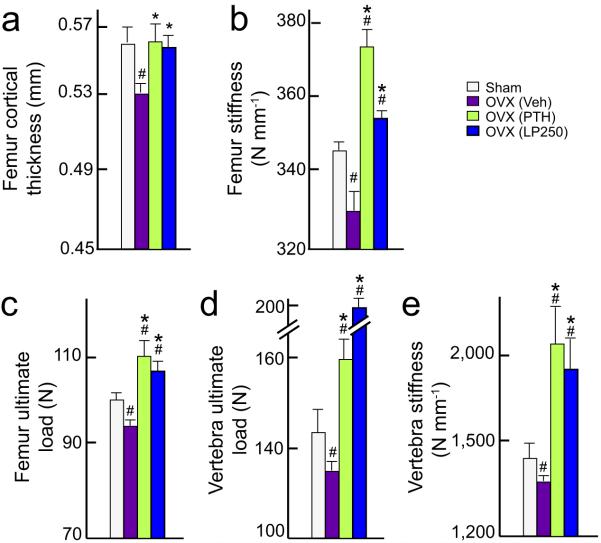
Fig. 4. Effect of LP533401 on bone biomechanical strength
(a–e) Cortical thickness, stiffness and ultimate load analysis in femur and L3 vertebra collected from rat sham–operated (sham) vehicle treated control, ovariectomized (OVX) and treated with vehicle or intermittent injections of PTH or 250 mg per kg body weight per day of LP533401 (LP) from week 3 to 7 post–ovariectomy. (n =8–10 animals each group) All values are expressed as means ± SEM. # p < 0.05 vs sham and * p < 0.05 vs OVX (Veh).

Comment in

References

    1. Rodan GA, Martin TJ. Therapeutic approaches to bone diseases. Science. 2000;289:1508–1514. - PubMed
    1. Yadav VK, et al. Lrp5 controls bone formation by inhibiting serotonin synthesis in the duodenum. Cell. 2008;135:825–837. - PMC - PubMed
    1. Liu Q, et al. Discovery and characterization of novel tryptophan hydroxylase inhibitors that selectively inhibit serotonin synthesis in the gastrointestinal tract. J Pharmacol Exp Ther. 2008;325:47–55. - PubMed
    1. Shi ZC, et al. Modulation of peripheral serotonin levels by novel tryptophan hydroxylase inhibitors for the potential treatment of functional gastrointestinal disorders. J Med Chem. 2008;51:3684–3687. - PubMed
    1. Yadav VK, et al. A serotonin-dependent mechanism explains the leptin regulation of bone mass, appetite, and energy expenditure. Cell. 2009;138:976–989. - PMC - PubMed

Publication types