


Ribosylation rapidly induces alpha-synuclein to form highly cytotoxic molten globules of advanced glycation end products
- PMID: 20140223
- PMCID: PMC2816216
- DOI: 10.1371/journal.pone.0009052
Ribosylation rapidly induces alpha-synuclein to form highly cytotoxic molten globules of advanced glycation end products
Abstract
Background: Alpha synuclein (alpha-Syn) is the main component of Lewy bodies which are associated with several neurodegenerative diseases such as Parkinson's disease. While the glycation with D-glucose that results in alpha-Syn misfold and aggregation has been studied, the effects of glycation with D-ribose on alpha-Syn have not been investigated.
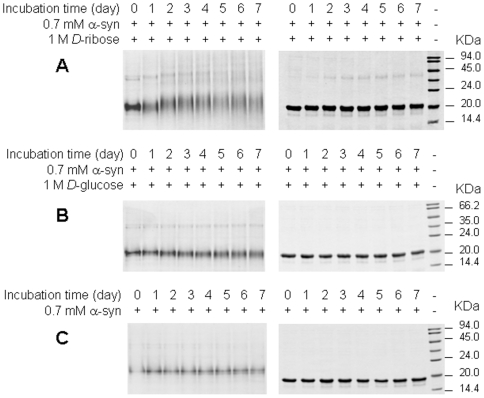
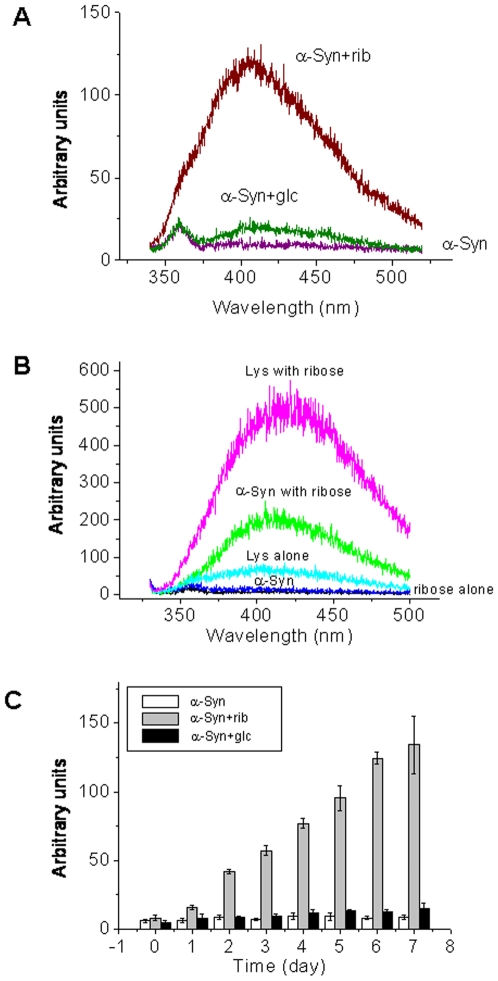
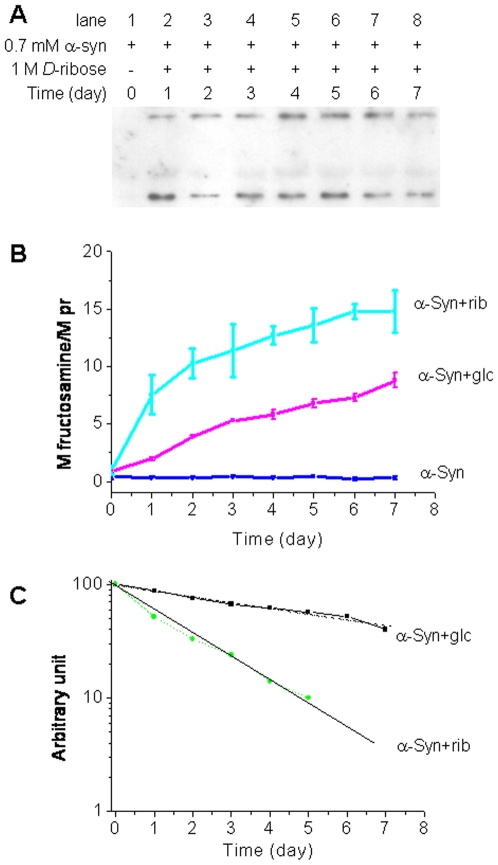
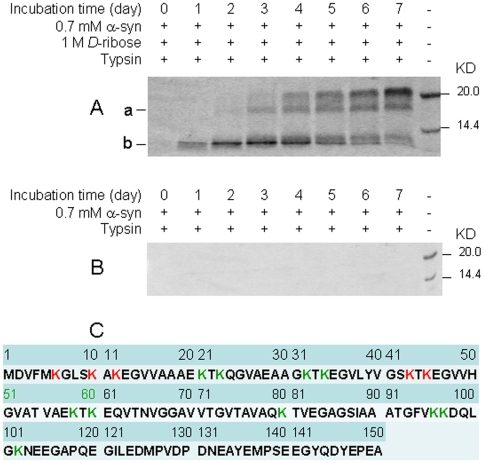
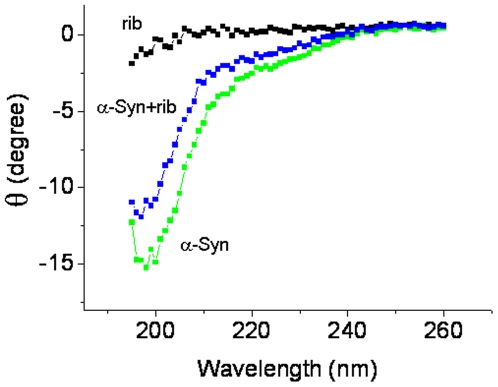
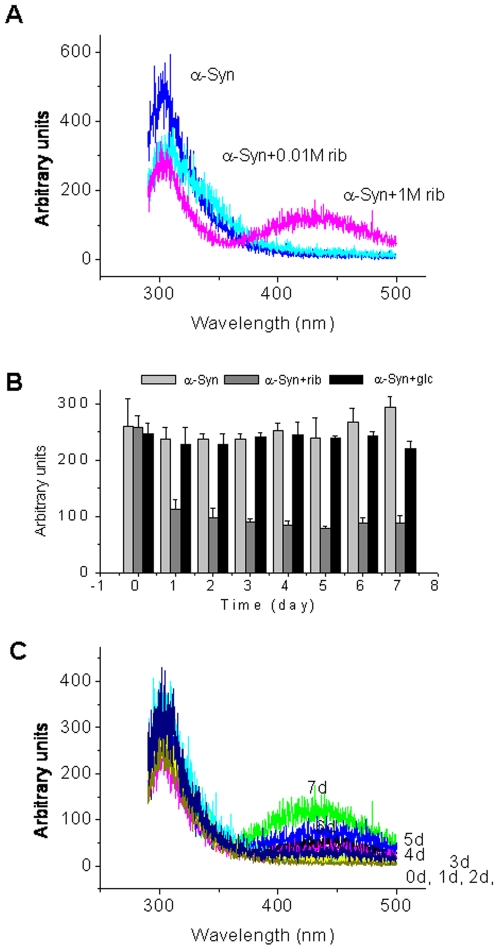
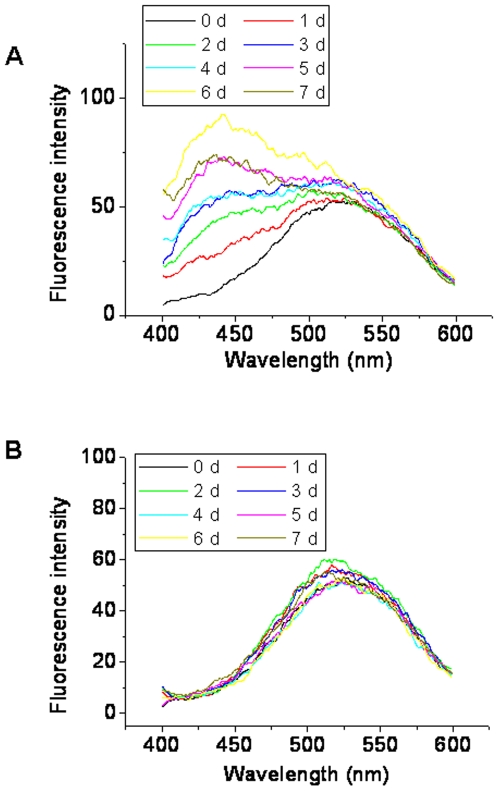
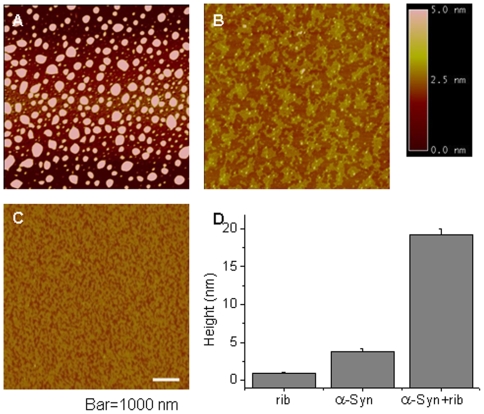
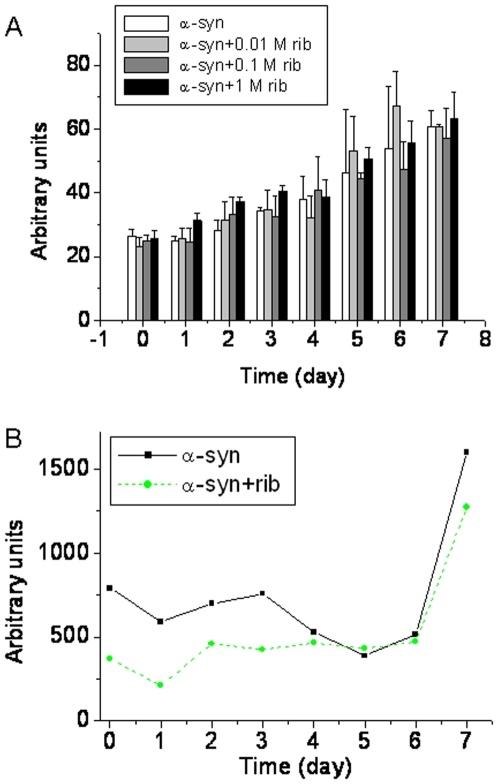
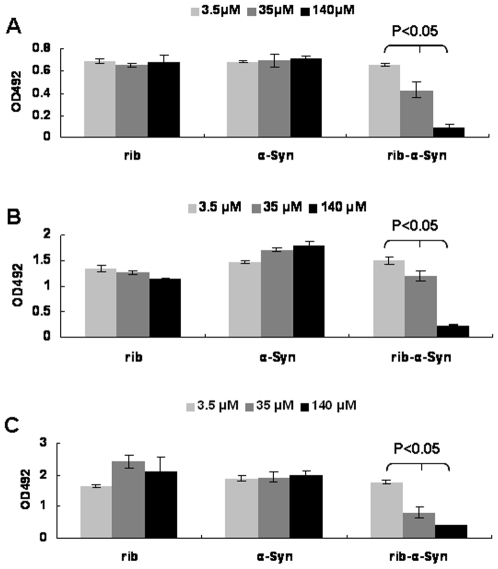
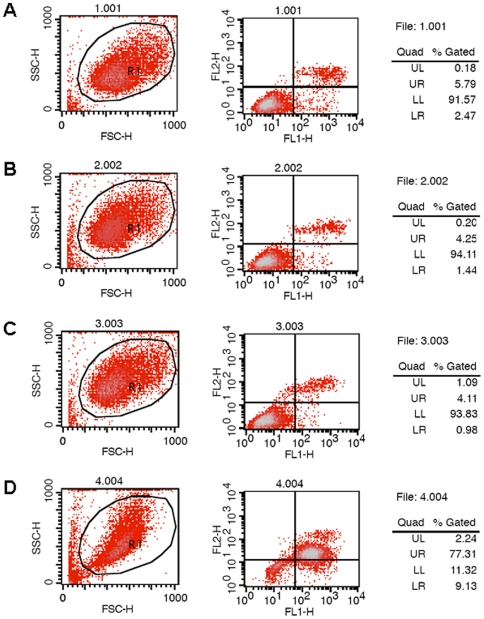
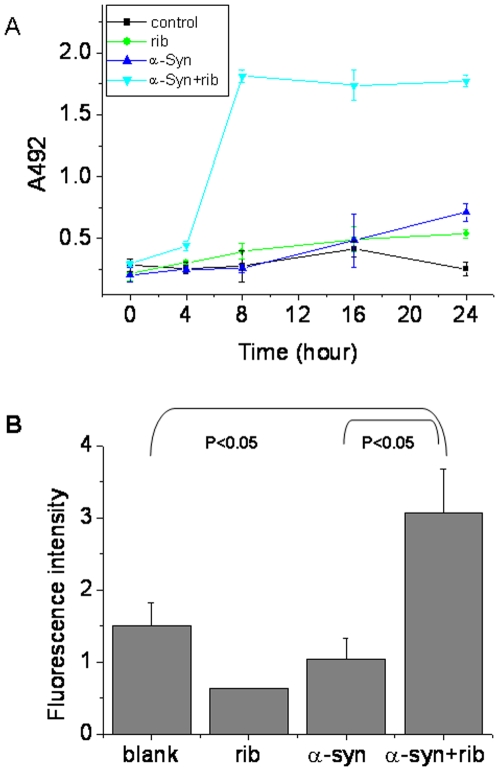
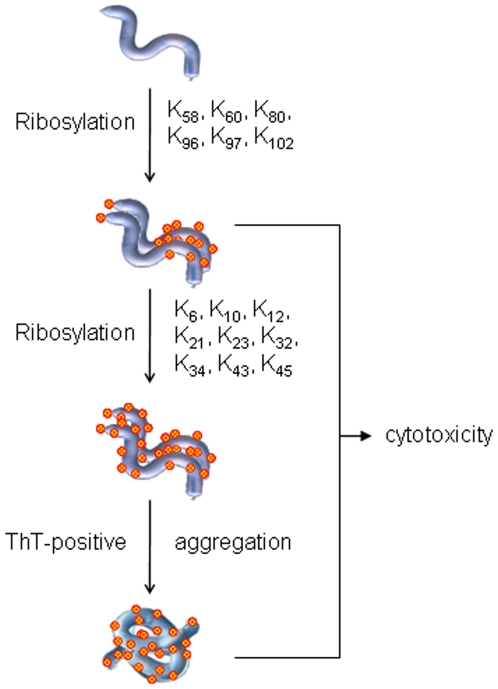
Methodology/principal findings: Here, we show that ribosylation induces alpha-Syn misfolding and generates advanced glycation end products (AGEs) which form protein molten globules with high cytotoxcity. Results from native- and SDS-PAGE showed that D-ribose reacted rapidly with alpha-Syn, leading to dimerization and polymerization. Trypsin digestion and sequencing analysis revealed that during ribosylation the lysinyl residues (K(58), K(60), K(80), K(96), K(97) and K(102)) in the C-terminal region reacted more quickly with D-ribose than those of the N-terminal region. Using Western blotting, AGEs resulting from the glycation of alpha-Syn were observed within 24 h in the presence of D-ribose, but were not observed in the presence of D-glucose. Changes in fluorescence at 410 nm demonstrated again that AGEs were formed during early ribosylation. Changes in the secondary structure of ribosylated alpha-Syn were not clearly detected by CD spectrometry in studies on protein conformation. However, intrinsic fluorescence at 310 nm decreased markedly in the presence of D-ribose. Observations with atomic force microscopy showed that the surface morphology of glycated alpha-Syn looked like globular aggregates. thioflavin T (ThT) fluorescence increased during alpha-Syn incubation regardless of ribosylation. As incubation time increased, ribosylation of alpha-Syn resulted in a blue-shift (approximately 100 nm) in the fluorescence of ANS. The light scattering intensity of ribosylated alpha-Syn was not markedly different from native alpha-Syn, suggesting that ribosylated alpha-Syn is present as molten protein globules. Ribosylated products had a high cytotoxicity to SH-SY5Y cells, leading to LDH release and increase in the levels of reactive oxygen species (ROS).
Conclusions/significance: alpha-Syn is rapidly glycated in the presence of D-ribose generating molten globule-like aggregations which cause cell oxidative stress and result in high cytotoxicity.
Conflict of interest statement
Figures
References
-
- Spillantini MG, Schmidt ML, Lee VM, Trojanowski JQ, Jakes R, et al. Alpha-synuclein in Lewy bodies. Nature. 1997;388:839–840. - PubMed
-
- Barzilai A, Melamed E. Molecular mechanisms of selective dopaminergic neuronal death in Parkinson's disease. Trends Mol Med. 2003;9:126–132. - PubMed
-
- Singleton AB, Farrer M, Johnson J, Singleton A, Hague S, et al. alpha-Synuclein locus triplication causes Parkinson's disease. Science. 2003;302:841. - PubMed
-
- Iwatsubo T. Pathological biochemistry of alpha-synucleinopathy. Neuropathology. 2007;27:474–478. - PubMed
Publication types
MeSH terms
Substances
LinkOut - more resources
Full Text Sources
Molecular Biology Databases
Research Materials
Miscellaneous
